

Blog
Night Running Safety Gear Guide for Runners

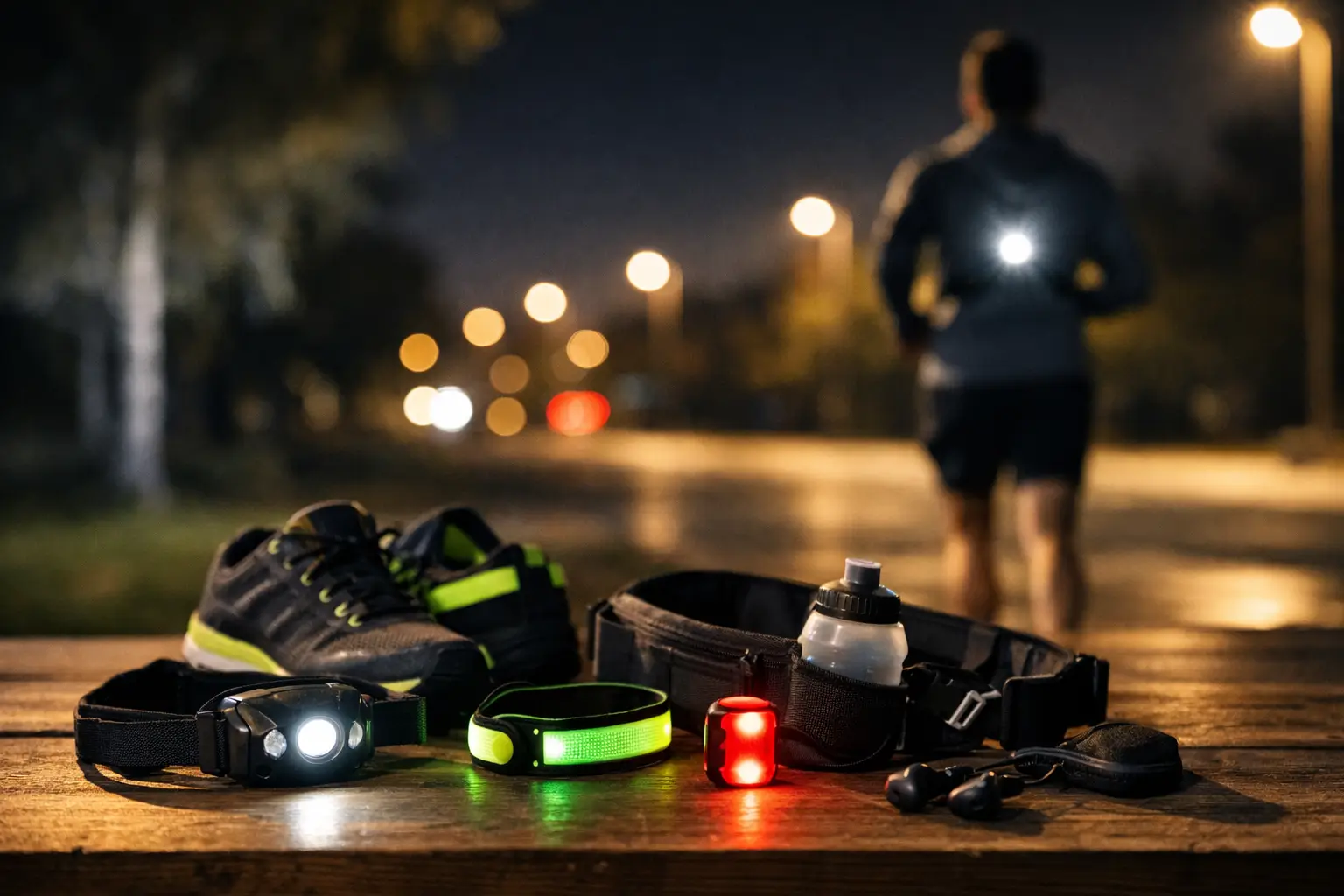
That stretch of road looks familiar in daylight. After dark, it is a different route entirely. Kerbs disappear, potholes show up late, and drivers have less time to spot you. A good night running safety gear guide is not about buying more kit for the sake of it. It is about choosing the right pieces so you stay visible, comfortable and focused without wasting money on gear that will not last.
For most runners, the safest setup is also the simplest. You need to be seen early, see clearly enough to react, and avoid small irritations that turn into bigger problems halfway through a run. If your gear does those three jobs well, your night miles become far more manageable.
What matters most in a night running safety gear guide
The mistake many runners make is treating all visibility gear as the same. It is not. Reflective gear helps others spot you when light hits it. Active lighting helps people see you even when there is no direct beam on your body. The best setup usually combines both.
That matters because night running conditions vary. In a well-lit town centre, reflective details may do more than enough. On a dim country lane or an unlit park path, passive visibility alone is not enough. You need your own light source, and you need it to be reliable.
Comfort matters just as much. If a vest bounces, a headlight slips, or a top traps sweat and chills you ten minutes later, you are less likely to wear that gear consistently. Reliable kit should earn a place in your routine, not live in a drawer after two uses.
Start with visibility, not style
If you run after dark, reflective elements should be your baseline. Reflective vest straps are a strong option because they sit over whatever you are already wearing and create movement patterns drivers recognise quickly. A moving reflective outline across the chest and shoulders tends to catch attention better than a small reflective logo on a sleeve.
Placement matters. Reflective details on the torso help from a distance, while reflective points on arms and legs add movement that makes you easier to read as a runner rather than a static object. That split second of recognition can make a real difference on roads, crossings and shared paths.
Bright colours can help in low light, but they are not a substitute for reflective materials. Neon yellow looks strong at dusk. In full darkness, it fades unless light hits it. That is why reflective gear is the smarter foundation.
There is a sustainability angle here too. Cross-functional gear that layers over existing kit is often the better buy than building a separate wardrobe just for dark runs. If one durable reflective piece works with your regular running clothing all year, that is better for your budget and better than churning through trend-led extras.
Choose lighting based on where you run
This is where a lot of runners overbuy or underbuy. A headlight is not automatically the best answer for everyone, and a chest light is not automatically enough. It depends on your route.
If you run on uneven ground, trails, canal paths or poorly maintained pavements, a rechargeable headlight gives you the best chance of spotting hazards early. Because the beam follows your gaze, you can check corners, kerbs and puddles before you step into them. That is especially useful in winter, when wet leaves, mud and broken surfaces can catch you out fast.
The trade-off is that some runners dislike the feel of a light on the head. If the fit is poor, it can bounce or feel tight by the end of a longer session. That is why adjustability and weight matter more than chasing the most powerful beam available. A light that is slightly less powerful but stable and comfortable is often the better choice.
LED chest lights solve a different problem. They tend to feel more balanced, and they can make you highly visible to traffic while still lighting the ground ahead. For steady road running, many runners find chest-mounted lights easier to forget about once they are on. The beam angle is lower, though, so they can be less helpful if you frequently need to scan further ahead or look around bends.
For some routes, the best answer is both. A chest light can improve how visible you are to others, while a headlight helps you read the surface more precisely. That is not essential for every runner, but it makes sense if you train on mixed routes or in very dark conditions.
Fit and stability are safety features
A piece of gear does not become safe just because the label says it is for night running. If it moves too much, distracts you or needs constant adjustment, it is creating friction when your attention should be on the road.
Headlights should sit securely without squeezing. Vest straps should adjust close to the body without restricting breathing or arm swing. Chest lights should stay put when your pace changes, not slap against your sternum every time you descend a hill.
That same logic applies to smaller items. No-tie elastic laces can make a surprising difference at night because they remove one small but annoying risk – stopping under poor lighting to deal with a loose lace. It sounds minor until you are on a cold run with numb fingers beside a road. Practical details matter because they reduce the number of things that can go wrong.
Do not ignore comfort in cold, wet or windy conditions
Night running is rarely just about darkness. It is often about darker, colder and wetter. That combination changes what counts as safe.
Sweat management matters because damp kit can cool rapidly once the temperature drops or the wind picks up. If you are shivering halfway through a run, your posture changes, your focus dips and your enjoyment usually disappears with it. Layering for conditions rather than piling on heavy clothing is usually the better move.
Chafing also becomes more likely on longer or wetter runs. Friction builds faster when clothing is damp, and discomfort can throw off your stride before you realise what is happening. A dependable anti-chafe product is not glamorous, but it is one of those small pieces of preparation that can protect a run from becoming miserable.
Again, this is where durable, purpose-built essentials beat fast-fashion sportswear. Night gear should work repeatedly in real conditions, not just look good under shop lighting.
Battery life and charging are part of the plan
A rechargeable light is only useful if you trust it to last. Before taking any lighting setup out regularly, get honest about your routine. Are you likely to charge after every run, or do you need a battery life that covers several sessions? There is no point choosing gear built for ideal habits if your real life is busier than that.
It is also worth checking how the light behaves as battery drains. Some lights hold a steady beam until they cut out. Others gradually dim. Knowing which type you have helps you avoid getting caught short on a route that suddenly feels much darker than it did twenty minutes earlier.
If you run before work or fit training around family life, convenience matters. Charging should be easy enough that you actually do it. Reliable gear is not only about performance specs. It is about whether the product supports consistent use.
Your route should influence your gear choices
A practical night running safety gear guide should say this clearly: there is no single perfect setup for every runner.
If you stay on lit pavements in busy areas, reflective straps and a compact active light may be plenty. If you run on unlit roads, you need stronger visibility from multiple angles. If your route includes trail sections, your priority shifts towards seeing the ground clearly and reacting quickly to terrain.
Pace also plays a part. Faster runners cover dark sections quicker and may need more confidence in what is ahead of them. Slower recovery runs can leave you exposed to cold for longer, which makes layering and comfort more important. Even the season changes the equation. A crisp autumn evening and a windy January night are not the same problem.
Buy less, choose better
There is a temptation to collect gear whenever conditions get harder. More often, the smart move is to build a small system of dependable pieces that work together. One stable light source, one strong reflective layer, comfortable clothing that handles sweat properly, and a few practical touches that prevent avoidable problems. That is enough for most runners.
This is where brands with a clear point of view matter. 4R backs the idea that performance gear should be reliable, affordable and made with more respect for the planet than disposable sportswear. That is a better standard to bring to night running too. Safety gear should not be throwaway kit.
The right gear will not make poor decisions safe. You still need route awareness, common sense and a willingness to adapt when conditions are rough. But when your kit is visible, secure and built to last, you remove a lot of avoidable risk.
If you run after dark, make your setup earn every mile. Choose gear you will actually wear, trust and keep using long after the novelty has worn off.