

Blog
How to Pick Running Visibility Gear for Safer Runs

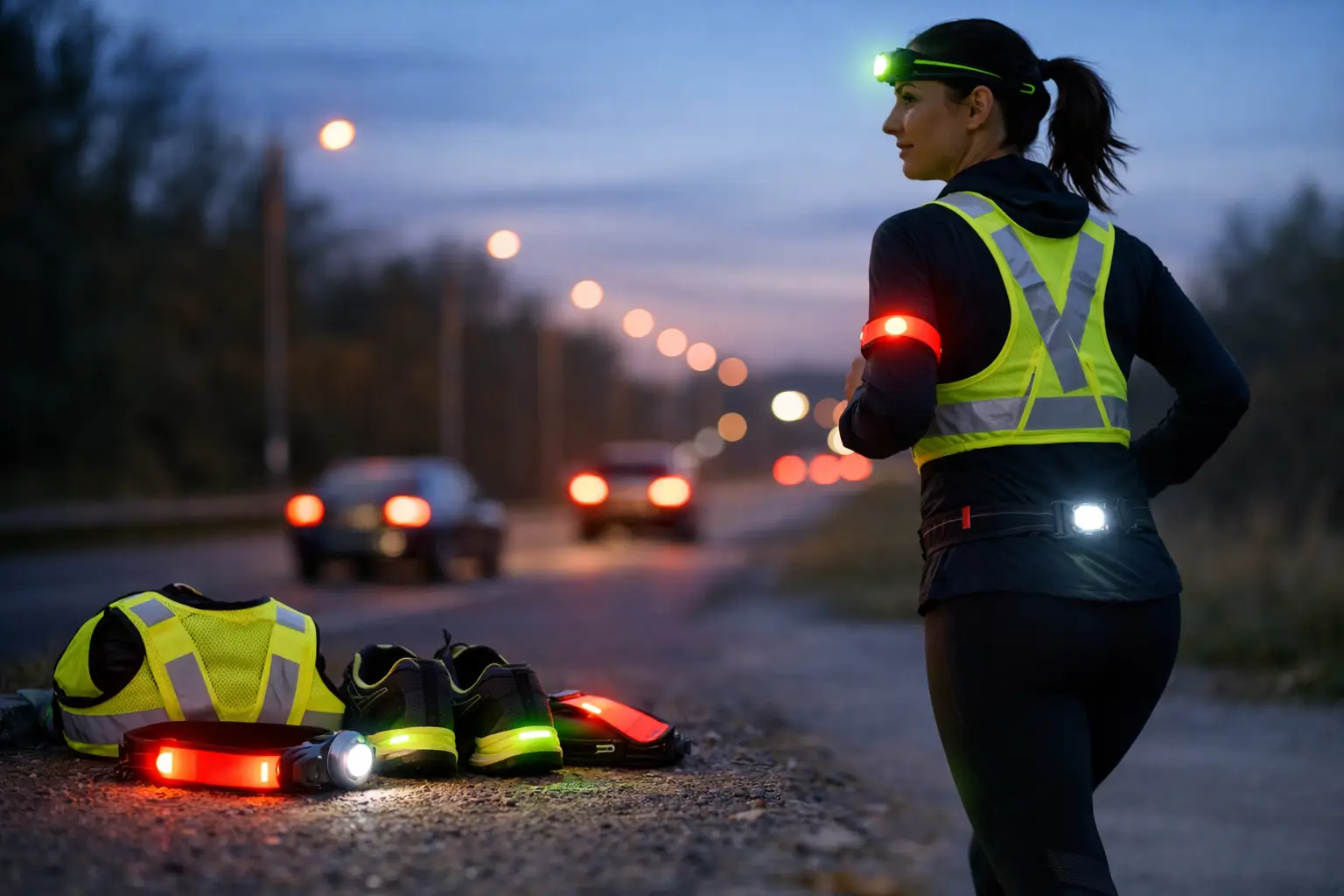
A dark run can feel like freedom – until a driver, cyclist or dog walker sees you a second too late. Knowing how to pick running visibility gear is not about piling on flashy accessories. It is about making sure you are noticed early, from the right angle, in the conditions you actually run in.
The best setup is usually simple: reflective details to return light, an active light to make you visible where there are no headlights, and enough illumination to see your footing when the route demands it. Buy for your regular run, not a one-off adventure, and choose durable kit you will genuinely wear.
Start with your route, not the product
A reflective vest can be brilliant on well-lit streets with passing traffic. It will do far less on an unlit canal path where nobody is shining headlights towards you. Before choosing anything, think about where and when you run.
A runner heading out before work on suburban roads has different needs from someone doing evening laps through a city park. Consider how much street lighting there is, how fast nearby traffic moves, whether you cross junctions, and whether cyclists share the path. Rain, fog and low winter sun can reduce contrast too, even before darkness arrives.
Ask one useful question: who needs to see me, and from how far away? Drivers approaching from behind need a clear view of your back. At crossings, you need to be visible side-on. On trails, you need light that helps you place your feet as well as signal your presence. One piece of gear rarely does every job perfectly.
Understand reflective, fluorescent and LED gear
These terms are often bundled together, but they solve different problems. Choosing well means knowing the difference.
Reflective material works when light hits it
Reflective strips, logos and straps bounce a vehicle’s headlights back towards the source. That makes them highly effective on roads, particularly in the dark. Look for reflective detailing on the front, back and sides of your body. Movement at the wrists, ankles and lower legs can also catch attention quickly because it is recognisably human movement.
The trade-off is straightforward: reflective gear does not create its own light. If you are on a poorly lit path without approaching traffic, it may not be enough on its own.
Fluorescent colours help in daylight and dull weather
High-visibility yellow, orange and pink stand out in grey daylight, drizzle and early morning gloom. They are useful when the light is flat but it is not fully dark. Fluorescent fabric loses much of its advantage at night, however. Treat it as a daytime visibility aid, not a replacement for reflectives or lights.
LEDs make you visible in darkness
An LED chest light, clip light or illuminated vest creates active light. This is especially useful on dark paths, in parks and on quiet roads. A white light facing forwards and a red light facing backwards follow the visual language other road users already understand.
Avoid assuming brighter is always better. An overly powerful or badly angled front light can dazzle oncoming runners, cyclists and drivers. The aim is to be seen clearly, not to turn every easy run into a search-and-rescue operation.
Pick the right light for seeing and being seen
A headtorch and a chest light may both use LEDs, but their main strengths differ. A headtorch directs light wherever you look. That is helpful on uneven ground, poorly lit trails and routes with kerbs, roots or potholes. It can also bounce around with your stride, and some runners find that movement distracting.
A chest-mounted light sits lower and often gives a steadier view of the ground immediately ahead. It can make surface texture and changes in terrain easier to judge. For off-road running, some people prefer a chest light, while others choose a headtorch for the ability to look around corners and read signs. It depends on comfort, route and pace.
For road running, visibility to others is often the priority. A rear red light or reflective vest straps can make more difference than a high-output beam aimed at the pavement. If you run on both road and trail, use a combination rather than expecting one device to cover every condition.
Check the light modes before buying. A steady setting can be easier for others to track, while a flash mode may catch attention in busy urban areas. Use flashing modes thoughtfully around shared paths, where rapid strobing can be irritating or disorientating. A light with easy controls matters more than a long menu of modes you will never use.
How to pick running visibility gear that stays comfortable
The safest kit is the kit you put on every time. If a vest rides up, straps rub your neck or a headtorch feels heavy after twenty minutes, it will end up in a drawer.
Choose adjustable gear that can sit securely over a T-shirt in summer and a running jacket in winter. Vest straps should lie flat without restricting your arm swing or breathing. If you carry a running pack, test whether the straps can sit over it without twisting, covering reflective sections or creating pressure points.
Weight matters, but balance matters more. A light that is technically lightweight can still feel awkward if it bounces. Look for a stable fit, a low-profile shape and a simple adjustment system you can use with cold hands. For longer runs, a rechargeable battery saves on disposable cells and reduces the small but needless waste that comes with replacing them.
Also consider weather resistance. Your visibility gear should cope with sweat, rain and the occasional downpour. That does not mean every item must be built for extreme conditions, but a light that fails after a wet commute or a vest that loses shape quickly is poor value and poor use of materials.
Make sure you can be seen from every angle
Many runners focus on their front because that is what they see in the mirror. Traffic does not. You need visibility across your whole outline.
Think in three directions: front, rear and side. A forward-facing white light helps pedestrians and oncoming traffic see you. Rear red illumination and reflectives matter for vehicles coming from behind. Side visibility is crucial at junctions, driveways and crossings, where a driver may only see you briefly from the corner of their vision.
A practical setup for many road runners is reflective vest straps over a visible top, plus a rear light when it is dark. Add a front light if the pavement is uneven or the route is unlit. For trails, pair active lighting for the ground ahead with reflective details that help others spot you from a distance.
Do not rely on a phone torch in your hand. It occupies one hand, gives an inconsistent beam and is easy to forget. Nor should visibility gear replace road awareness. Make eye contact where possible, slow down at blind junctions, and assume a driver has not seen you until their actions show otherwise.
Buy less, choose better
Visibility gear does not need to become another pile of single-purpose kit. A few reliable pieces, used across seasons, are more useful than several cheap items that fade, fail or feel uncomfortable. Prioritise rechargeable lights, hard-wearing reflective materials and adjustable designs that work over different layers.
Care extends the life of what you own. Wipe lights dry after wet runs, charge them before they are fully depleted, and check straps and clips for wear. Wash reflective clothing according to its care label, avoiding harsh treatment that can shorten the life of technical finishes. A quick battery check before you leave is far better than discovering a dead light halfway through a winter run.
There is no prize for owning the most gear. The right choice is the one that suits your route, stays comfortable at your pace and makes you visible without creating more waste. Choose it with purpose, charge it, wear it, and give yourself one less thing to worry about when the light fades.