

Blog
How to Wear Reflective Straps for Safer Runs

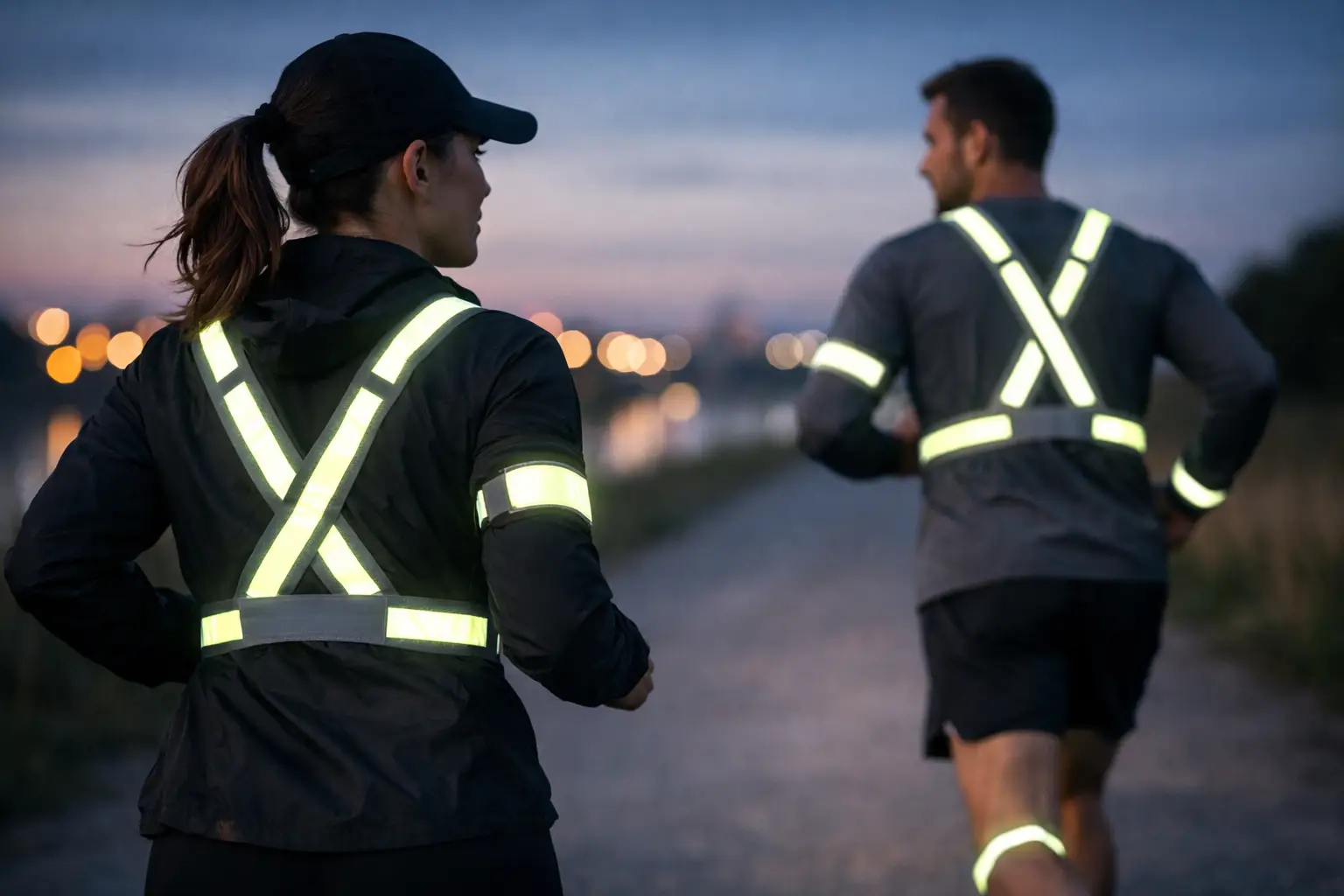
A reflective strap that twists, slides or disappears beneath your jacket is not doing its job. Knowing how to wear reflective straps properly takes seconds, yet it can make a real difference when you run before sunrise, after work or through a dimly lit park.
The aim is simple: create clear, moving points of reflection that help other road and path users notice you sooner. Fit matters. Placement matters. And while reflective gear is a smart layer of protection, it works best alongside sensible route choices, awareness and a proper running light when conditions call for one.
Start with the right fit
Reflective straps should feel secure without restricting your breathing, arm swing or posture. If you are constantly tugging at them, they are either too loose, badly positioned or being worn over the wrong layer.
For a reflective vest-style strap, put it on over your running top or outer layer, then adjust the waist and shoulder sections until the fit is close to the body. You should be able to take a full breath and move your arms freely, but the straps should not bounce with every stride. Check that the front and back panels sit flat rather than riding up towards your neck.
If you are wearing individual reflective bands on your arms or ankles, make them snug enough to stay in place without leaving deep marks in the skin. A quick test before heading out: jog on the spot, swing your arms and lift your knees. Any strap that immediately shifts will become annoying several kilometres later.
How to wear reflective straps over running layers
Wear reflective straps on the outside of your clothing. That sounds obvious, but it is easy to cover a shoulder strap with a gilet, hide a waist band under a waterproof jacket, or obscure the back with a running pack.
In mild weather, straps can sit directly over a T-shirt, long-sleeve top or lightweight running jacket. In winter, adjust them over your warmer outer layer instead of trying to squeeze into yesterday’s setting. Bulky clothing changes the fit, and an overly tight harness can feel restrictive once you settle into your pace.
If rain is expected, reflective straps are usually a better choice than relying only on reflective details printed onto clothing. A visible strap worn over a waterproof shell remains easier to spot, provided it is kept clean and flat. Still, check the product instructions before repeated washing or exposure to heavy weather.
Running with a backpack needs a little more thought. Put the pack on first, then wear a compatible reflective strap system over it if it can sit securely. If your pack covers the reflective area on your back, add reflective bands to your arms or ankles and use a rear-facing light. Do not assume a small strip on a shoe or jacket is enough to make you visible from every angle.
Place reflection where movement is easiest to see
A reflective vest or harness makes your torso more noticeable from the front and back. Arm and ankle straps add movement, which can help a driver, cyclist or other runner recognise that the person ahead is moving.
For the strongest everyday set-up, use a torso strap plus reflective bands on moving limbs. You do not need to cover yourself in kit. You need visible reflection in the places other people are most likely to see you.
Think about the route, too. On a pavement beside traffic, make sure you are visible from the road-facing side. On shared paths, visibility from the front and back matters most. If you run country lanes, crossings or routes with bends, give yourself more than one form of visibility. Reflective material only shines when light hits it, so it cannot replace a headtorch or chest light in unlit conditions.
Keep the straps flat and unobstructed
A twisted strap has less reflective surface facing outward. Before you leave, run a hand along each section and straighten it. Make sure your hair, hood, scarf, hydration vest, phone armband or jacket collar is not covering the material.
This is particularly useful with chest straps. Position the front reflective section high enough to remain visible above a jacket zip and low enough to avoid rubbing your throat. At the back, centre the reflective section between your shoulder blades where possible. If it sits too low, it may be hidden by a waistband, pack or long top.
Use reflective straps with lights, not instead of them
Reflection and active lighting do different jobs. Reflective straps return light from a car, bike or streetlamp towards its source. A running light creates its own light, helping you see the ground and helping others spot you where there is little or no external illumination.
For urban runs with regular street lighting, reflective straps may be a practical core layer, especially when paired with bright clothing. For dark towpaths, woodland trails, country roads or winter mornings, add a reliable headtorch or chest light. A front light helps you read uneven ground, puddles and kerbs; a rear light can make your position clearer to traffic approaching from behind.
Avoid setting a light so high or so bright that it shines directly into the eyes of oncoming runners and cyclists. Angle it towards the ground ahead. You want to be seen without making the route worse for everyone else using it.
Adjust for comfort before the run gets serious
The best time to fix chafing is before the first kilometre. Reflective straps can rub where they cross bare skin, especially in warm weather or over a vest. Wear them over fabric wherever possible, and make small adjustments until the edges sit away from the neck and underarms.
If a harness has adjustable buckles, keep the loose ends tidy. Long ends can flap, catch on a jacket zip or become a constant distraction. On longer runs, the straps may feel different once you are sweating or once your outer layer is damp, so choose a fit that is stable rather than aggressively tight.
There is a trade-off with every layer. A lightweight reflective harness is easy to carry and works over different outfits, but it may offer less coverage than a fully reflective jacket. A jacket gives more surface area, but it can be too warm for a fast session or a mild evening. Durable, cross-functional gear earns its place when you can use it across seasons rather than buying a separate disposable outfit for every forecast.
Check your visibility at home
You do not need specialist equipment to test whether your straps are positioned well. In a dark hallway, garden or quiet outdoor space, ask someone to shine a torch or bicycle light towards you from the front, side and back. Move your arms and jog gently in place.
Look for obvious reflective areas rather than tiny flashes. If the straps are hidden, twisted or only visible from one direction, adjust them before your next run. This quick check is especially worthwhile when you change jackets, add a running pack or start wearing winter layers.
Care for reflective straps so they keep working
Dirt, road spray and body oils can dull reflective material over time. Wipe straps with a soft damp cloth after muddy or wet runs, then let them air dry away from direct heat. Do not leave them crumpled at the bottom of a kit bag for weeks.
Avoid harsh cleaners, fabric softener and high heat unless the care label specifically permits them. These can damage the coating, elastic or fastenings. Inspect the straps regularly for cracked reflective sections, stretched elastic, frayed stitching and buckles that no longer hold securely.
If the material no longer reflects clearly under a torch, or the fit cannot be adjusted to stop bouncing, it is time to replace it. Choosing well-made running essentials and looking after them is a more responsible approach than repeatedly buying cheap gear that fails after a season. That is the kind of practical, long-lasting thinking 4R stands for.
Common questions about reflective straps
Should reflective straps go over or under a jacket?
Over the jacket. Reflection needs an unobstructed view of approaching light, so placing straps under an outer layer removes most of their benefit.
Can I wear reflective straps in daylight?
Yes. They are light, simple and ready for a run that finishes later than planned. They will not add much visual impact in bright daylight, but there is no harm in keeping them on.
Are reflective straps enough for night running?
It depends on where you run. On well-lit streets, they are a useful visibility layer. In poorly lit areas, use reflective straps alongside a headtorch or chest light and make route choices that give you space and clear sightlines.
Your running gear should help you move with confidence, not leave you second-guessing every dark stretch of road. Fit your reflective straps well, keep them visible and pair them with the right light for the route ahead. Then get out there and make the miles count.