

Blog
Do Reflective Straps Really Work for Runners?

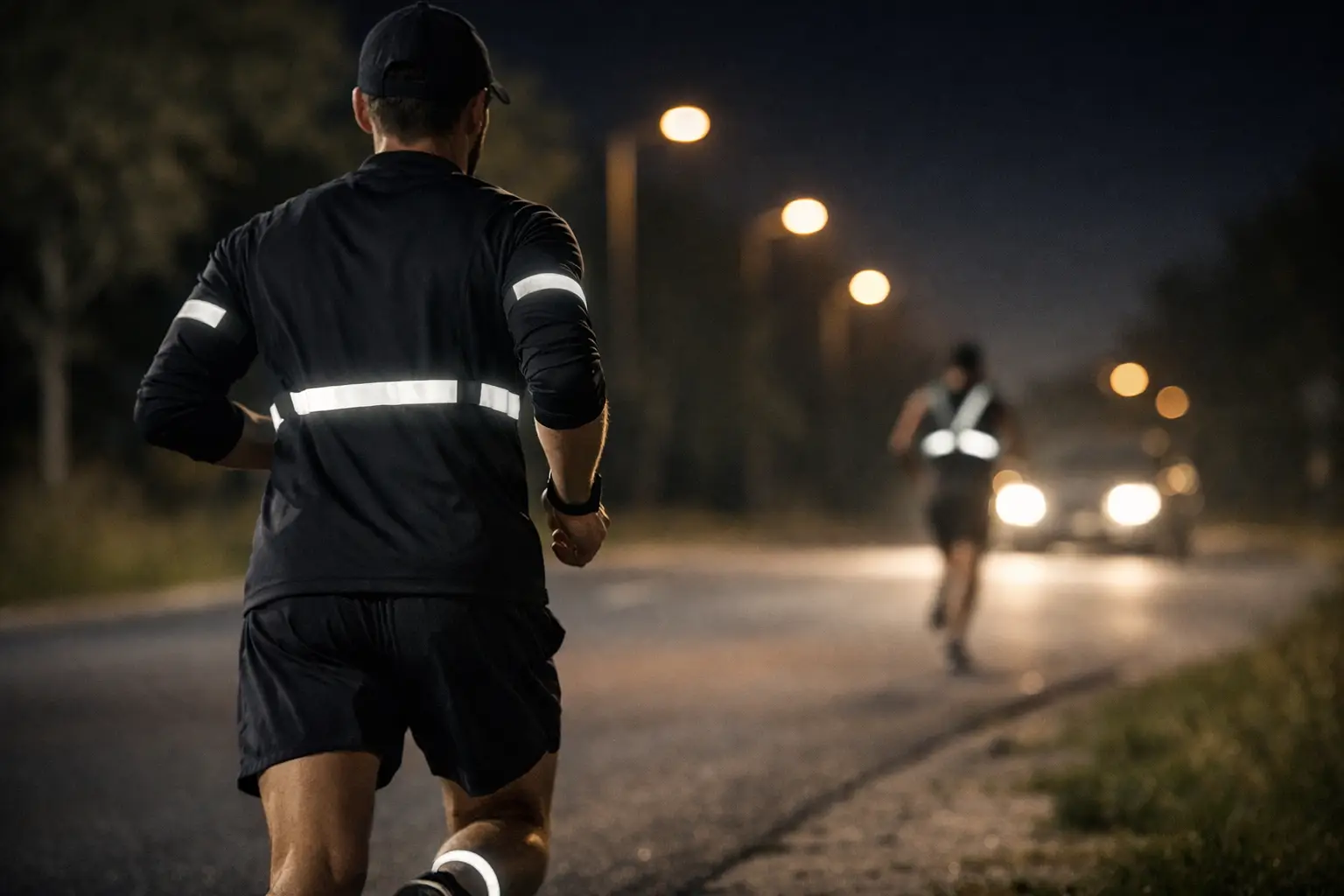
A driver rounds a bend on a wet, dark morning. Your black running kit may disappear into the road behind you, but a reflective strap catches their headlights and flashes bright white. That moment is why runners ask: do reflective straps really work? Yes, they can make a serious difference to how quickly you are noticed – but only when they are worn well and used as part of a sensible low-light setup.
Reflective straps are not magic, and they are not a substitute for paying attention around traffic. They are a simple, lightweight tool that helps put you in a driver’s line of sight. For early starts, evening miles and grey winter weather, that is a practical advantage worth having.
How reflective straps work
Reflective material is designed to send light back towards its source. When car headlights, a bike light or a streetlamp shines on the strap, its surface appears bright to the person holding that light source.
That is different from a bright-coloured running top. Neon yellow, orange and pink can stand out brilliantly in daylight and at dusk, but they need some available light to be seen. Reflective details become most useful when darkness sets in and vehicle headlights are doing the illuminating.
A reflective running strap also creates movement. As your arms swing and your legs turn over, flashes of reflected light move with you. Humans are very good at spotting movement, particularly when the rest of the road scene is still and dark. Straps placed around the chest, waist, ankles or arms can therefore make your outline easier to recognise as a person rather than an unidentified bright spot.
Do reflective straps really work in real running conditions?
They work best when a vehicle’s headlights are pointed towards you. On an unlit lane, a reflective strap can be far more noticeable to an approaching driver than dark clothing alone. It gives them a clearer visual cue sooner, which gives them more time to slow down, move over and pass with care.
The benefit is strongest on routes where you share space with traffic: country roads without pavements, suburban roads, crossings, car parks and the final stretch home after sunset. They are also useful around cyclists, although cyclists need their own light source for reflective material to shine brightly.
There are limits. Reflective gear does not produce its own light. A driver without headlights, someone looking away from the road, or a vehicle approaching from an unexpected angle may not see the reflection straight away. Heavy rain, fog and dirty reflective surfaces can reduce its impact too.
That does not mean reflective straps are ineffective. It means they should be treated as one part of being visible, rather than the whole plan. If you run after dark, adding an active light is the smarter call.
Reflective straps versus lights
Reflective straps are passive. They need an outside light source. LED chest lights, clip lights and head torches are active, producing their own light so you can be seen even before a vehicle is close enough for its headlights to hit your kit.
For many runners, the strongest combination is both. Wear a reflective strap or vest so headlights pick up your moving body shape, then use a front-facing or chest-mounted light to make yourself visible from further away. If your route is poorly lit, a head torch also helps you see uneven pavement, puddles, roots and dropped kerbs.
The trade-off is comfort and charging. Lights need battery power, and badly placed lights can bounce, glare or feel distracting. Reflective straps weigh very little, take no charging and can sit over the running clothes you already own. That makes them an easy habit, especially when daylight fades faster than expected.
Think of active lighting as your signal and reflective material as your backup response. One announces that you are there. The other becomes highly visible when a driver’s lights reach you.
Where you wear reflective straps matters
A small reflective patch hidden beneath a loose jacket or covered by a running backpack cannot do much. Position matters as much as the material itself.
Chest and torso straps tend to be effective because they sit high on the body and are visible from the front and rear. Adjustable reflective vest straps can give you a recognisable human outline while leaving your normal running layers unrestricted. That is useful in the UK, where one run can start cold, turn wet and end surprisingly mild.
Ankle and wrist straps bring movement into play. They can be particularly noticeable at junctions and crossings because the regular rhythm of your stride is easy to spot. They are a worthwhile addition, but they should not be your only reflective detail. Lower-body straps can be obscured by parked cars, hedges, road spray or your own running motion.
Aim for visible detail on more than one area of the body. Front, back and sides all matter, particularly if your route includes bends, roundabouts or shared paths where people may approach from different directions.
What can reduce their effectiveness?
Even excellent reflective material needs basic care. Road grime, mud and salt can dull the surface, while repeated harsh washing can wear it down over time. Wipe straps clean after a muddy run and let them dry fully before stuffing them into a kit bag.
Fit is another factor. A strap that twists, slips under your jacket or bounces around your torso will be less visible and more annoying. You should be able to breathe freely, swing your arms naturally and add or remove a layer without a lengthy adjustment session at the kerb.
Be realistic about your surroundings too. Streetlights can create visual clutter, while bright shop fronts and vehicle lights compete for attention. On these routes, reflective straps still help, but a small active light becomes even more valuable. In rain or fog, slow down, choose quieter roads where possible and assume that others may see you later than you would like.
How to build a safer low-light running setup
Start with the route, not the outfit. A well-lit pavement or traffic-free path is usually a better choice than a narrow road with fast-moving cars. Tell someone where you are going if you are heading out alone, keep your music low enough to hear what is around you and avoid crossing between parked vehicles.
Then layer your visibility. Wear reflective straps over your outermost layer so they are not hidden. Add a light for darkness, especially on roads without consistent lighting. In daytime rain, dawn or dusk, choose a brighter top as well, because reflective material is not at its best without direct light.
Before you leave, take ten seconds to check your gear. Is the reflective surface clean? Is the strap snug but comfortable? Is your light charged? These small checks are far more useful than buying a drawer full of accessories that never make it out of the house.
Choose gear you will actually wear
The best safety kit is the kit that survives regular use. A complicated vest that chafes, overheats or takes ages to adjust will soon stay at home. Look for lightweight, adjustable straps that sit securely over a T-shirt, a winter running jacket or a hydration layer.
Durability matters for more than your budget. Buying one dependable piece of running gear and using it season after season is a better answer than replacing flimsy accessories every few months. Useful, long-lasting kit keeps waste down while supporting the miles you want to run.
Reflective straps work because they turn a driver’s headlights into a clear signal: a runner is here. Wear them visibly, pair them with active lighting when darkness demands it, and give yourself every reasonable chance to be noticed before the road gets close.