

Blog
What Running Clothes Reduce Chafing Best?

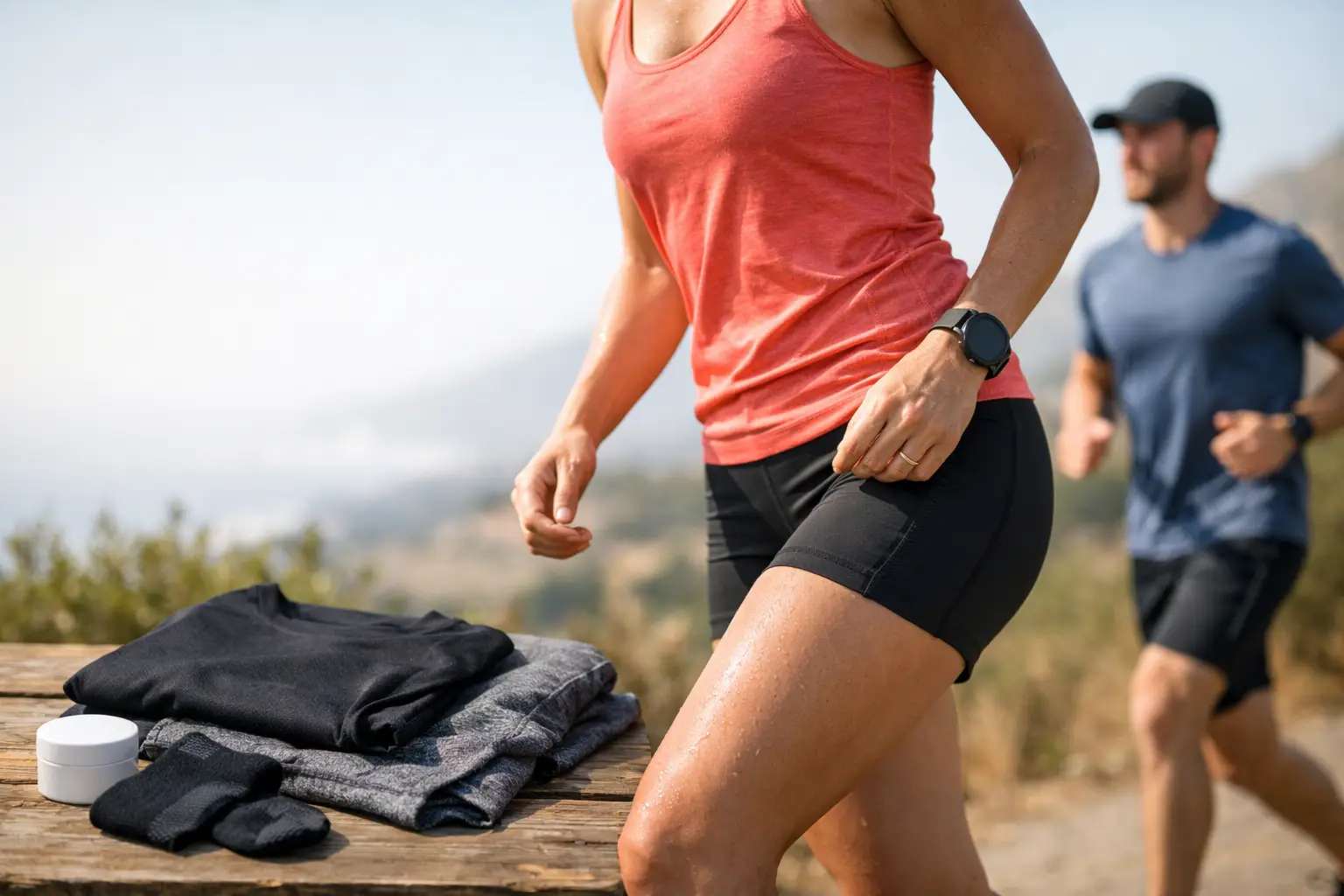
A run can feel brilliant until one small area starts burning. By the time you notice a rubbing waistband, a damp sports bra band or shorts creeping up your thighs, the skin is already irritated. The answer to what running clothes reduce chafing is not simply buying more kit. It is choosing fewer, better-fitting pieces that manage sweat, move with you and keep their shape mile after mile.
Chafing happens where heat, moisture, friction and repeated movement meet. Your clothes should reduce at least three of those forces. That means fabric matters, but fit, construction and the way you layer matter just as much.
What running clothes reduce chafing?
The most reliable anti-chafe running clothes are close-fitting without being restrictive, made from moisture-wicking technical fabric, and finished with low-friction seams. Think running tights or fitted shorts that stay in place, a supportive sports bra with a smooth underband, technical socks, and a lightweight top that does not bunch beneath a vest or jacket.
Loose cotton clothing is usually the wrong choice for running. Cotton absorbs sweat and holds on to it, becoming heavy and abrasive as you warm up. A baggy T-shirt can also rub under the arms, while ordinary underwear can shift, trap moisture and create friction exactly where you do not want it.
Synthetic performance fabrics such as recycled polyester, nylon and elastane blends are common for good reason. They pull moisture away from the skin, dry more quickly and offer enough stretch to follow your stride. Merino blends can work well in cooler conditions too, especially for socks and base layers, because they handle moisture and temperature well. The trade-off is that some runners find merino less durable in high-friction areas, while tightly woven synthetics can feel warmer on humid days.
The goal is not one miracle fabric. It is a dependable system that suits your body, your route and the weather.
Start with the areas that rub most
Every runner has their own trouble spots. For some, it is inner thighs on longer runs. For others, it is under the arms, around the waistband, beneath a sports bra or at the heel and toes. Identify where chafing starts and choose clothing for that specific area rather than hoping a generic running outfit will solve everything.
Shorts and tights that stay put
For inner-thigh chafing, longer fitted shorts or running tights are usually the strongest option. Look for a length that fully covers the area where your thighs meet and a fabric with enough elastane to hold its position. If shorts ride up within the first kilometre, they are unlikely to improve after an hour of sweat and movement.
A wide, secure waistband also helps. It should sit flat against your body without digging in or rolling over. Drawcords are useful if you find waistbands slipping as you run, but they should be soft and positioned so they do not create a pressure point.
Avoid bulky inner seams in the gusset and thigh area. Flatlock seams, where the fabric edges are joined flat rather than overlapping, are a better choice for high-movement clothing. Some runners prefer a built-in liner; others find a separate pair of fitted running underwear more comfortable. It depends on the cut, your anatomy and how far you are running. Test the combination on a short session before committing to it for a race or long run.
A sports bra built for movement, not just support
A good running sports bra should limit bounce, but anti-chafe comfort deserves equal attention. Check the underband first. It needs to be firm enough to stay in place, with a soft surface against the skin and no exposed edge that can rub when wet.
Look at the straps, too. Narrow straps can concentrate pressure on the shoulders, while poorly placed adjusters may rub under a vest or hydration pack. A smooth back panel is often more comfortable for runners who carry gear. If you are between sizes, do not assume tighter is better. A bra that feels secure standing still can become painful once your ribcage expands with hard effort.
Wash sports bras after sweaty runs and retire them when the elastic no longer recovers. A stretched-out underband moves more, and movement creates friction.
Running tops with a clean fit
Your running top should skim the body rather than cling like a second skin or flap in the wind. Too tight can restrict movement and pull at the underarms. Too loose can rub at the chest, nipples and armholes, particularly when wet.
For warm conditions, choose a lightweight technical T-shirt or vest with smooth arm openings. For colder runs, use a fitted, breathable base layer beneath a jacket rather than piling on loose layers. Every extra fold of fabric is another chance for rubbing.
Men who experience nipple chafing should pay close attention to shirt fabric and fit. A close-fitting technical top can reduce movement, but for long distances, rain or heavy sweating, clothing alone may not be enough. Anti-chafe balm or protective patches are practical additions, not signs that you have chosen the wrong kit.
Socks and underwear are not minor details
Ordinary cotton socks are one of the fastest routes to blisters. Running socks should wick moisture, fit securely around the heel and arch, and have minimal bulk at the toe seam. The right thickness depends on your shoes and conditions. A thicker sock may cushion better in winter, but it can make a snug shoe too tight and increase toe friction.
Underwear deserves the same attention. Choose a close-fitting style made for sport, with soft edges and a construction that does not bunch. If your running shorts already have a comfortable liner, adding underwear can create unnecessary layers. If the liner rubs, switch to unlined shorts with running underwear instead. There is no universal rule, only the setup that stays comfortable through your full run.
Fit before fabric, every time
Premium fabric cannot rescue poor fit. Try running clothing with the movements you actually make: jog on the spot, lift your knees, bend, swing your arms and check where seams sit. A waistband that feels fine in a changing room may roll the moment you start climbing hills.
Pay attention to compression, too. Mild compression can reduce fabric movement and support muscles, which many runners enjoy. But overly tight gear can trap heat, pinch at seams and make sweat feel more irritating. The best anti-chafe fit is stable, not squeezed.
Sizing can also change across brands and cuts. Use measurements rather than relying only on the size you usually buy. When you find a style that works, it is often worth choosing another pair in a different colour rather than gambling on several cheap alternatives that will end up unworn.
Match your layers to the conditions
Rain, heat and long-distance running expose weak clothing choices quickly. In wet weather, choose fabrics that dry fast and avoid heavy layers that hold water against your skin. A rain shell should be breathable enough to release heat, with a collar and cuffs that do not scrape when you move.
In hot weather, lighter is not always better. An ultra-thin top that clings to sweaty skin can rub more than a slightly more structured technical fabric. Test it on a humid run, not just a dry five-kilometre jog. For winter, use moisture-wicking base layers next to the skin and keep rougher fleece or outer fabrics away from high-friction areas.
If you run with a hydration vest, reflective straps or a chest light, make sure the clothing underneath is smooth and fitted. Gear that bounces against a loose shirt can cause chafing at the shoulders, chest and lower back. Adjust straps before you set off, then make a quick check after the first few minutes.
Make your kit last longer and work harder
Buying durable running clothing is better for your skin and better than treating sportswear as disposable fashion. A well-made pair of tights or shorts that keeps its stretch, shape and smooth finish through regular use will serve you far better than a drawer full of unreliable options.
Wash technical kit promptly after sweaty runs, ideally inside out on a cool cycle. Skip fabric softener, which can coat fibres and reduce their ability to move moisture. Air-dry where possible, as high heat can damage elastane and shorten the life of fitted garments. Check seams, waistbands and bra bands regularly. When the fabric becomes rough, thin or permanently stretched, it may be time to replace that one hard-working piece.
At 4R, we believe practical running gear should support your performance without feeding a throwaway culture. Choose clothing you will reach for repeatedly, care for properly and trust when the miles get longer.
The best anti-chafe outfit is the one you stop noticing after the first mile. Start with one friction point, solve it with a stable, sweat-managing layer, and give that choice a proper road test. Comfortable running is not a luxury. It is what lets you keep showing up.