

Blog
10 Best Accessories for New Runners That Last

Your first few runs can make small problems feel enormous. A rubbing seam, loose laces or a dark path can turn a positive habit into an easy excuse to stop. The best accessories for new runners are not flashy extras. They solve real problems, help you feel confident outside and earn a place in your kit week after week.
You do not need to buy everything at once. Start with the issues you are most likely to face: discomfort, poor visibility, unpredictable weather and the practical challenge of carrying what you need. Choose durable gear with a clear purpose, then add to it as your running routine grows.
1. Anti-chafe balm for comfortable miles
Chafing is one of those running problems nobody mentions until it happens. It can affect thighs, underarms, bra lines, nipples, feet or anywhere skin and fabric repeatedly rub together. Once your skin is irritated, even a short easy run becomes unpleasant.
A good anti-chafe balm creates a protective barrier before you set off. Apply it to known hot spots, especially when wearing new shorts, running in warm weather or heading out for longer than usual. It is a small product with an outsized effect on comfort.
Do not wait for a painful run to prove you need it. Prevention is simpler than recovery, and a compact balm belongs in any beginner runner’s cupboard.
2. No-tie elastic laces for a secure fit
Shoelaces sound minor until you are stopping mid-run to retie them, trying to fix pressure across the top of your foot or dealing with a loose heel. No-tie elastic laces offer a practical answer. Once adjusted, they provide consistent tension and let you slip your shoes on and off without starting from scratch.
They can be particularly useful if you struggle to find a comfortable lace pattern, have limited hand mobility or simply want fewer interruptions. The trade-off is that the initial set-up takes a little patience. Adjust both shoes while standing, walk around indoors, and make small changes before committing to a run.
Elastic laces will not rescue shoes that fit badly. Your running shoes still need enough room in the toe box, a secure heel and a shape that suits your foot. But on the right pair, they make getting out of the door easier.
3. Reflective vest straps for everyday visibility
Most new runners fit sessions around work, family and real life. That often means early mornings, winter afternoons or evenings when the light disappears faster than expected. Reflective vest straps help drivers, cyclists and other road users spot you sooner.
Unlike a bulky extra layer, adjustable reflective straps sit over your existing running top or jacket. That makes them useful across seasons and avoids buying a separate high-visibility outfit for every temperature. Look for an adjustable fit that stays comfortable over both a T-shirt and warmer layers.
Reflective gear works by returning light from headlights and street lamps. It is valuable, but it does not make you visible in complete darkness on its own. Pair it with an active light when routes are poorly lit.
4. A rechargeable headtorch for seeing the route
A light is not only about being seen. It is about seeing where you are placing your feet. Uneven pavements, tree roots, kerbs and potholes become much harder to judge after dark, particularly when you are new to running and still building confidence in your stride.
A rechargeable headtorch keeps your hands free and points light where you look. It suits towpaths, parks, country lanes and any route without reliable street lighting. Choose a model that feels stable rather than heavy, with simple controls you can operate in gloves.
Battery life matters more than maximum brightness for many runners. A very powerful beam is useful on truly dark trails, but for urban routes a steady, dependable setting is usually the smarter choice. Charge it after use rather than discovering an empty battery five minutes before your run.
5. An LED chest light for forward-facing visibility
Some runners prefer an LED chest light to a headtorch. A chest-mounted light can feel more balanced and may reduce the bounce or pressure some people notice around their forehead. It also puts a bright, visible light at torso level, helping you stand out to oncoming traffic.
There is no universal winner between head and chest lights. A headtorch follows your gaze, which is helpful when you need to check a turn or look towards the ground. A chest light offers a stable forward beam and can be an excellent option for road running. If you regularly run in very dark places, using active lighting alongside reflective straps gives you a stronger visibility set-up.
Whichever you choose, test the fit on an easy run first. A light that slips, pinches or swings is not a bargain, however bright it looks in the box.
6. Running socks that prevent blisters
Beginners often spend carefully on shoes, then wear whatever socks are in the drawer. That is a false economy. Cotton holds moisture and can increase friction, while badly fitting socks bunch up and create pressure points.
Running-specific socks are designed to manage moisture and stay put. You do not need a huge collection. Two or three dependable pairs will cover regular training, provided you wash and dry them properly. Choose the height based on your shoes, weather and personal preference, but make sure the cuff does not dig in and the heel sits where it should.
If you are getting repeated blisters, review the whole system: shoes, socks, lacing, moisture and distance. One accessory rarely fixes every cause.
7. A simple way to carry essentials
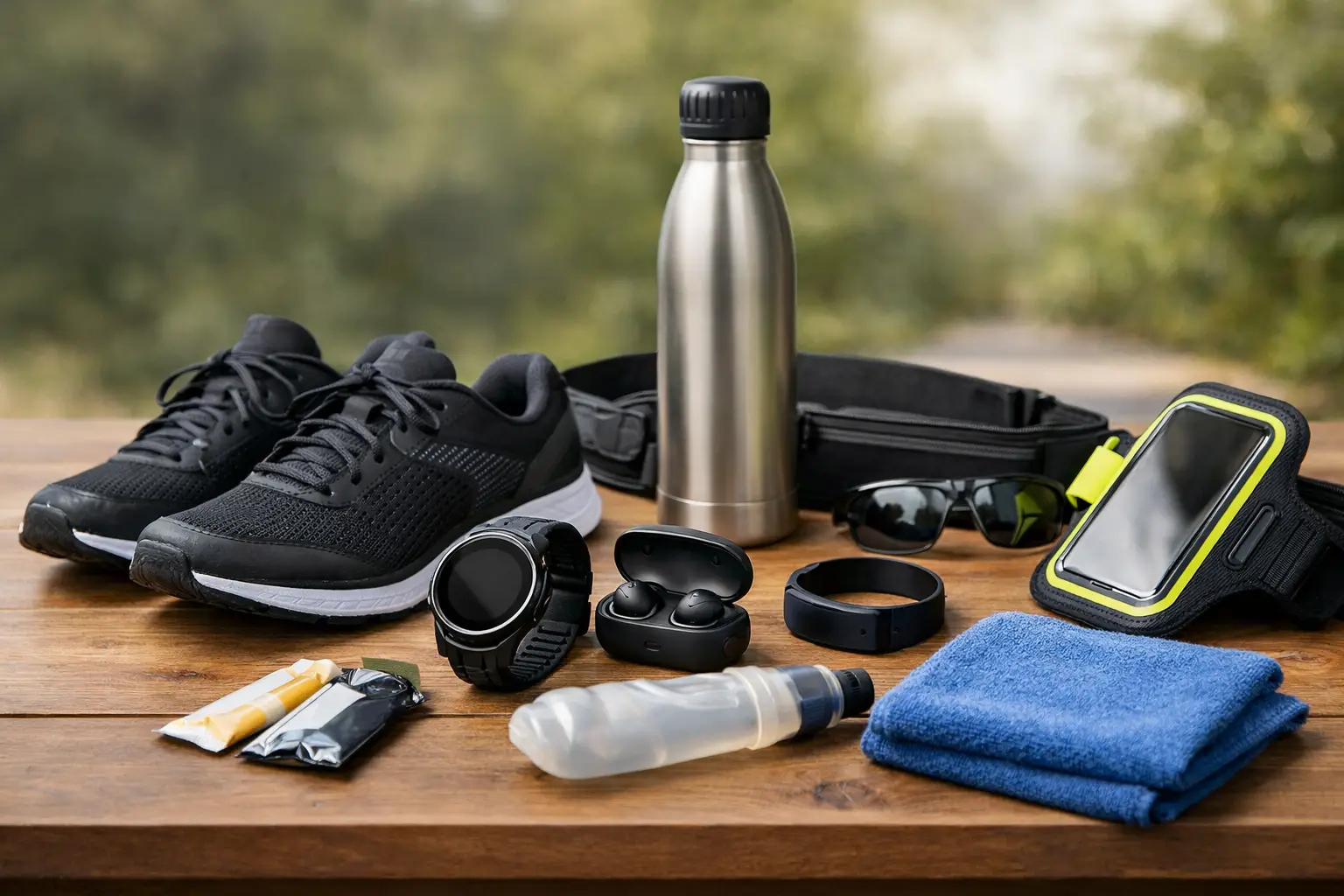
Even a 20-minute run may require a key, phone, card or inhaler. Trying to hold them changes how you run and makes an easy session needlessly irritating. A compact running belt, pocketed shorts or a lightweight armband can keep essentials secure without bouncing.
Keep the load honest. You do not need to carry a full survival kit around your local loop. For short runs, take only what you would genuinely need. For longer runs, hot weather or unfamiliar routes, add water and a little fuel if appropriate.
Before buying a belt, consider what your clothing already offers. A well-placed pocket may do the job, which means one less item to own. Buying less is not about going without. It is about choosing gear that genuinely works.
8. A reusable water bottle for warmer runs
Hydration needs depend on duration, temperature, pace and how much you sweat. For a short winter run near home, you may not need to carry water at all. For a longer summer session, a reusable bottle can be the difference between finishing comfortably and cutting the route short.
A soft flask or small handheld bottle suits many runners because it is light and easy to refill. If carrying a bottle annoys you, plan routes with water fountains or a stop at home. Avoid single-use bottles as your default whenever practical. A reusable option saves waste and gives you a reliable routine.
9. Weather-ready layers, not a pile of kit
Accessories can also mean the small additions that let your clothing work harder: gloves for cold starts, a light cap for rain or sun, and a neck tube for exposed routes. These are worthwhile when they solve a seasonal problem, not because a new runner is expected to look fully equipped.
Prioritise pieces that layer well, wash easily and last through repeated use. One durable pair of gloves will serve you better than several flimsy pairs that disappear after a few runs. That principle sits at the heart of responsible running kit: performance should not depend on disposable consumption.
How to choose the best accessories for new runners
Start with your actual route and routine. If you run before sunrise, visibility comes first. If your thighs chafe after two kilometres, comfort is the urgent issue. If you keep delaying runs because your laces come undone, solve that friction point before buying more clothing.
Choose accessories that are adjustable, rechargeable or reusable where possible. Look after them, too. Rinse sweat from lights and straps, let balm caps stay clean, dry shoes fully and inspect batteries before a dark run. Care extends product life and keeps reliable equipment out of the waste stream.
At 4R, the goal is simple: useful running gear should help you move more, not make you buy more. Build your kit slowly, choose products that earn their place, and let each comfortable, visible mile prove that you are capable of the next one.