

Blog
Best Reflective Gear for Runners

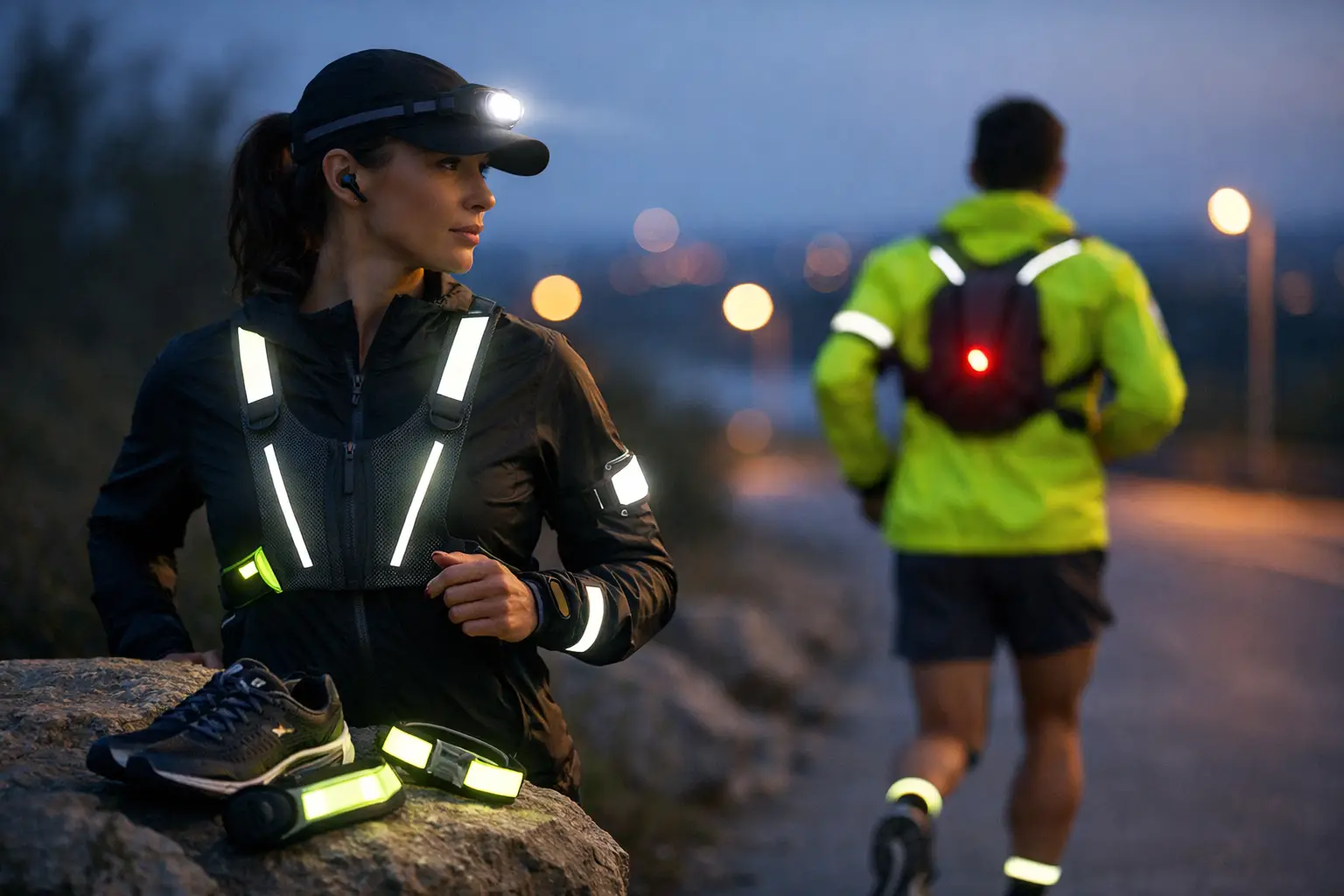
A black jacket on a wet road at 6am can make even a careful runner almost invisible. That is why choosing the best reflective gear for runners is not about chasing gadgets or buying more kit than you need. It is about being seen early, clearly and from the right angles, so drivers, cyclists and other pavement users have time to react.
The right setup also needs to work in the real world. It has to stay comfortable when you warm up, fit over the layers you already own, and survive more than a few winter runs. If your reflective gear bounces, slips, pinches or needs replacing every season, it is not doing the job properly.
What makes the best reflective gear for runners?
Reflective gear works by bouncing light back towards its source. That means it comes into its own when car headlights, street lighting or bike lamps hit it. On its own, though, reflective material is not the same as active lighting. If you run on dark country lanes, poorly lit paths or early starts before sunrise, reflectivity should usually be paired with LEDs or a proper running light.
That is the first trade-off to understand. Reflective strips are lightweight, low-maintenance and often enough in urban areas with regular traffic lighting. Active lights make you visible in darker conditions and help you see where you are going, but they need charging and can feel bulkier. For many runners, the best answer is not one or the other. It is a simple combination.
Placement matters too. Drivers do not just notice brightness. They notice movement. Reflective details on your chest, back, ankles and arms are more useful than a small patch hidden on one shoulder. Moving reflective points on the body help other road users recognise that you are a person in motion, not just a random glint at the side of the road.
Reflective vests and strap systems
For most runners, a reflective vest or strap harness is the smartest place to start. It sits over whatever you are wearing, works across seasons and gives broad visibility from the front and back without forcing you to buy a whole new wardrobe.
A good vest should feel adjustable rather than restrictive. You want enough structure for it to stay put, but not so much fabric that it traps heat or rubs over a base layer. Strap-style designs often suit runners who want minimal coverage and better airflow, especially during tempo runs or milder evenings. A more fabric-heavy reflective vest can offer a larger visible area, but it may feel sweaty in spring or autumn.
This is where durability becomes a big factor. Cheap fast-fashion running accessories often look fine out of the packet, then stretch out, fray or lose their reflective finish after repeated use. A better-made vest costs less in the long run because you are not replacing it every few months. That matters if you care about waste as much as performance.
LED chest lights and clip-on lights
If your routes include unlit sections, LED lighting earns its place quickly. Chest lights are especially useful because they throw light in the direction you are moving while making you more visible head-on. They can be a strong option for runners who dislike head torches or find them uncomfortable over hats and winter headbands.
Clip-on LEDs have their place as well, but they work best as support pieces rather than your only visibility tool. A small light clipped to a waistband, pocket or hydration vest can add extra movement and catch attention, yet it may not be high enough or bright enough to do the full job on its own.
The key question is battery reliability. Rechargeable lights are usually the better long-term choice over disposable battery models, both for convenience and for reducing waste. You do need to remember to charge them, of course, so if you are the sort of runner who decides to head out with ten minutes’ notice, choose a model with clear battery indicators and a straightforward charging routine.
Head torches for runners
Head torches divide opinion. Some runners swear by them. Others cannot wait to take them off. The reason is simple: they solve one problem brilliantly and create a few smaller ones.
The big advantage is visibility ahead. If you run on uneven towpaths, trails, country roads or dark park loops, a head torch helps you spot puddles, kerbs, roots and loose gravel before your foot lands. That is not just about being seen. It is about running with more confidence and less hesitation.
The downside is comfort. Poorly fitted head torches bounce, feel tight around the forehead and can become annoying over longer distances. They also direct light wherever your head turns, which is useful when scanning a path but less stable than a chest-mounted beam. If you mostly run in town under streetlights, a head torch may be more than you need. If you run in genuine darkness, it can be one of the best buys you make.
Reflective accessories that actually help
Not every reflective item deserves space in your kit drawer, but some smaller pieces pull more than their weight.
Reflective armbands and ankle bands work because they create visible movement. Ankles are especially effective since the repetitive running motion catches attention quickly. They are light, inexpensive and easy to use with clothes you already own. The drawback is coverage. On their own, they are not enough for darker roads.
Reflective gloves and hats can also add useful visibility in winter, though they are secondary pieces rather than your main line of defence. The same goes for reflective details on jackets, tights and trainers. They are worth having, but many garments only include small accents that look technical in product photos without offering much real-world visibility.
Reflective laces are one of the more underrated upgrades. They do not replace a vest or light, but they add motion low to the ground and work every time you lace up. For runners who want practical gains without buying excess gear, details like this make sense.
What to look for before you buy
The best reflective gear for runners should earn its keep on every run, not just the coldest or darkest ones. That means thinking beyond brightness.
Fit comes first. If gear chafes, rides up or feels awkward over your jacket, you will stop wearing it. Adjustability matters, especially if your kit changes between summer singlets and winter layers.
Weather resistance matters nearly as much. Rain, sweat and repeated washing test running gear fast. Reflective elements should hold up without peeling, and lights should cope with damp conditions without becoming unreliable.
Simplicity is another advantage. The more fiddly a product is, the less likely you are to use it consistently. A vest you can throw on in seconds beats a complicated system with awkward clips and straps every single time.
Finally, think about how often you run and where. A runner doing three urban 5Ks a week needs a different setup from someone training for a spring half marathon on dark rural roads. There is no universal perfect option. There is only the right level of visibility for your route, routine and comfort.
A practical setup for most runners
If you want a reliable answer without overcomplicating things, start with a reflective vest or strap system as your base. Add a rechargeable chest light or head torch if your route includes poorly lit stretches. Then layer in one or two smaller reflective accessories, such as ankle bands or reflective laces, to increase movement visibility.
That combination covers the essentials without pushing you towards disposable, single-use trends. It is a smarter way to buy kit: fewer items, better function, longer life. That approach sits well with how 4R sees running gear in the first place. Performance should not come at the cost of waste.
There is also a mindset shift here. Reflective gear is not just winter kit. Grey mornings, heavy rain, fog and shaded roads can all reduce visibility, even when it is not fully dark. If a piece of gear helps keep you seen across more of the year, it is probably worth having within easy reach.
The gear to skip
Some reflective running products look clever but solve very little. Tiny reflective patches hidden on the side of a sleeve, novelty flashing accessories with weak battery life, and poorly made vests that flap after two runs are easy to regret.
Be wary of anything that prioritises appearance over placement and function. Visibility is not about looking technical. It is about being noticed soon enough to stay safe. Durable, practical gear wins every time.
A good run starts before your first stride. When visibility is poor, the smartest choice is usually the simplest one: wear gear that gets you seen, stays comfortable and lasts well enough to become part of your routine rather than clutter at the back of a drawer.