

Blog
Best No Bounce Running Lights for Dark Runs

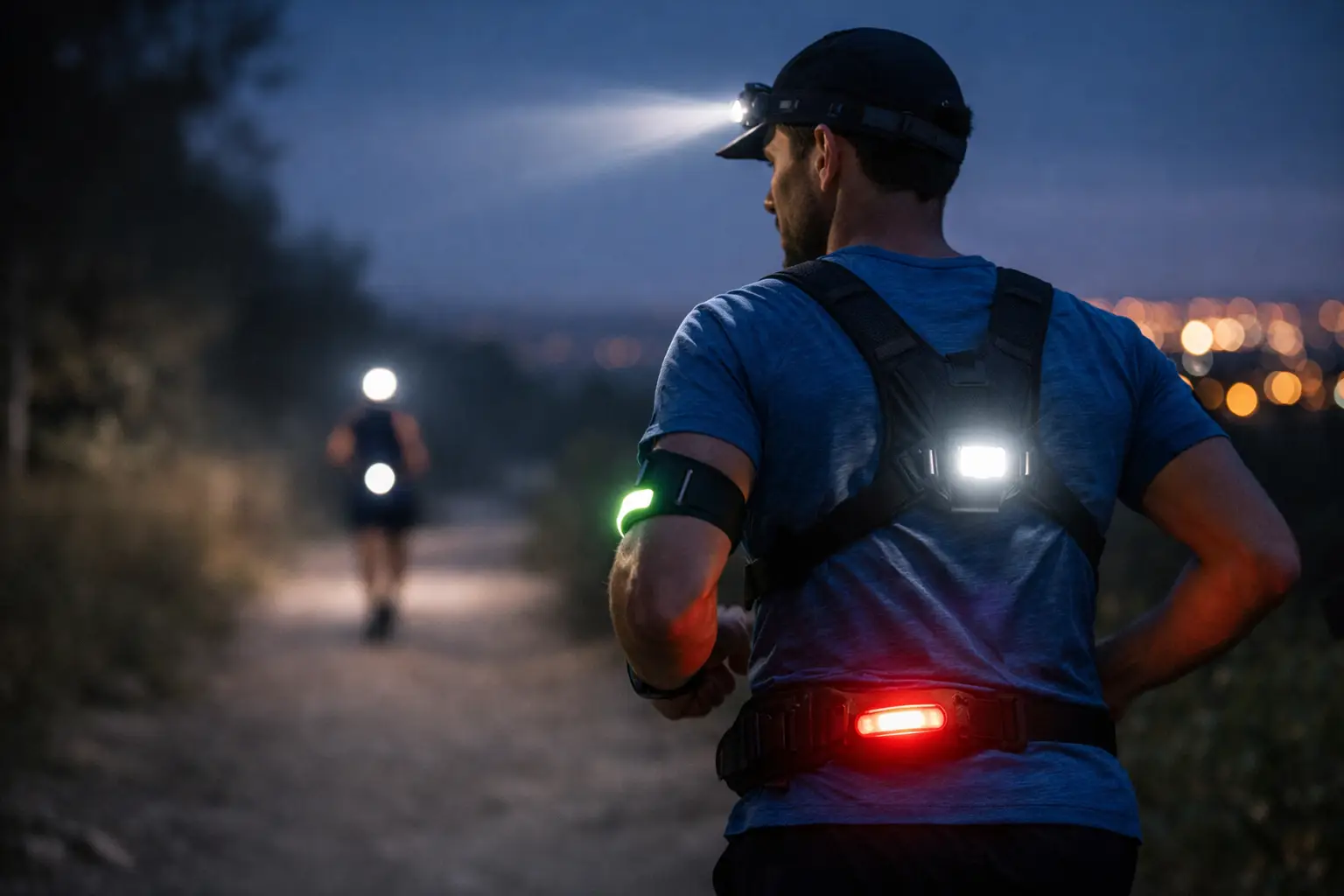
A light that skips against your chest, slides around your waist or pulls at your neck is not just annoying. It breaks your rhythm when you should be focused on the road ahead. The best no bounce running lights stay put through easy miles, hard efforts and wet-weather runs, helping you see clearly and be seen without adding distraction to your kit.
For most runners, the right answer is not simply the brightest light. It is the light you will genuinely wear. That means a secure fit, sensible weight, useful visibility and enough durability to keep it out of landfill after one season.
What makes a running light truly no bounce?
“No bounce” is often used as a shortcut for any wearable light, but fit is the deciding factor. A good running light moves with your body rather than fighting it. It should sit close to your torso, use adjustable straps that do not loosen as you run, and distribute its weight across more than one point.
A single heavy lamp attached to a narrow elastic band can feel fine when standing still. Add arm drive, downhill impact and a few kilometres of movement, and it may start to rise, twist or thump. Lights designed around a chest harness or wide reflective straps tend to control that movement better because they spread pressure across the upper body.
The ideal fit is snug, not restrictive. You should be able to draw a full breath, swing your arms naturally and layer the light over a T-shirt, running jacket or winter mid-layer without constant adjustment. If it only works with one outfit, it is not versatile enough for year-round running.
The best no bounce running lights: choose the right style
There is no single best design for every runner. Your route, pace, weather and the amount of darkness you face all matter. These are the main options worth considering.
LED chest lights for all-round visibility
A chest light is often the strongest choice for runners who want to see the path ahead and remain visible to approaching traffic. With the beam mounted centrally on the torso, it usually stays more stable than a handheld torch and points where your body is travelling.
Look for a lightweight unit with wide, adjustable straps and a secure central housing. A broad beam is useful on pavements, park paths and canal towpaths because it gives you awareness beyond one narrow patch of ground. On uneven trails, a brighter focused setting may help you spot roots, stones and changes in surface.
The trade-off is that a chest light can feel warm beneath a jacket, especially during faster runs. It also needs to be fitted correctly. Tighten it enough to stop movement, then test a few strides before leaving home.
Rechargeable head torches for technical ground
A head torch puts light exactly where you look, which makes it particularly useful for dark trails, early-morning hills and routes where foot placement matters. The best models use a stable, adjustable headband and a balanced battery position, rather than placing all the weight on your forehead.
Head torches are not automatically bounce-free. A loose band will shift with every step, while an overly tight one can create pressure and headaches. If you wear a cap, glasses or a buff in colder weather, try the full combination first. Small fit issues become big irritations after an hour outside.
For road running, a head torch can be more light than you need. It may also shine directly into other people’s eyes if angled too high. Point the beam down towards the ground ahead and use a lower setting when the street is already well lit.
Reflective vest straps with integrated LEDs
For urban runners, visibility from every angle can matter more than lighting up the road. LED vest straps are light, easy to layer and less likely to bounce than a loose clip-on light. They are a practical choice for routes with street lighting, traffic and shared paths.
Choose straps with adjustment at the waist and shoulders. The vest should stay flat against your body rather than floating over your top. Reflective material adds a passive safety layer, while LEDs keep you noticeable when headlights are not directly hitting the fabric.
This style is not usually enough for unlit trails by itself. Think of it as a visibility-first option, not a substitute for a forward-facing beam when you need to see terrain.
Small clip lights for backup visibility
Clip lights can work well as a secondary light on a rucksack, waistband or the back of a running vest. They are compact and affordable, but they are rarely the best stand-alone choice for a no-bounce setup. A clip can rotate, fabric can flap and a light positioned too low may be hidden by your arm swing.
Use them to add rear visibility or as an emergency spare. For regular dark running, pair one with a chest light, head torch or LED vest that has a more dependable mounting system.
Fit matters more than maximum lumens
It is tempting to buy the light with the highest lumen figure, but brightness without control can be wasteful. A powerful beam that bounces around, runs flat quickly or makes you avoid wearing it has little value.
Start with your running environment. On a well-lit neighbourhood route, you may only need enough front light to be noticed and enough reflective coverage to stand out. On rural lanes, unlit parks or trails, you need stronger forward lighting and a more stable beam. In rain or fog, visibility drops quickly, so a combination of active LEDs and reflective detailing gives other road users more chances to spot you.
Battery life should be judged at the setting you will actually use. Some lights advertise impressive run times only on their lowest mode. If your winter run lasts 60 minutes, aim for a comfortable buffer beyond that, especially when cold weather can reduce battery performance. Rechargeable lights help reduce the pile-up of disposable batteries, but only if the charging port, cable and battery are built to last.
A quick fit test before you commit
You do not need to wait for a night run to find out whether a light works. Put it on over the layers you normally wear, then jog up and down the road or around the house for a minute. Take a few sharper turns and try a short downhill section if possible.
Watch for the housing drifting sideways, straps creeping upwards, a beam that moves too much, or any rubbing around the collarbone and underarms. Adjust the waist strap first, then the shoulders. With chest-mounted lights, a slightly lower position is often more stable than placing the unit high on the sternum.
If you carry a phone, soft flask or keys, test those too. A light setup should not compete with your other essentials or leave you with nowhere practical to store them.
Build a safer, lower-waste dark-running kit
Reliable gear is the more sustainable choice when it is used repeatedly, cared for and not replaced on a whim. Rather than collecting several cheap lights with different faults, choose a versatile setup that covers most of your runs. A rechargeable chest light or head torch, supported by reflective straps or a rear LED, can serve commuters, winter trainers and weekend runners alike.
At 4R, we believe practical running gear should earn its place. Look after your light by wiping off mud and sweat, letting it dry before storage and recharging it regularly rather than leaving the battery empty for months. Check straps for wear before the darker season begins, too.
When should you replace a running light?
Replace a light when its battery no longer holds a useful charge, its straps no longer stay secure, its casing is cracked or its beam has become unreliable. Do not ignore flickering, damaged charging ports or loose fittings. A running light is safety equipment, and a failure on a dark rural lane is more than an inconvenience.
Before replacing the whole unit, see whether the issue is a worn strap, dirty charging connection or battery-care problem. Repairing or replacing a small component can extend the life of a good product and keeps your kit purposeful.
Dark miles can be some of the best miles – quieter streets, cooler air and a little more space to think. Choose a light that stays steady, helps others see you and lets you run with confidence, whatever the forecast says.