

Blog
How to Run Safely After Dark With Confidence

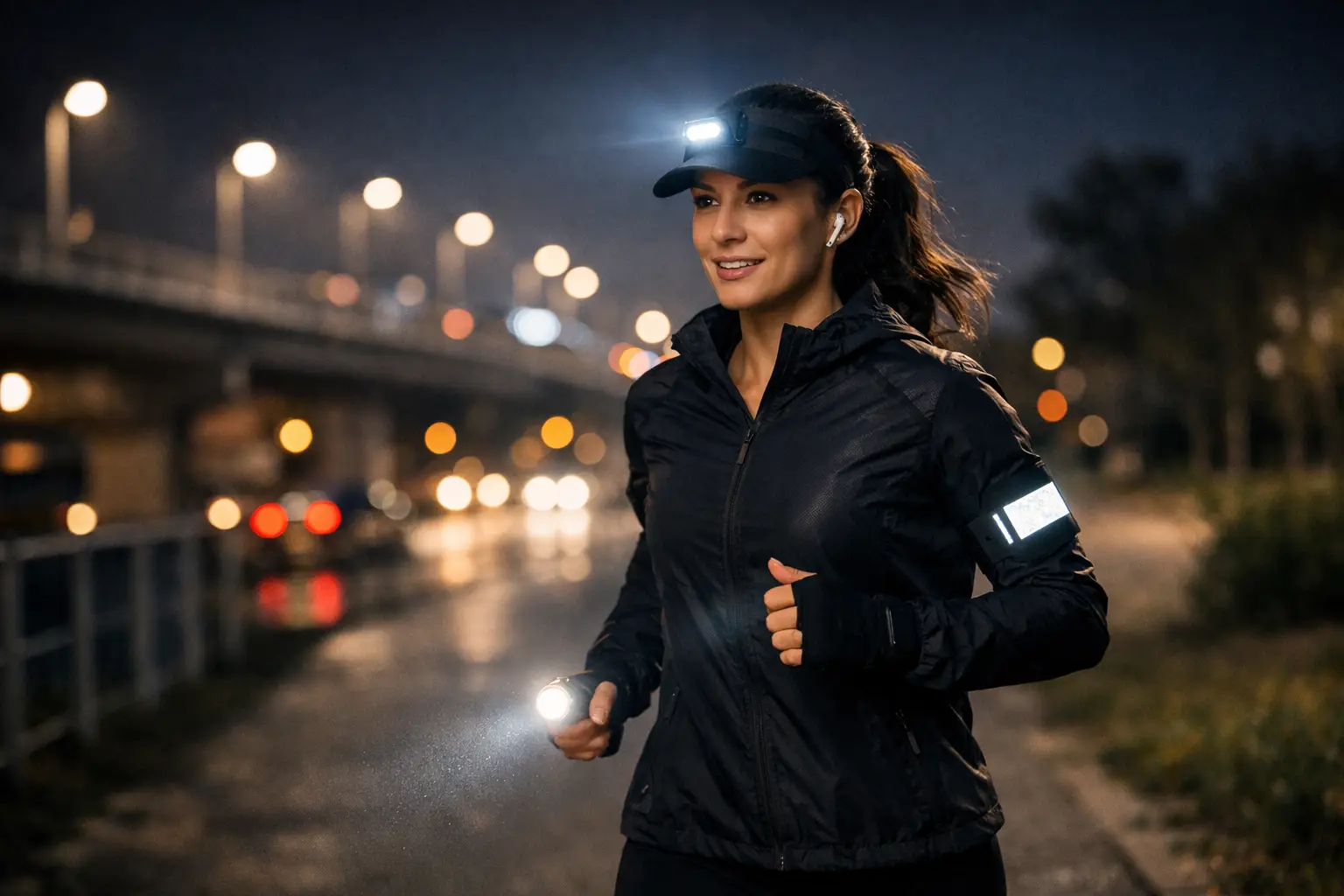
The pavement feels different after sunset. Familiar corners disappear into shadow, car headlights flatten your depth perception, and a quiet route can feel either peaceful or isolating. Learning how to run safely after dark is not about giving up your evening miles. It is about making smart choices before you leave the door, then staying alert enough to enjoy the run.
Dark running can be brilliant. It fits around work, gives busy streets a little more space and turns a routine session into proper head-clearing time. But darkness changes the risks. Drivers see less, uneven ground becomes harder to judge and your usual route may no longer feel right. A few dependable habits make a major difference.
Plan the route before you lace up
The best night-time route is rarely the most scenic one. Choose roads, parks or paths with consistent lighting, clear sightlines and enough space to move away from traffic. A well-lit route with a few more road crossings may be safer than a pitch-black trail with no traffic at all.
Favour places you know well. You will already understand where the kerbs dip, where puddles collect and which junctions need extra care. If you want variety, check a new route in daylight first. Running after dark is not the time to discover that a popular footpath ends at a locked gate or becomes a muddy, uneven track.
Think about who is likely to be around. Completely deserted streets can feel uncomfortable, while crowded nightlife areas bring their own distractions. Routes near open shops, residential streets, public transport stops or other runners often offer a good middle ground. If something about a route feels off before you start, trust that instinct and change it.
For off-road runners, the trade-off is sharper. Trails can be calmer and free from traffic, but roots, loose stones and sudden drops become much harder to spot. Save technical terrain for daylight unless you know it intimately, have a reliable headlight and are comfortable moving at a slower pace.
Be visible, but do not assume you have been seen
Visibility is your first line of defence around traffic. It is also not a guarantee. A driver may be tired, distracted, turning across your path or struggling with rain on the windscreen. Wear bright, reflective gear, then run as if every road user still needs a moment to notice you.
Reflective details work when light hits them, which makes them especially useful near roads. Active lights help you stand out before a car’s headlights reach you. A rechargeable chest light or headlight can make your outline more recognisable, while a reflective vest strap adds visibility without forcing you to buy a separate outfit for every season.
Place visibility where it moves. Ankles, wrists and your torso are easier for drivers to read than a small reflective logo hidden under a jacket or backpack. If you run in rain, check that your outer layer does not cover the reflective elements underneath.
Use a light that helps you see as well as be seen. On unlit pavements, a headlight lets you spot raised slabs, drains and broken glass early enough to adjust your stride. Point it slightly downwards rather than directly ahead, and choose a setting that gives useful light without dazzling people coming towards you. Charge it after use, not when you remember halfway through the next run.
Make road crossings deliberate
At night, do not treat a crossing as a gap in the route. Treat it as a separate decision. Slow down, look properly and make eye contact with drivers where possible. Even at a zebra crossing, wait until traffic has clearly responded before stepping out.
Be particularly cautious at side roads. A driver waiting to turn may be watching for cars, not a runner approaching from the pavement. Avoid passing directly behind a reversing vehicle, and give buses, taxis and delivery vans extra room. Their drivers have blind spots, and a bright interior or glowing dashboard can make it harder for them to see beyond the vehicle.
Run facing oncoming traffic where there is no pavement and it is safe to do so. This gives you the best chance of seeing a hazard early. On narrow roads, step aside well before a vehicle reaches you rather than relying on a last-second move.
Carry less distraction and more reassurance
Music can lift a run, but complete isolation is not worth it after dark. Keep one ear free, use an ambient mode, or leave the headphones at home on busier or unfamiliar routes. You need to hear approaching bikes, vehicles, footsteps and changes in the world around you.
Carry your phone in a secure, easy-to-reach pocket or running belt, with enough charge to make a call. Tell someone your planned route and expected return time if you are heading out late or covering a longer distance. Live location sharing can offer reassurance, but it should support good judgement, not replace it.
A small personal alarm can be a sensible addition, particularly if you often run alone. The goal is not to run feeling fearful. It is to have a practical way to draw attention if you need help. Keep it accessible rather than buried under spare layers, gels and keys.
Your night-running essentials do not need to become a pile of disposable gadgets. Build a small kit you will actually use, look after it and recharge it. Durable, cross-functional gear earns its place in a runner’s wardrobe far better than another short-lived purchase.
Adjust your pace for the conditions
Darkness is a reason to run with more care, not to prove you can hit the same splits you manage at midday. Slow slightly on uneven surfaces, tight corners and wet leaves. Shorten your stride if the ground is difficult to read. A controlled pace gives you more time to react and reduces the chance of a nasty slip.
Weather matters more at night, too. Rain reflects streetlights and headlights, making puddles and edges harder to judge. Cold can stiffen your hands and make it awkward to use your phone, zip a jacket or adjust a light. In winter, start with a layer you can comfortably finish in rather than dressing for the first chilly five minutes.
If fog, ice, high winds or heavy rain reduce visibility dramatically, be willing to change the plan. A treadmill session, a shorter loop close to home or a rest day is not a failure. Consistency comes from protecting your ability to run tomorrow.
Run with calm, confident body language
Stay aware without becoming tense. Look up regularly, scan ahead and avoid staring at the ground for long stretches. Keep your hands free where possible, with your keys and phone stored securely rather than carried in a clenched fist.
If another person makes you uncomfortable, create distance early. Cross the road, turn towards a brighter area, change direction or enter a public place. You do not owe anyone politeness at the expense of your safety. If you believe you are being followed, do not head straight home. Move towards people, call someone, and contact emergency services if needed.
Running with a friend or local group is one of the simplest ways to make evening miles feel easier. You gain company, extra eyes on the route and a little more motivation when the sofa is making a strong case. Still, each runner should wear visible kit and know the route. Safety should never depend on one person doing all the thinking.
A quick check before every dark run
Before stepping outside, take thirty seconds to check four things:
- Your route is familiar, lit where possible and appropriate for the weather.
- Your lights are charged and your reflective details are visible over every layer.
- Your phone is charged, secure and easy to reach.
- Someone knows where you are going if you are running late, alone or far from home.
These habits quickly become automatic. They do not make your run complicated. They make it more likely that you will finish feeling strong, clear-headed and ready to do it again.
Night running asks for a little more intention, but it can still be one of the best parts of your week. Choose the route that feels right, wear gear you can rely on, and give yourself permission to adapt when conditions change. The miles are yours – make sure you get to enjoy every one of them.