

Blog
Best Durable Running Accessories That Last

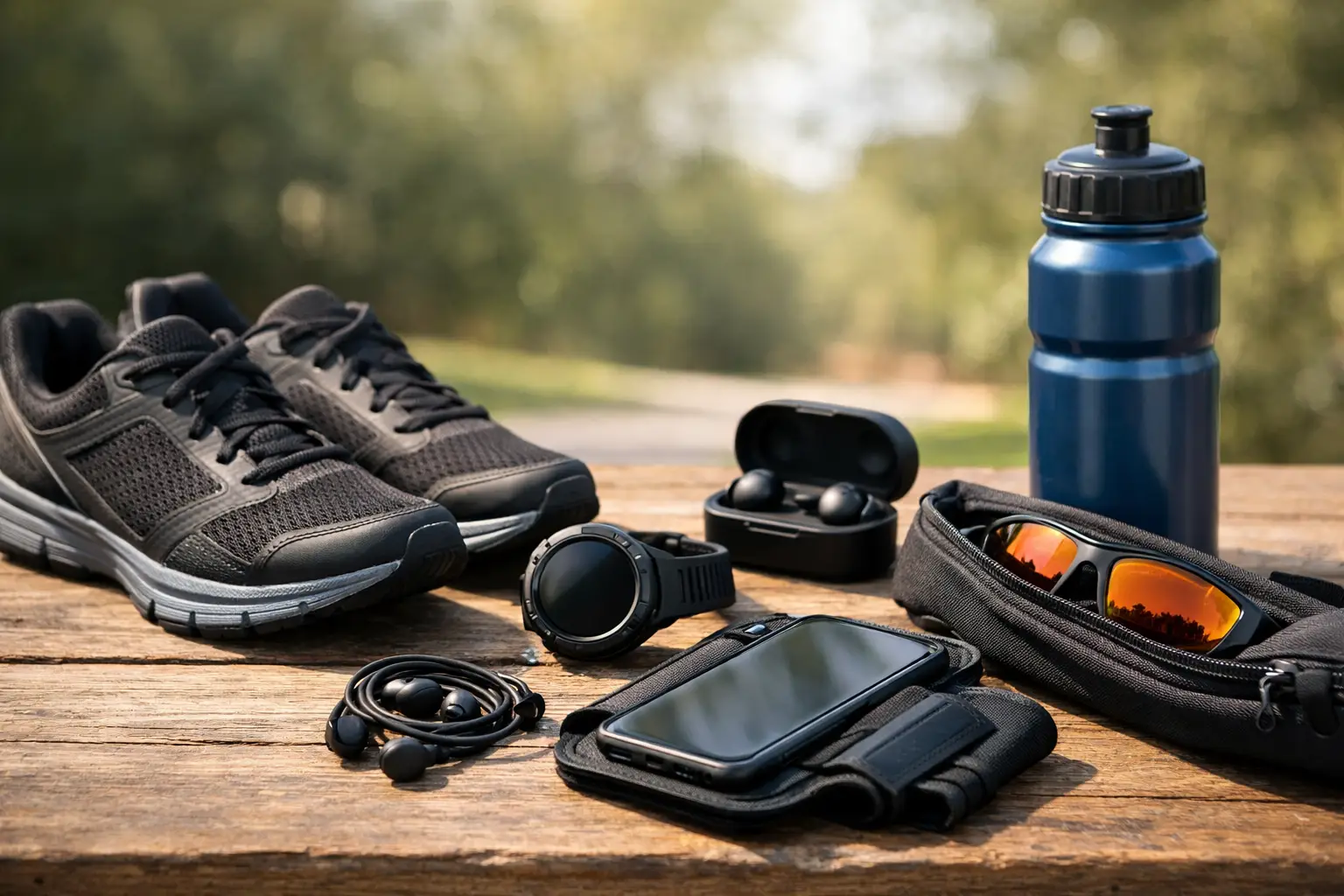
A run can be derailed by something surprisingly small: a lace that works loose at kilometre three, a torch that fades on an unlit path, or rubbing that turns a good session into a painful walk home. The best durable running accessories solve these everyday problems repeatedly, without becoming more disposable kit in the back of a drawer.
For runners who care about performance and the planet, durability is not just about surviving a few muddy outings. It means buying less often, relying on your gear when conditions change, and choosing practical products that earn their place run after run. Here is what is genuinely worth looking for.
What makes a running accessory durable?
Durability is not simply a claim on a label. A useful accessory should keep doing its core job after sweat, rain, repeated cleaning, being stuffed into a gym bag, and regular use. It should also be simple enough that you will actually use it.
The strongest choices tend to have a clear purpose, few failure points and materials suited to the job. Rechargeable lighting removes the constant waste of single-use batteries. Adjustable reflective straps can fit over a light summer top or a winter running layer. Elastic laces need secure fastening and enough stretch to hold the foot without creating pressure points.
There is a trade-off. The lightest item is not always the toughest, and a feature-packed accessory can be harder to maintain than a straightforward one. Choose the product that suits your most common runs, rather than buying for an imaginary ultra-marathon in extreme weather.
Best durable running accessories for everyday miles
Anti-chafe balm that stays put
Chafing can affect anyone, regardless of pace, experience or distance. Heat, rain, seams and repeated movement all create friction. A dependable anti-chafe balm forms a protective barrier on areas that rub, such as thighs, underarms, feet, sports-bra lines or where a hydration vest sits.
Look for a balm in a sturdy, easy-to-carry stick or tin and use it before discomfort starts. The point is prevention, not trying to rescue irritated skin halfway through a run. A small product that helps you finish comfortably can stop you wasting money on trial-and-error fixes and keep your training consistent.
It is worth remembering that no balm can compensate for poorly fitting clothing or shoes. If chafing happens in exactly the same place each time, inspect the seam, sock, strap or fit causing it. The most durable solution may be changing the source of the friction as well as using balm.
Rechargeable headlights for dark routes
Early starts and evening runs should not mean guessing where your feet are landing. A rechargeable headlight is one of the best durable running accessories for runners who use unlit roads, trails, parks or canal paths. It helps you see uneven ground, puddles and low branches while keeping your hands free.
Prioritise a secure, adjustable band and a light that does not bounce with your stride. Multiple brightness settings are useful: a lower mode can preserve charge on familiar paths, while a brighter beam makes sense for technical ground. A rechargeable unit is usually the smarter long-term choice because it reduces battery waste and makes it easier to keep your kit ready.
Battery life still matters. Get into the habit of charging after longer night runs rather than discovering a flat light at the door. In heavy rain, check the product’s weather resistance and avoid assuming every light can handle a full downpour.
Reflective vest straps for 360-degree visibility
A headlight lets you see, but reflective gear helps other people see you. Reflective vest straps are a practical choice because they can sit over the clothing you already own. That makes them useful across changing seasons and avoids buying a separate fluorescent top for every temperature.
Choose adjustable straps that sit flat and stay stable when you move. The best fit is close enough not to shift, yet comfortable enough to wear over a base layer or lightweight jacket. Reflective details work when light hits them, so they are especially valuable around traffic, junctions and shared paths after dark.
Do not treat reflectivity as a substitute for awareness. Make eye contact with drivers where possible, assume you may not have been seen and use well-lit routes when your surroundings make that the safer option.
LED chest lights for a wider beam
For some runners, a chest light is more comfortable than a headlight. It can provide a broad, downward-facing beam and may feel more stable on uneven terrain. It is also a useful option for anyone who dislikes wearing a strap around their head or runs in a cap, beanie or hood.
A well-designed LED chest light should be adjustable, visible from the front and comfortable over your layers. Its position can make it easier to spot changes in the ground immediately in front of you, though the lower angle may cast longer shadows than a headlight. That is why trail runners may prefer to use both on particularly dark, technical routes.
The practical choice depends on where you run. For town pavements, chest lighting and reflective straps may be enough. For woodland trails, a headlight with a focused beam can provide greater confidence. Buy for the route, not the marketing claim.
No-tie elastic laces that keep shoes secure
Laces seem minor until they come undone in rain, snag on rough ground or create numbness across the top of your foot. No-tie elastic laces replace standard laces with an adjustable system that lets you slip shoes on and off while maintaining a consistent fit.
They are especially useful for runners who want a quicker pre-run routine, struggle to find the right tension with conventional laces, or have to stop repeatedly to retie them. The key is setting them up properly. Too tight, and they can create pressure as your feet swell. Too loose, and your heel may move inside the shoe.
Durable elastic laces should retain their stretch and use a fastening that stays locked under movement. Once fitted, check them after a few runs and make small adjustments. A secure shoe fit supports comfort, reduces distractions and helps your footwear last longer too.
How to buy less and choose better
The most sustainable accessory is not necessarily the one with the loudest environmental message. It is the one you use often, look after and do not need to replace every few months. Before buying, ask whether it fixes a recurring problem in your running.
Consider these four checks before adding anything to your kit:
- Will it be useful in at least one regular training situation, such as dark commutes, wet-weather runs or long-distance sessions?
- Can it work with the clothing and shoes you already own?
- Is it rechargeable, adjustable or refillable where that makes practical sense?
- Will you be able to clean, store and maintain it without special effort?
This approach cuts through impulse purchases. A reflective strap that works over several layers has more value than a novelty item used once. A rechargeable light that you charge routinely is better than a powerful one that stays flat in a cupboard.
At 4R, the focus is on practical running gear that supports active lives without feeding the wasteful cycle of fast fashion. That matters because your kit should help you run with purpose, not create another pile of short-lived stuff.
Make your accessories last longer
Even well-made gear needs basic care. Let lights and reflective straps dry after wet runs before putting them away. Wipe mud and sweat from straps, check clips and buckles occasionally, and keep charging contacts clean. For a rechargeable light, avoid leaving the battery completely flat for long periods.
Store anti-chafe balm out of intense heat so it keeps its shape, and replace it if the texture or smell changes. With elastic laces, inspect the cord and locking mechanism when you clean your shoes. Small checks take moments and can prevent a failure just before an important run.
Build your kit gradually. Start with the accessory that removes the biggest barrier between you and your next run, whether that is discomfort, poor visibility or unreliable footwear. The right piece of durable gear is not glamorous. It is the one that quietly helps you get out the door again tomorrow.