

Blog
Why Do Runners Get Chafing?

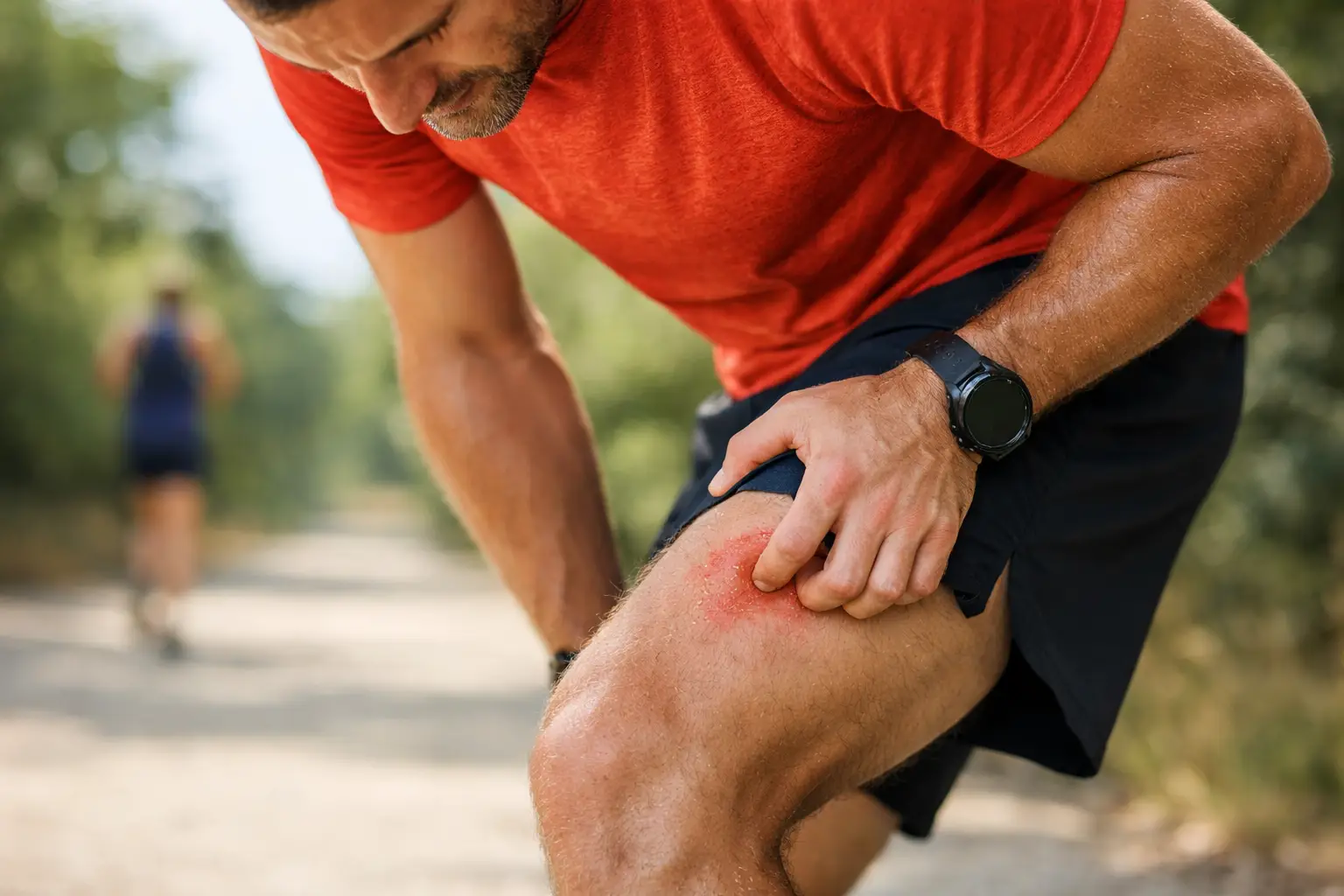
You can feel it before you see it. A slight hot spot on an inner thigh, a sting under a sports bra band, a raw patch where your top kept rubbing for 10 kilometres. If you have ever asked why do runners get chafing, the short answer is simple – friction. But the real answer matters more, because once you understand what is causing it, you can stop it.
Chafing is one of those running problems that sounds minor until it ruins a session, a race, or the next few days of walking. It does not care whether you are training for a marathon or heading out for your first 5K. It shows up when skin, fabric, sweat and repeated movement all collide in the wrong way.
Why do runners get chafing in the first place?
Running is repetitive by nature. That is part of what makes it effective, but it is also why chafing happens so easily. Every stride repeats the same movement through the thighs, underarms, chest, feet or anywhere fabric and skin keep making contact. If that contact stays dry, smooth and stable, you are usually fine. If it becomes damp, rough or loose, irritation builds fast.
Sweat is a major part of the problem. Many runners assume sweat lubricates the skin, but in practice it often makes chafing worse. Moisture softens the outer layer of skin, which makes it more vulnerable to abrasion. Add salt from dried sweat and you have a rougher surface rubbing over and over again.
Clothing plays a big role too. Seams, poor fit, scratchy fabric and garments that move too much can all trigger friction. Cotton is a common culprit because it absorbs sweat and stays wet, which leaves skin sitting in moisture for longer than it should. Technical fabrics tend to perform better, but only if the fit is right.
Body shape and movement patterns matter as well. Runners with stronger thighs may get inner-thigh rubbing. Others may struggle around the nipples, waistband, under the arms or along bra lines. There is no single runner profile that gets chafing. It depends on anatomy, clothing, weather and distance.
The most common places runners get chafing
Some areas take more punishment than others. Inner thighs are one of the biggest trouble spots because they often rub with every step. Underarms are another, especially when a vest or short-sleeved top shifts during a run. The chest is a frequent issue too, whether from a sports bra band, a hydration vest or fabric rubbing directly against the skin.
Feet can also chafe, even if runners describe it as blistering instead. The cause is similar – heat, moisture and repeated rubbing. Waistbands, groin folds, lower back areas and even the neck can become irritated if gear is not sitting properly.
Longer distances usually make these problems worse, but shorter runs are not always safe. A badly fitted top on a warm 20-minute run can do more damage than a well-prepared half marathon.
Sweat, weather and distance change everything
Hot weather gets blamed most often, and fairly enough. More heat usually means more sweat, and more sweat means more chance of softened skin and rubbing. But cold weather can cause chafing too. Heavy layers, rain jackets and damp base layers can all create friction, especially when fabric gets wet and starts shifting.
Rain is particularly sneaky. A run that starts comfortably can turn painful once clothing becomes saturated. Humidity has a similar effect because sweat does not evaporate as efficiently, so moisture stays trapped against the skin.
Distance is the multiplier. A small irritation at 3 kilometres can become a proper skin injury by 15. That is why runners often discover gear problems on longer training runs rather than on casual jogs. The issue was always there – the run just lasted long enough to expose it.
Why some gear helps and some makes it worse
Not all running kit is created equal, and disposable fast-fashion sportswear often shows its limits quickly. Fabric that looks fine on the hanger can feel terrible once sweat and movement enter the picture. If shorts ride up, if seams sit in high-friction zones, or if a top stretches oddly when wet, your skin pays for it.
A better approach is to wear gear designed for repeated movement and built to last. Close-fitting garments can help because they reduce excess motion, but too tight is not always better. Compression-style shorts may solve thigh chafing for one runner and create waistband irritation for another. It depends on where pressure lands and how the fabric behaves once you are moving.
Sports bras need the same attention. Support matters, but so does the band, the stitching and the way the straps sit after a few miles. Socks should manage moisture and stay in place. Footwear fit also matters because slipping inside the shoe creates friction that leads to blisters.
Reliable kit is not about having more. It is about choosing better pieces, wearing them often and trusting them when conditions get harder. That is a more sustainable way to run too.
How to stop chafing before it starts
The best fix is prevention. Once skin is already raw, every step becomes harder. Before your run, think in terms of friction control. You want less rubbing, less trapped moisture and fewer opportunities for fabric to move.
Start with the areas you know are vulnerable. If your thighs usually rub, tackle that before the run rather than hoping for the best. The same goes for bra lines, nipples, underarms or feet. Anti-chafe balm creates a protective layer that reduces friction and helps skin glide rather than drag. For many runners, that one step makes the biggest difference.
Then look at your clothing choices. Pick moisture-managing fabrics instead of cotton. Make sure shorts, leggings, tops and bras fit properly when you are actually moving, not just standing in front of the mirror. If a seam has annoyed you once, it will not magically improve over a longer run.
Weather-proofing matters too. In warm conditions, lighter fabrics and less bulk can help. In wet or cold conditions, think carefully about layers and where damp fabric might rub. If you are trying new kit, test it on a shorter run first.
What to do when chafing keeps happening
If the same area flares up again and again, treat it like a gear problem, not bad luck. Repeated chafing usually means there is a pattern. Maybe your shorts ride up after 30 minutes. Maybe your sports bra band shifts once it gets wet. Maybe your running pack sits fine with a T-shirt but rubs badly with a vest.
That pattern is useful. It tells you what to change. Sometimes the answer is as simple as applying balm more consistently. Sometimes you need to retire a garment that never really worked. Sometimes you need a different fit entirely.
It is also worth paying attention to laundry habits. Fabric softeners can affect technical materials, and worn-out clothing loses the structure that once kept seams and panels in place. Old favourite gear is not always good gear.
How to treat runner’s chafing after a run
If the damage is already done, clean the area gently and let it dry. Avoid scrubbing. A mild wash and breathable clothing will usually help. If the skin is broken, give it time before your next hard session. Running through severe chafing rarely toughens it up – it usually makes it angrier.
For milder irritation, rest and protection are often enough. For more serious skin damage, especially if there is swelling, oozing or signs of infection, it is sensible to get medical advice. That is not overreacting. Broken skin plus sweat and friction is not a great combination.
The key is not to ignore it. Chafing may be common, but it should not be accepted as part of the sport.
Why do runners get chafing more during training blocks?
When mileage builds, small issues get amplified. You are running more often, sweating more frequently and putting the same areas under repeated stress with less recovery time. You might also be experimenting with race kit, carrying nutrition, or running in weather you would usually avoid.
That is why chafing often appears during half marathon or marathon prep. Your body is not failing you. Your training is simply exposing weak spots in your clothing system and skin protection routine.
This is where practical habits win. Keep track of what you wore, what the weather was doing and where irritation started. The more honest you are about patterns, the easier it is to prevent repeat problems.
Running should feel challenging because of the effort, not because your skin is on fire. A few smart choices around fit, fabric and friction can change that quickly. If your gear works with your body instead of against it, every run gets a little smoother – and that is exactly how progress lasts.