

Blog
Running Lights Review for Safer Winter Miles

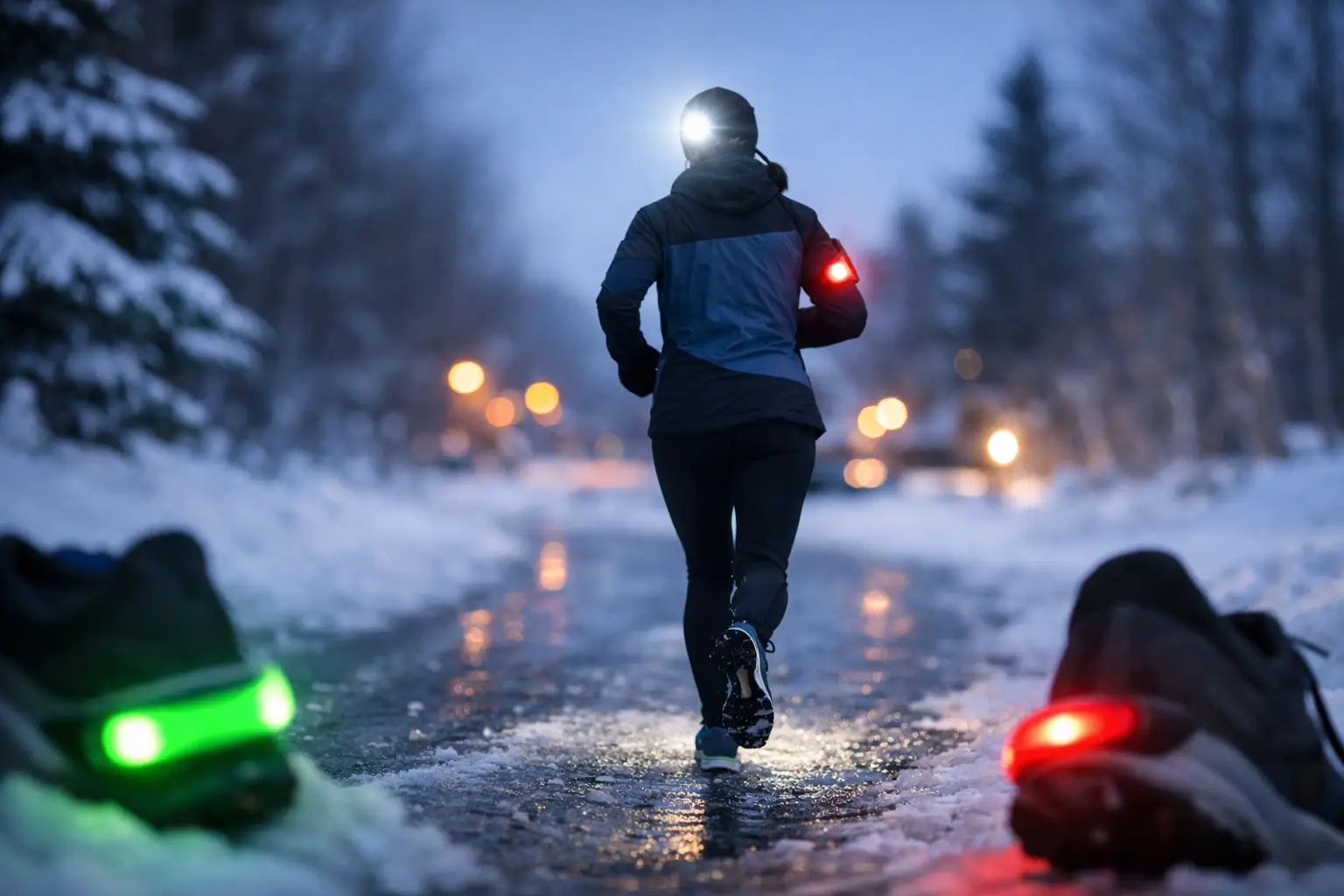
The difference between a good night run and a tense one is often not fitness. It is whether you can see the uneven pavement ahead and whether drivers, cyclists and other runners can see you early enough. This running lights review focuses on the details that matter on real runs: usable light, secure fit, reliable charging and gear you will actually want to wear when the evenings close in.
A light that looks bright in a product photo is not automatically the right choice. Runners move through changing conditions, from lit streets to unlit paths, rain to cold, and short recovery jogs to long winter miles. The best option depends on where you run, how fast you move and whether your main priority is seeing the route or being seen on it.
Running lights review: what good visibility means
There are two jobs a running light can do. The first is illumination: casting enough light forward to help you spot kerbs, roots, puddles and changes in surface. The second is visibility: making your presence clear to others from a useful distance and from more than one angle.
On a well-lit urban route, visibility is usually the bigger concern. Streetlights may show the pavement, but drivers pulling out of junctions and cyclists approaching from behind still need to register you quickly. A flashing or steady LED light combined with reflective details can make a genuine difference here.
On dark canal paths, country lanes or trails, you need illumination as well. Reflective clothing cannot reveal a tree root before you stand on it. A forward-facing headlight or chest light gives you a pool of light where your eyes need it, helping you choose your footing with more confidence.
The sensible approach is often to combine both. Use a light that helps you see the ground and wear visibility gear that makes your moving body recognisable. One tiny clip-on light may be enough for a short, lit route, but it is not a complete answer for every after-dark run.
Head torch or chest light?
A head torch is the familiar choice for dark routes. Because the beam follows your gaze, you can scan a corner, check a sign or look down at a rough section of trail without turning your whole body. This is particularly useful where the route is uneven or unfamiliar.
Its trade-off is movement. A poorly fitted torch can bounce with every stride, and a beam placed too high can shine straight into the eyes of people coming towards you. The best fit is snug rather than tight, with the light angled slightly down so it reaches a few metres ahead rather than lighting the treetops. Try it while running, not only while standing in the hall.
A chest light sits lower and gives a more stable, natural view of the ground in front of you. It can be an excellent choice for runners who dislike pressure on their forehead, wear a hat, or want a light that stays steady through quicker sessions. A lower beam can also make surface texture easier to read because small shadows reveal dips and raised edges.
There is no universal winner. Trail runners who need to look around corners may favour a head torch. Road runners and commuters may prefer the steady, hands-free comfort of a chest light. If you run a mixture of both, choose the light you will consistently take out of the door.
Beam pattern matters more than a huge number
Brightness figures can be helpful, but they are not the whole story. A very narrow, intense beam can light up a distant point while leaving the edges of the path dark. A wider beam gives more awareness of what is around you, which can feel more secure on twisting paths and shared routes.
For pavements and parks, a broad, even beam is often more practical than maximum power. For technical trails, extra brightness and a stronger central beam may be worth the additional weight and battery use. Consider whether you need to see fifty metres ahead or simply want clear footing for the next few strides.
Also look for more than one setting. A lower steady setting can preserve battery life on an easy route, while a brighter mode is useful when street lighting disappears. Flashing modes are effective for attracting attention, but they are not always pleasant for the wearer or people around them. Use them thoughtfully on shared paths.
Fit is a safety feature, not a finishing touch
Running accessories have to work while you sweat, breathe hard and move your arms freely. If a light chafes, slides, rattles or needs adjusting every kilometre, it will soon end up in a drawer.
For chest lights and reflective vest straps, adjustability is essential. The straps should sit close to the body without restricting your breathing or bouncing over a running jacket. Test them over the layers you normally wear in winter. A setup that feels perfect over a thin top may need a different adjustment over a gilet or waterproof.
Weight matters too, especially on longer runs. A light does not need to be heavy to be effective. Well-positioned, lightweight lighting is less distracting and more likely to become part of your routine. The goal is to forget it is there while others can clearly see you.
If you carry a running pack, check that its straps do not cover the light or force it into an awkward position. Likewise, a head torch should work with your cap, buff or hood. Simple compatibility prevents a lot of frustration at the front door on a wet November evening.
Battery life should match your real routine
Rechargeable running lights are a practical, lower-waste choice when they hold their charge well and are built to last. They remove the need to keep buying disposable batteries, but they do ask for one habit: charging before you need them.
Do not judge battery life by the longest claim alone. Manufacturers commonly quote a maximum runtime at the lowest setting, which may not be the setting you need on a dark trail. Look for a clear indication of runtime across different modes, then choose with a margin. If your usual long run takes two hours, a claimed two-hour runtime at high power leaves little room for cold weather, battery ageing or a forgotten switch-off.
A battery indicator is more useful than it sounds. It lets you make a sensible decision before leaving, rather than discovering halfway through a route that your beam is fading. USB rechargeability is convenient, particularly if the cable is standard and easy to replace, but remember to charge after a run instead of waiting for the next one.
Cold conditions can reduce battery performance. Keep the light indoors rather than in a freezing shed or car, and use a lower setting where it remains safe to do so. This small change can make a charge last much longer.
Rain, traffic and the details that build trust
British winter running is rarely dry for long. Your light should be designed to cope with rain and road spray, not only clear evenings. Weather resistance does not mean you should submerge it, but it should handle the conditions that ordinary runners meet week after week.
Controls need to be simple enough to use with cold fingers or gloves. A tiny button that takes several presses to find the right mode can turn a useful feature into a nuisance. One obvious control, a dependable lock function and straightforward charging are signs that a product was designed for use, not just for a shelf.
Think about visibility from the side and behind as well as the front. Traffic does not always approach head-on. Reflective vest straps add a recognisable outline when vehicle headlights hit them, while LEDs provide their own active signal. Together, they cover different conditions: reflective materials need another light source, whereas LEDs work in darker spaces but rely on charged batteries.
This is also where durability becomes part of sustainability. Cheap gear that fails after a few wet runs creates more waste and costs more over time. Choosing reliable, rechargeable lighting and using it for several seasons is a better fit for runners who want performance without disposable kit. 4R’s approach is built around that practical idea: buy less, use it well and keep moving.
Choose for the route, not the marketing claim
For lit streets, a visible LED chest light or reflective straps may be the most comfortable and effective choice. For a mixed route with poorly lit sections, add a forward-facing light so you can see the surface. For trail running, prioritise a stable light with a beam pattern and runtime that suit the terrain.
Avoid treating lighting as permission to run without awareness. Keep the volume low enough to hear traffic and bikes, take care at crossings, and be prepared for the fact that rain can scatter light and make roads harder for drivers to read. Bright kit supports good decisions. It does not replace them.
Choose a light that fits your regular route, your layers and the length of your runs. Then charge it, wear it and let the darker months become another reason to get out there, not an excuse to stop.