

Blog
Running Headlight vs Head Torch for Night Runs

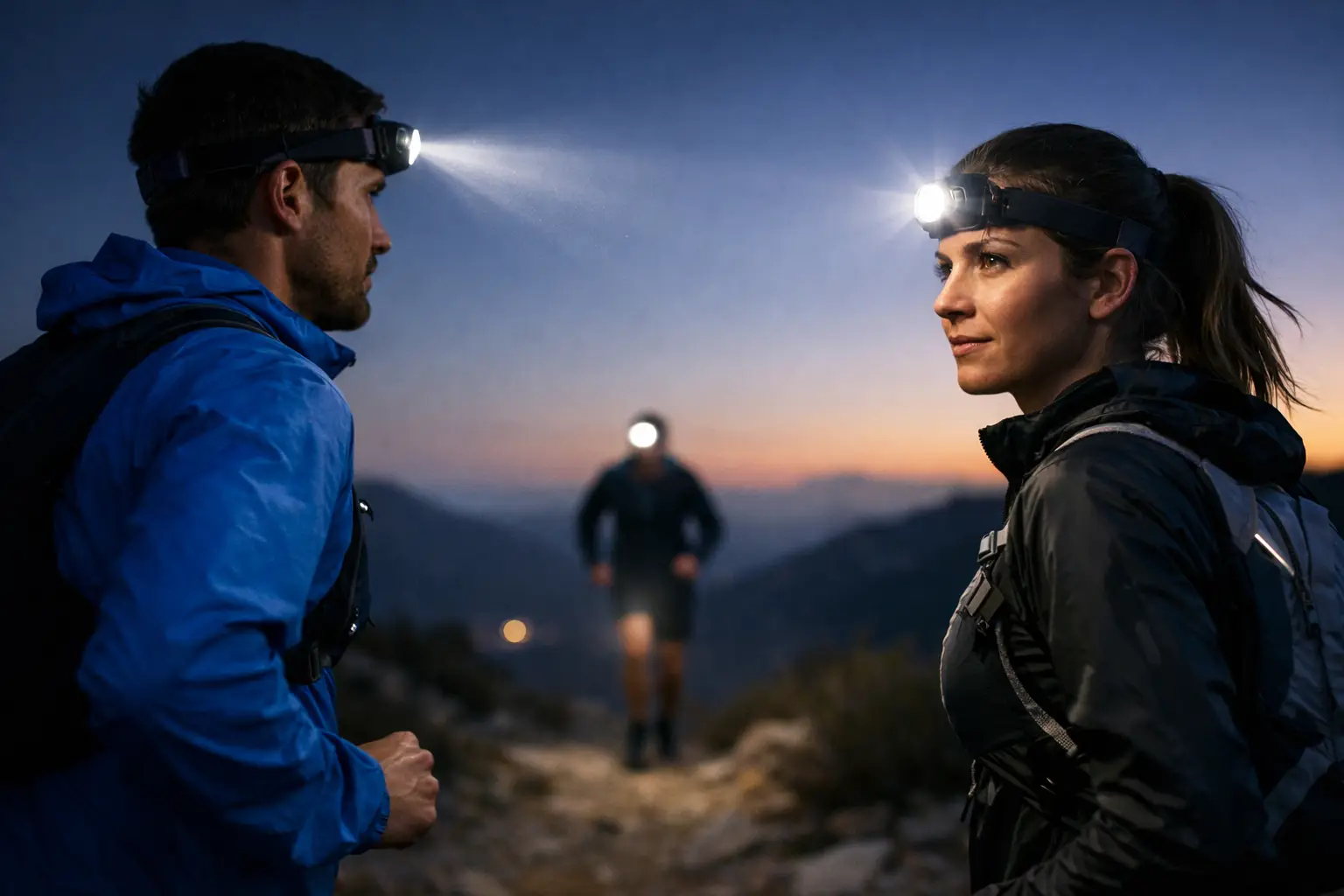
A dark morning can turn a familiar route into a different run. Puddles appear late, kerbs blend into the road and drivers may not spot you until they are far too close. The running headlight vs head torch decision is not simply about how many lumens a light claims to have. It is about where the beam sits, how your body feels after 5km, and how visible you are to everyone else sharing the route.
For runners who train before work, after dark or through winter, dependable lighting is essential kit. The right choice should help you run with more confidence, not distract you with bouncing straps, a narrow tunnel of light or a battery that fades halfway home.
Running headlight vs head torch: the key difference
A head torch is worn around the head, usually with an adjustable elastic band and a light centred on the forehead. It shines wherever you look. This makes it a natural choice for technical ground, uneven paths and trail running, where you need to check your footing a few steps ahead.
A running headlight is a broader term, but for runners it often means a purpose-built body-mounted light, such as a chest light. Rather than following your eye line, it projects from your torso. Some models combine a forward-facing white light with rear red lighting, helping you see the route while making your position clearer from behind.
Neither is automatically better. The best option depends on where you run, how long you are out for and whether your priority is detailed path visibility or being seen in traffic.
When a head torch is the better running light
Head torches earn their place on trails, unlit towpaths and rural lanes. Because the beam moves with your gaze, you can scan for roots, loose stones, gates and trail markers without turning your whole body. On a twisting route, that control feels useful rather than fussy.
They also work well beyond running. A rechargeable head torch can be useful for camping, walking the dog, early starts at an event or finding your way around a car park. Choosing gear that works across more than one activity is a practical way to buy less and use each item properly.
The trade-off is movement. Even a light head torch can bounce if its strap is not secure, particularly during faster running or downhill sections. A beam positioned high on the head can also flatten shadows. That matters because shadows help you judge depth, potholes and changes in surface. On wet pavement, glare can become tiring too.
Comfort is personal. Some runners barely notice a well-fitted head torch; others dislike the pressure around the forehead or the feeling of heat under the strap. If you wear glasses, a cap or a buff in cold weather, try your full setup before relying on it for a long dark run.
Head torch strengths
A head torch is usually the strongest choice when your route is genuinely dark and uneven. Look for a stable, adjustable strap, a wide beam as well as a focused option, and a battery mode that lasts longer than your planned session. High output is useful for short technical sections, but a sensible medium setting often gives better battery life and enough usable light for steady running.
When a running headlight makes more sense
A chest-mounted running headlight suits many road and pavement runners because it puts the beam lower down. This creates stronger shadows around uneven surfaces, which can make kerbs, cracks and puddles easier to read. The light is also separated from your head movement, so looking over your shoulder does not swing the beam away from the path ahead.
For commuting runs and urban routes, visibility to others often matters just as much as your own view. A running light with front and rear LEDs helps define your position from both directions. Pair it with reflective vest straps or reflective details on your clothing, and you give drivers, cyclists and other runners more than one chance to notice you.
Chest lights can feel more stable than head torches, particularly when the harness sits snugly over a running top. Still, fit matters here as well. A loose chest strap can bounce against the sternum, while a poorly placed light may be blocked by a jacket zip, hydration vest or swinging arms.
A body-mounted light may not be ideal for a narrow, technical trail where you constantly need to look around corners or inspect terrain at head height. It is brilliant for many everyday runs, but it cannot direct light quite as precisely as a torch on your head.
Choose for your route, not the packaging
The word “running” on a product label does not guarantee it is right for your route. Start with the conditions you actually face most weeks.
If you run on lit streets, the goal is usually to be conspicuous rather than to turn the road into daylight. A lower-power front light, rear light and reflective gear may be more useful than a very bright trail torch. Excessive brightness can dazzle oncoming runners and cyclists, especially on shared paths.
If you run on unlit country roads, you need both forward vision and all-round visibility. A chest light with rear lighting is a strong starting point, while a head torch can add useful direction if the road surface is poor. On remote trails, a head torch generally takes priority because placing feet accurately is the immediate safety concern.
For long runs, do not choose based on maximum lumens alone. Manufacturers commonly quote a high-output setting that lasts far less time than lower modes. Check the realistic runtime at the brightness you expect to use, then leave a margin for cold weather and an accidental detour.
A useful two-light approach
Many regular night runners eventually use both. A chest-mounted running headlight provides stable, low-angle light and helps make you visible, while a lightweight head torch gives you the freedom to look into a bend, read a sign or inspect a rough patch.
This is not about carrying more for the sake of it. It is about redundancy on longer or more remote runs. If one battery fails, you are not left navigating darkness with only a phone screen. For a short lap around well-lit streets, one quality light is usually enough.
What to look for before you buy
Prioritise rechargeable power if you run regularly. It reduces the waste and expense of disposable batteries, and it makes a light easier to keep ready: charge it after a few runs, not when you are already late for the door. A battery indicator is especially helpful, as guessing is a poor pre-run routine.
A useful running light should have simple controls that work with cold fingers and preferably remember the last mode used. You do not want to cycle through flashing settings while standing at a crossing. Weather resistance also matters in Britain, where a dry forecast can become steady rain before your first kilometre.
Pay attention to beam pattern, not just output. A broad flood beam helps you see the space around your feet. A narrow spot beam reaches further ahead. Road runners often benefit most from a balanced beam that does not create harsh glare, while trail runners may want the flexibility of both.
Finally, choose equipment built to last. A cheap light with a weak clip, failing battery or uncomfortable strap soon becomes another discarded accessory. At 4R, the focus is on practical gear runners can rely on, because durable kit is better value for your training and kinder to the planet than replacing disposable products every season.
Fit and use matter as much as the light
Test your light on a short, familiar run before taking it onto an unlit route. Adjust the head strap or chest harness until it stays put when you jog, look down and turn sharply. Point the beam slightly down rather than straight ahead, so it lights the surface without shining directly into another person’s eyes.
Wear reflective elements even when using a powerful light. A beam helps you see, but reflective material helps others recognise that you are a moving person. On roads without pavements, follow local guidance on which side to run and stay alert for quiet vehicles, bikes and changing weather.
Charge before every key run, particularly if temperatures are low. Carrying a small backup light is sensible for longer sessions, and keeping your phone accessible adds another layer of reassurance. Lighting supports safer running, but it never replaces route awareness.
The best light is the one you will wear consistently. Choose a head torch when the terrain demands where-you-look control. Choose a running headlight when stable illumination and being seen on the road are your daily priorities. Then switch it on, step outside and give the dark far less power over your running routine.