

Blog
Running Safety Gear That Earns Its Place

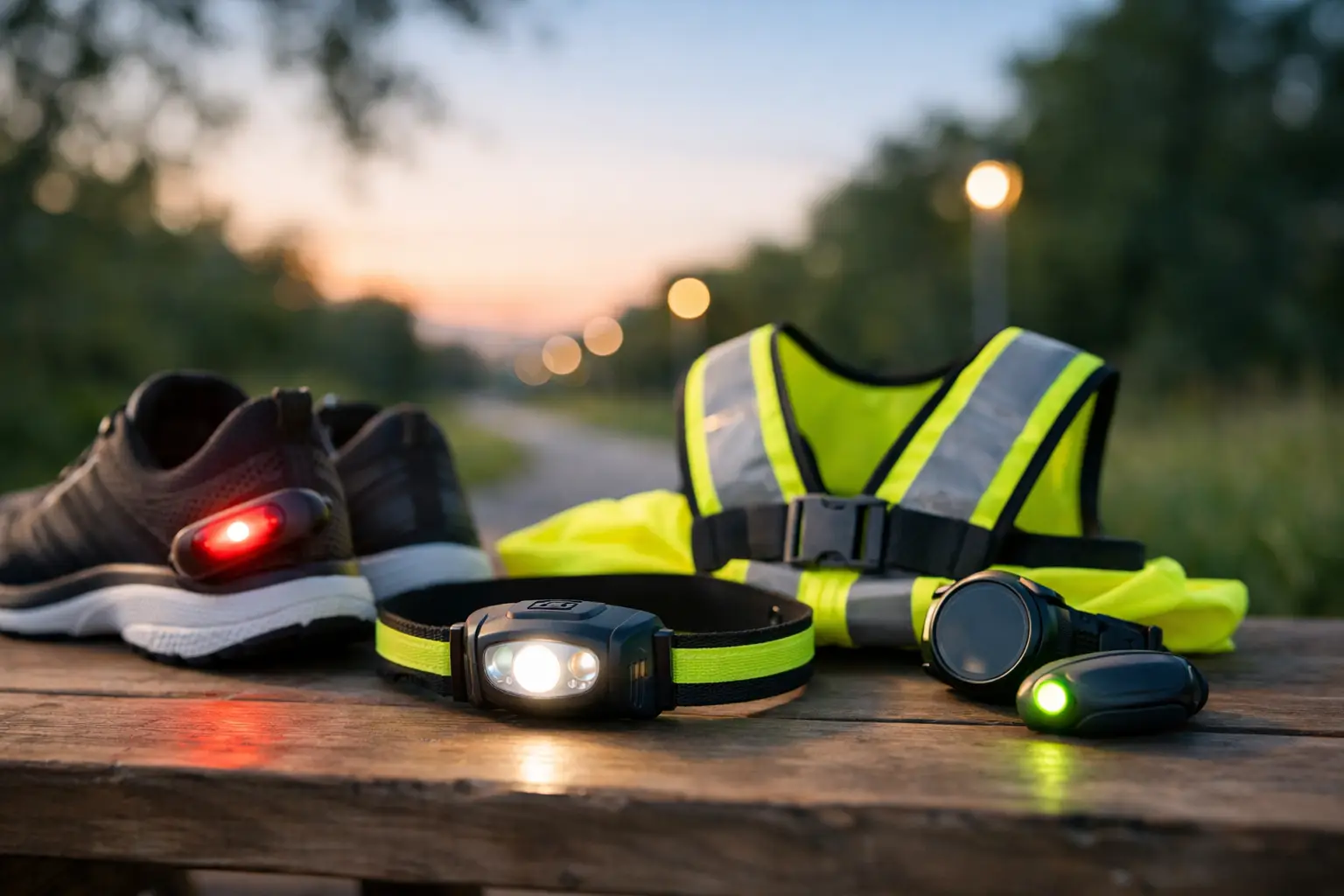
A dark morning can turn a familiar route into a different run. Puddles hide uneven ground, drivers are managing glare and rain, and a runner in black can disappear into the background far sooner than they realise. The right running safety gear does not need to make you feel over-equipped. It should simply help you see, be seen and keep moving comfortably.
That matters whether you run before work, fit in a few kilometres after sunset or head out on quiet country lanes at the weekend. Safety is not about buying more stuff. It is about choosing dependable kit that solves a real problem, lasts through regular use and earns a place in your running drawer.
Start with the conditions, not the product
There is no single safety setup for every runner. A well-lit park path at 6pm calls for something different from an unlit pavement at 6am. Before adding anything to your kit, think about where you run, when you run and what other people need to notice about you.
If your routes include roads, junctions and shared paths, visibility should be your first priority. If they include dark trails, your ability to see the surface ahead becomes just as important. In wet weather, comfort and grip can move higher up the list. The aim is not to prepare for every possible scenario on every run. It is to make sensible choices for the conditions you actually face.
A useful rule is simple: wear light to see, reflectivity to be seen, and carry only what supports your route. This keeps your setup practical rather than cluttered.
Be seen from every angle
Reflective details are most effective when light hits them directly, such as car headlights. They are a strong layer of protection around traffic, but they do not make you visible in every situation. On a dim canal path or under poor street lighting, a reflective logo alone may not be enough.
A reflective vest or adjustable reflective straps add clear definition to your body shape. That matters because movement catches attention. Straps around the chest, shoulders and torso can be especially useful where vehicles approach from different angles, without forcing you to replace a jacket you already own.
For early starts and evening miles, add an active light. An LED chest light or clip-on light gives off its own illumination, making you easier to spot when there are no headlights nearby. Position matters. A light worn high on the torso is less likely to be blocked by your arms than one attached low down, while a rear-facing light helps approaching traffic pick you out sooner.
Do not assume one bright point is enough. A runner is easier to identify when light and reflective elements are visible at the front, rear and sides. You do not need to resemble a Christmas tree. You need to be recognisable as a person moving near the road.
Reflective gear and lights do different jobs
Reflective gear works brilliantly when another light source reaches it. Active lighting works independently, but it needs charging or fresh batteries. Combining the two is usually the strongest choice for darker routes.
That combination also gives you a little breathing room. If your light is low on charge or a car approaches from an unexpected angle, you are not relying on one small piece of kit to do all the work.
Choose a light that helps you see properly
A head torch is not just for trail runners. It can make broken pavements, dropped kerbs, loose gravel and standing water easier to spot on any poorly lit route. But brighter is not always better. An overly powerful beam can flatten depth perception close up, bounce back from fog or rain, and distract other path users.
Look for a rechargeable light with a stable fit, a beam suited to your running surface and controls you can use with cold hands. A wide beam is often useful for seeing your immediate surroundings, while a more focused beam helps you look further down the route. On a narrow trail, you may want more forward reach. On familiar streets, a lower setting can be enough and will preserve battery life.
Check your charge before leaving, not when you reach the darkest point of the route. Make a habit of charging after the run or set aside one regular time each week. A rechargeable head torch is a practical, lower-waste option when it is made to last and used consistently rather than treated as another disposable gadget.
Be considerate with the angle, too. Tilt the beam slightly down so it lights your path without shining directly into the eyes of cyclists, dog walkers or other runners. Safety works better when everyone can see.
Comfort is a safety feature
Kit that rubs, slips or bounces will eventually get left at home. That is why fit is not a minor detail. Reflective straps should sit securely over your layers without restricting your breathing or arm swing. A chest light should stay stable as your pace changes. A head torch needs a band that remains comfortable when your hair is wet or you are wearing a hat.
Anti-chafe balm belongs in the safety conversation for the same reason. Chafing may not sound dramatic, but it can shorten a run, change your gait and leave you sore enough to skip the next session. Apply it before longer runs or whenever heat, humidity and repeated friction are likely to cause trouble. Common pressure points include feet, inner thighs, underarms and areas where waistbands or straps sit.
No-tie elastic laces can help here as well. They reduce the risk of laces coming undone mid-run and make it easier to achieve an even, comfortable fit. They are particularly useful if you regularly stop to retie laces, run in rain or struggle to tighten shoes without creating pressure across the top of the foot.
Small improvements count. When your gear stays in place, you can focus on the pavement, the traffic and your effort rather than constantly adjusting your kit.
Make your route part of your safety plan
Even the best running safety gear cannot replace awareness. Keep your mobile phone charged and, where possible, tell someone roughly where you are going if you are heading out alone in the dark. Choose routes with predictable footing and avoid poorly lit shortcuts when you are tired or weather conditions are poor.
Music can make a solo run feel easier, but it changes what you can hear. Consider leaving one ear free, using a low volume or choosing open-ear headphones on roads and shared paths. You should be able to notice a bicycle bell, a vehicle behind you or another person trying to get your attention.
When crossing roads, make eye contact with drivers where possible rather than assuming they have seen you. At night and in rain, visibility is reduced for everyone. Slow down at crossings, take the extra second and make your intention clear.
If the weather turns, give yourself permission to change the plan. A shorter, better-lit loop is a smart decision, not a missed session. Consistency comes from making choices that let you run again tomorrow.
Buy less, choose better
Safety kit is easy to overbuy. A drawer full of cheap lights, flimsy bands and badly fitted accessories does not make a runner safer. It creates waste, costs more over time and makes it harder to find the gear you trust.
Choose versatile pieces that work across seasons and layer with what you already own. Check that lights are rechargeable, straps are adjustable and materials can handle rain, sweat and repeated washing. Care for them as you would your shoes: wipe down lights after wet runs, inspect straps for wear and replace damaged components before they fail on a dark route.
This is where sustainability becomes practical rather than performative. Durable running gear reduces the cycle of buying, binning and buying again. It also means that, when the weather changes at 5pm, you have reliable kit ready to go.
4R believes performance should not come with a throwaway mindset. The best setup is not the biggest one. It is the one you will wear, maintain and trust mile after mile.
Build a setup you will actually use
For a lit urban route, reflective straps and a front-and-rear active light may be enough. For darker roads, add more all-round visibility and keep your route predictable. For trails or unlit paths, a secure head torch becomes essential for seeing the ground ahead, while reflective or LED elements still help others locate you.
Start with the biggest risk on your usual run, then add only what reduces it. Test your gear close to home before relying on it for a long outing. Notice whether it shifts, whether the controls are easy to use and whether the light lasts for your full running time.
Your safest run is rarely built from one hero product. It comes from a few reliable choices, used consistently, that let you step outside with confidence when the light is low and the road is still waiting.