

Blog
Best Running Gear for Commuters Who Run to Work

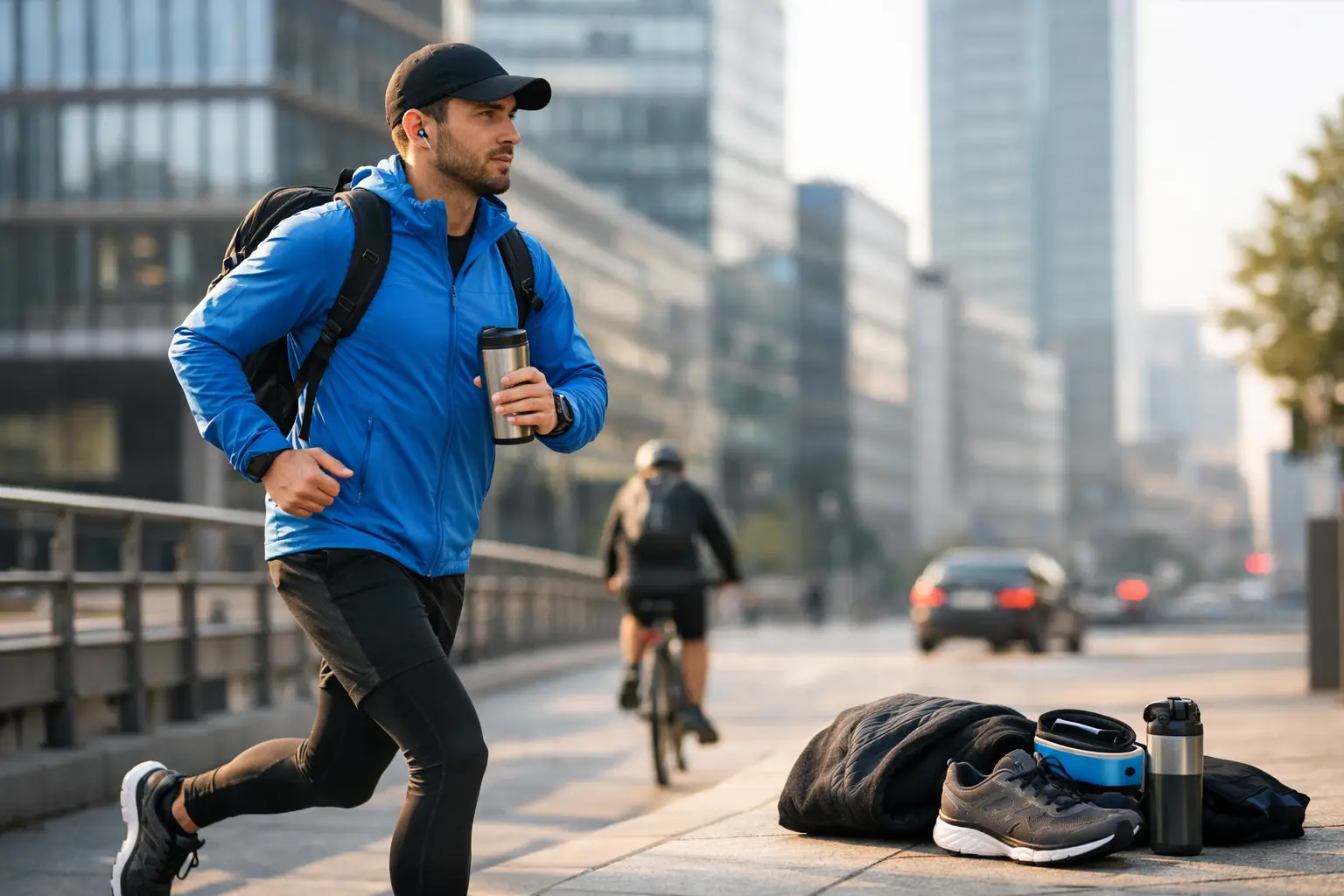
A run commute asks more of your kit than a weekend 5K. You need to arrive visible, dry enough, organised and ready to start the day – without hauling a bag full of single-use, short-lived gear. The best running gear for commuters is not about owning more. It is about choosing reliable pieces that solve the real problems between your front door and your desk.
For some runners, that means a short, fast trip in daylight. For others, it is a dark winter route, a laptop in a pack and a shower at work. Build around your own journey, then buy equipment that earns its place every time you use it.
Start with the route, not the shopping basket
Before choosing gear, look at the parts of your commute that create friction. How early do you run? Are there poorly lit roads, shared paths or busy crossings? Can you leave shoes, toiletries or a change of clothes at work? Will you need to carry technology, or can it stay at the office?
This matters because there is no single commuter setup. A runner covering three miles on city pavements may need little more than reflective details and a compact way to carry keys. Someone running 10 miles through rain, traffic and darker lanes will need more capacity, more weather protection and a deliberate visibility plan.
Avoid the temptation to duplicate every item in your running wardrobe. A durable layer that works for training, errands and the commute is usually a better choice than another trend-led piece that loses shape after a season. Less waste. More wear. Better value.
Best running gear for commuters: visibility first
Visibility is the commuter essential that should never be an afterthought. In low light, a black running outfit can make you hard to see even under street lamps. Reflective details help when headlights hit them, but they do not create their own light. For early starts, late finishes, fog or rain, use active lighting as well.
Use a light where drivers can see it
A rechargeable headlight helps you spot uneven kerbs, puddles and poorly lit paths, while also signalling your presence. Choose a stable fit that will not bounce as your pace changes. If your route includes roads or busy cycle paths, a chest light can be especially useful: it places light lower and forwards, helping others judge where you are.
For the strongest setup, pair a light with reflective vest straps. They add high-contrast movement around the body and can sit over your existing layers without making you commit to a separate, single-purpose jacket. Check your lights before every run commute, particularly during the darker months. A flat battery is a preventable problem.
Make your movement recognisable
You do not need to dress in fluorescent colour from head to toe, but contrast helps. A lighter outer layer, reflective straps and a visible light source give other road users several chances to notice you. This is particularly valuable at junctions, where a runner can disappear into the visual clutter of parked cars, shop fronts and rain-slicked roads.
Visibility gear is not just for rural roads. City commuters face delivery vans, turning traffic, cyclists and pedestrians stepping out between vehicles. Be seen early, not only when someone is already close.
Carry only what changes your day
The best commuter bag is the smallest one that safely carries what you genuinely need. Bigger packs invite overpacking, and excess weight soon becomes uncomfortable over longer distances. Look for a close, secure fit with adjustable straps, minimal bounce and separate protection for items that must stay dry.
If you carry a laptop, a change of clothes and lunch, a proper running pack is worth considering. Keep heavier items close to your back and low enough that they do not pull on your shoulders. Pack electronics in a waterproof inner pouch or dry bag, even if the outer bag claims water resistance. Rain has a way of finding a zip, seam or pocket after enough miles.
For shorter journeys, a waist belt or compact pocket solution may be enough for a mobile phone, keys, bank card and a small snack. The point is not to buy the largest capacity available. It is to move freely and arrive with what you need intact.
A useful commuter habit is leaving duplicates at work where possible: a towel, toiletries, spare shoes and a basic change of clothes. That reduces your load on every run and makes the routine far easier to sustain. It also means your running kit can focus on running rather than becoming a portable wardrobe.
Choose clothing that can handle repeat use
Your commute kit will be washed often. That makes quality and versatility more important than novelty. Choose comfortable running layers that hold up to regular wear, dry reasonably quickly and feel good against the skin when your effort rises.
In mild conditions, a breathable top and shorts or tights may be all you need. When the temperature drops, add layers rather than relying on one heavy piece. A light base layer manages sweat, while an outer layer can block wind or light rain. The right combination depends on your pace, distance and how much time you spend cooling down after you stop.
Waterproof clothing involves a real trade-off. A fully waterproof shell offers protection in sustained rain, but can feel warm on a hard effort. For a short commute in drizzle, a windproof or water-resistant layer may feel more comfortable. If you regularly run through heavy rain, protect your work clothes and electronics first, then choose a shell with enough ventilation for your pace.
Think beyond the first wear. Ethically made, durable apparel is a practical decision when you run several times a week. A garment that lasts reduces replacement cycles and the waste that comes with disposable sportswear. Performance should not demand a throwaway wardrobe.
Prevent the small problems that stop consistency
A run commute only becomes routine when it is comfortable enough to repeat. The minor irritations deserve attention because they can become the reason you skip tomorrow’s run.
Chafing is one of them. Friction increases when you sweat, carry a pack or run in wet weather, so apply anti-chafe balm before you leave rather than waiting for a sore patch to appear. Focus on areas affected by seams, pack straps and repeated movement. It is a small step that can save several uncomfortable days.
Your shoes need attention too. No-tie elastic laces can make getting out the door quicker and give a consistent, secure fit without stopping to retie loose laces at crossings. They are particularly handy when you are changing in a workplace locker room or managing your kit in a hurry. Set the tension carefully: too loose can cause heel movement; too tight can create pressure across the top of the foot.
Do not overlook socks. A well-fitting technical pair can help manage moisture and reduce rubbing, especially if your journey ends with time in shoes before you can shower. Rotate your running shoes if your budget and space allow, giving each pair a chance to dry fully between runs.
Build a commute kit you will actually use
The smartest way to buy running gear is gradually. Start with the non-negotiables for your route: secure carry, reliable visibility and comfortable clothing. Run the journey for a few weeks, notice what interrupts it, then add only what solves a recurring issue.
A simple commuter checklist can help before you leave: charged lights, weather layer, work essentials, keys and mobile phone, plus anything you cannot replace at the office. Keep these items in one place at home so the morning decision is easy. Preparation is not glamorous, but it is what turns good intentions into regular miles.
4R believes useful running gear should support your goals without asking the planet to pay for them. Choose pieces that are made to last, work across your active life and keep you moving with confidence.
Your commute does not need to look like anyone else’s. Make it visible, comfortable and realistic enough to repeat next week. That is the gear choice that carries you furthest.