

Blog
Rechargeable Headlamp vs LED Clip Light

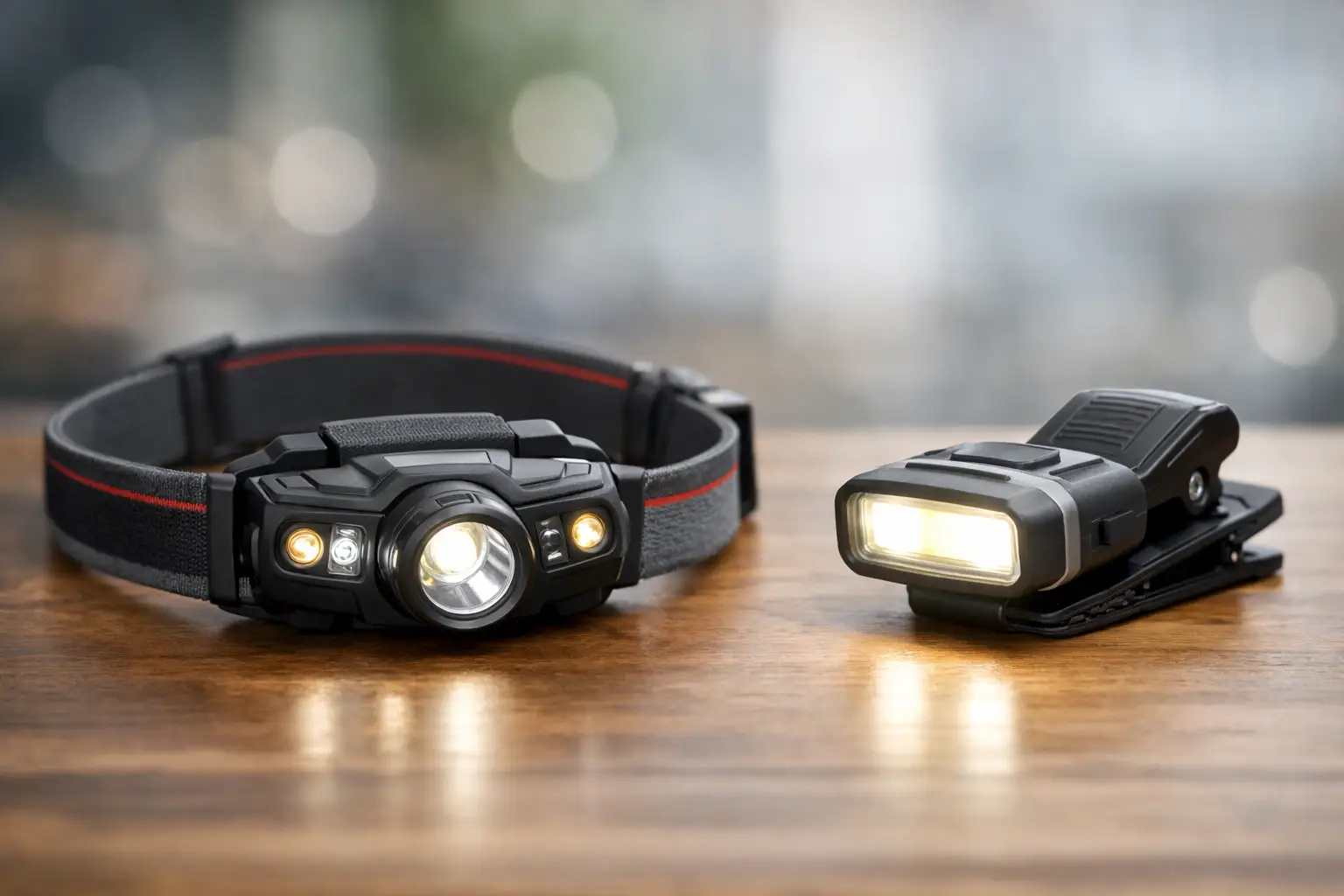
You notice bad lighting fast when the pavement disappears, the kerb edge blurs and every puddle looks deeper than it is. That is where the rechargeable headlamp vs LED clip light decision becomes more than a gear preference. For runners, it affects comfort, visibility, confidence and how safely you can move when daylight is short.
Both options can earn a place in your kit. The better choice depends on where you run, how long you are out, how much light you need to see the ground ahead and how much you need other people to see you. If you want one simple answer, here it is: a headlamp is usually better for seeing, while a clip light is usually better for being seen. But that only gets you so far.
Rechargeable headlamp vs LED clip light for runners
A rechargeable headlamp sits on your head and throws light in the direction you are looking. That sounds obvious, but it matters. On dark routes, a beam that follows your gaze helps you spot uneven pavement, loose gravel, tree roots and sharp turns before you are on top of them.
An LED clip light is smaller and lighter. It usually attaches to a waistband, jacket zip, vest strap, hat brim or pack. Some are designed mainly to flash, making you more visible to drivers, cyclists and other pedestrians. Others offer a steady beam, but they rarely match a proper headlamp for forward visibility.
So the real question is not which one is universally better. It is which problem you are trying to solve. If your route is poorly lit and you need to see clearly, the headlamp has the edge. If your route already has street lighting and your main goal is adding visibility without extra bulk, a clip light can be the smarter choice.
What matters most on a run
Runners do not need kit that looks impressive on a product page. We need gear that works at 6 am, in drizzle, on tired legs and without constant fiddling. That is why the best comparison comes down to real use rather than specs alone.
A headlamp gives you active light. It helps you read the road or trail. That can reduce hesitation in the dark and make your stride feel more natural, especially on uneven ground. It is also useful if you run through parks, canalside paths or rural roads where street lighting is limited or non-existent.
A clip light gives you passive simplicity. It is often easier to forget you are wearing it. For urban runners, that can be enough. If lampposts already illuminate your route, you may not need a strong beam. You may simply need an extra point of light on your body so traffic can pick you out earlier.
There is also a comfort trade-off. Some runners dislike anything around the head, particularly during long sessions or faster efforts. Others hate bounce at the waist or chest more than they dislike a head strap. Fit matters because irritation becomes a bigger issue when you are running than when you are walking.
Brightness is not the whole story
It is easy to get pulled into lumen numbers, but brightness alone does not decide usability. Beam shape, beam angle and light placement make a huge difference.
A headlamp usually offers a more focused beam and greater range. That helps when you need to see ahead rather than simply glow in the dark. If you run on mixed surfaces, country lanes or winter trails, that focus is valuable. You are not just announcing your presence. You are reading the route.
A clip light often spreads light over a smaller, less useful field for navigation. When clipped low on the body, it may cast awkward shadows or point in a fixed direction that does not line up with where you are looking. That can make depth perception less reliable, particularly on uneven terrain.
Still, there are moments when less is more. On a lit high street or a familiar estate loop, a strong headlamp can feel excessive. It may even annoy oncoming pedestrians if the beam is too intense or angled too high. In those settings, a compact clip light is often more than enough.
Comfort, bounce and wearability
If you never enjoy wearing it, you will stop using it. That is the unglamorous truth behind every running accessory.
Headlamps can feel secure and balanced when well designed, but not every runner likes a band around the forehead. Sweat, hair, hats and cold-weather layers all affect comfort. A heavier unit may shift during quicker efforts, especially if the strap needs constant readjustment. That said, a good rechargeable headlamp should sit close to the head and stay stable through steady miles.
Clip lights win on minimalism. They are small, easy to stash and usually quicker to attach. For runners who want low-light safety without feeling kitted out, that simplicity is a strong argument. But placement is everything. A poor clip position can lead to bouncing, fabric tugging or a beam that points somewhere useless.
This is where cross-functional gear earns its keep. If your clothing or reflective accessories give you a secure attachment point, a clip light becomes far more practical. If not, a headlamp may actually be the less fussy option.
Battery life and charging in the real world
Rechargeable gear makes sense for runners who are tired of disposable batteries and throwaway habits. It is better for the planet and usually better for your routine too, provided charging is straightforward and reliable.
Headlamps often have larger batteries and more lighting modes, which can mean stronger performance but also more dependence on remembering to charge. High beam settings drain power quickly. If you regularly leave the house at dawn without checking battery levels, that is worth thinking about.
Clip lights tend to be simpler. They may last a long time in flashing mode because they are designed more for visibility than for lighting your path. That can make them a dependable backup option, even if they are not your primary source of light.
For many runners, the sensible move is to think beyond one perfect product and focus on a durable system. A rechargeable headlamp for genuinely dark runs and a lightweight clip light for shorter, lit sessions can reduce waste because each item is used for the job it does best, rather than being replaced when it disappoints.
When a rechargeable headlamp is the better choice
A headlamp is the stronger option when you run in places where footing matters. That includes trails, unlit parks, canal paths, country roads and any route with poor surfaces. It is also the better choice for winter long runs, early starts and commutes where conditions can change mid-run.
It helps if you want your hands free, your line of sight illuminated and your pace to feel less cautious. For runners building confidence in darker months, that matters. Good light can make the difference between sticking to training and skipping sessions because the route feels uncertain.
It is also the better pick if your priority is practical visibility rather than just compliance. Reflective gear helps others notice you, but a headlamp helps you react sooner. Those are not the same thing.
When an LED clip light makes more sense
An LED clip light makes sense when your route already gives you enough visual information. City streets, promenades and suburban loops with steady street lighting often fall into that category. In those conditions, your main need may be to stand out more clearly rather than to light the ground in front of you.
It also suits runners who prefer lighter gear and shorter sessions. If you are heading out for a 5k before work or adding visibility to an evening jog, a clip light can be the easy option you actually use every time.
For travel, it has an edge too. It takes up little space and can live in a gym bag, coat pocket or work rucksack. That convenience matters because the best safety gear is the gear you do not leave at home.
The best answer is often both
This is the part many comparisons miss. Rechargeable headlamp vs LED clip light does not always need a winner. For plenty of runners, the best setup is combination rather than competition.
A headlamp covers route visibility. A clip light adds another point of awareness on the body. Together, they improve your chances of seeing clearly and being seen from different angles. That is especially useful in winter rain, on mixed routes or during commutes where traffic, cyclists and dim stretches all show up in the same run.
If you care about buying less and using gear longer, this approach can still fit your values. The key is choosing dependable products you will keep using, not filling a drawer with gimmicks. That is the difference between practical kit and disposable clutter.
If you can only buy one, choose based on your darkest regular route, not your easiest one. Buy for the conditions that challenge your confidence. That is the gear decision you are least likely to regret.
Low-light running should not feel like a compromise between safety, comfort and your principles. Choose the light that fits how you actually run, and you give yourself one less excuse to stay indoors when the miles still matter.