

Blog
LED Chest Light Review for Runners

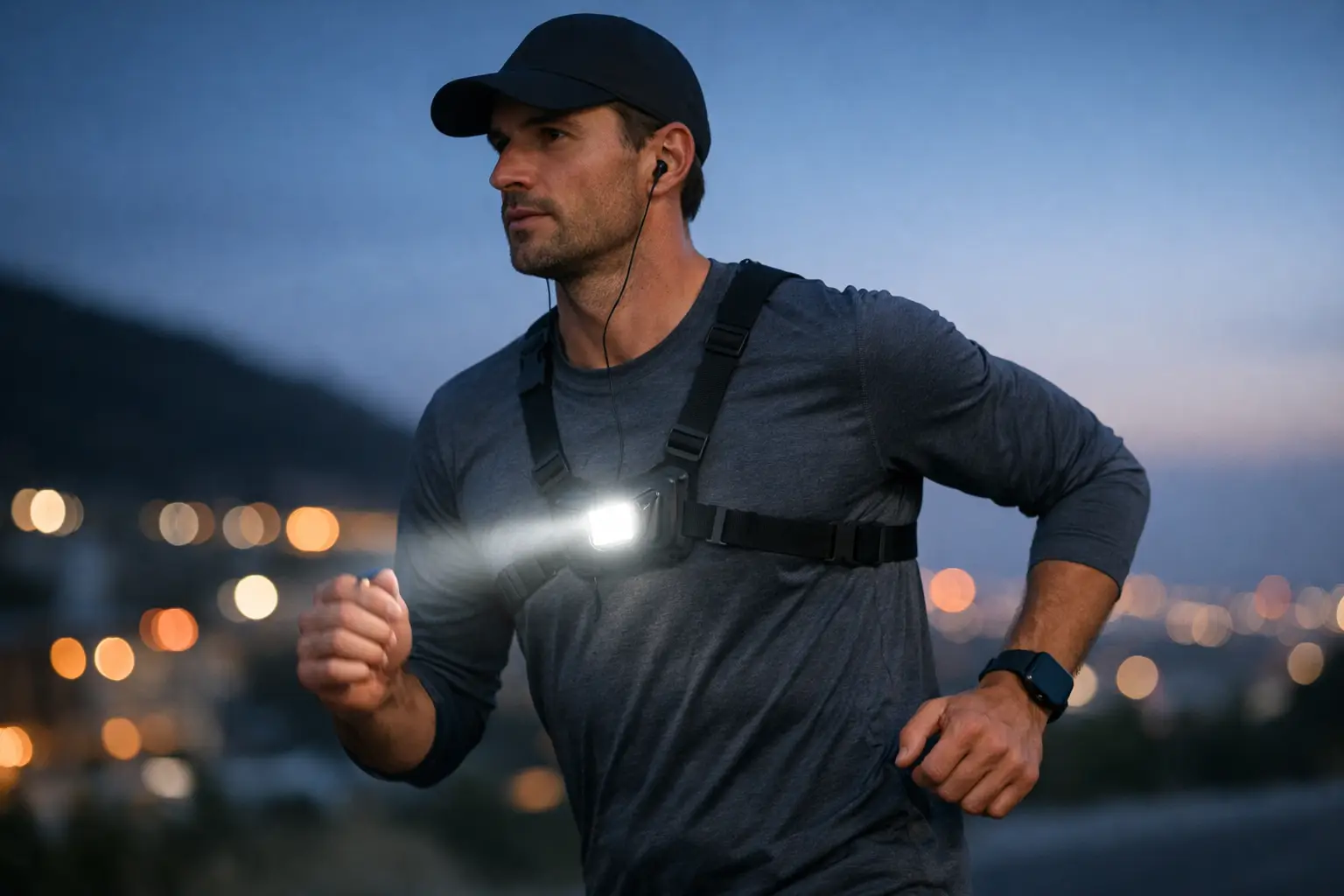
Running in the dark changes fast when your visibility kit is poor. A loose strap, a weak beam or a battery that fades halfway through a session can turn a simple evening run into a frustrating one. That is why a proper LED chest light review matters. For runners, this is not just about brightness. It is about comfort, consistency and whether the gear helps you move with confidence when the light drops.
What makes an LED chest light worth wearing?
A chest light has one clear job – help you see and help others see you. The problem is that plenty of products only do one half well. Some throw out a strong beam but bounce around on every stride. Others feel comfortable enough yet barely light the road ahead.
For runners, the sweet spot sits in the middle. You want enough forward light to spot potholes, kerbs, puddles and uneven trail sections, while also keeping a visible profile for drivers, cyclists and other pedestrians. That balance matters more than chasing the highest lumen number on the box.
Positioning is a major advantage. Because the beam sits lower than a head torch, a chest light can give more useful definition on the ground immediately ahead. You often get a better sense of texture and depth, which helps on wet pavements and mixed terrain. At the same time, it avoids that top-heavy feeling some runners dislike with a lamp on the forehead.
Still, chest lights are not perfect for everyone. If you frequently scan side to side on technical trails, a head torch moves with your gaze and can feel more natural. If most of your running happens in towns with decent street lighting, a chest light might be more visibility tool than essential illumination source. It depends on where, when and how you run.
LED chest light review: the features that matter most
Brightness gets the attention, but usability wins long term. In any LED chest light review, the first thing to assess is whether the beam is practical rather than simply powerful. A wide, even spread is often more useful than a narrow spotlight. Runners need to read the path, not interrogate a tree fifty metres away.
Battery life is where marketing claims often need a reality check. High mode can look impressive in product descriptions, but if it only lasts long enough for a short session, it will not suit anyone training through winter. Medium mode tends to be the real benchmark. If the light performs well there and still gives reliable runtime, that is a better sign of everyday value.
Fit matters just as much. The best chest light should stay stable over a base layer, a light jacket or a winter running top. Adjustable straps are essential, but adjustment alone is not enough. The strap material needs enough grip and flexibility to stay put without feeling restrictive across the chest and shoulders.
Weather resistance is another practical test. A runner in Britain needs kit that can handle drizzle, steady rain and general damp without fuss. You should not have to treat a visibility essential like fragile electronics. If a chest light cannot cope with regular wet-weather use, it is not built for real training.
Charging method also deserves attention. USB rechargeability is now expected, and rightly so. Disposable batteries are harder on the planet and less convenient for regular runners. A rechargeable unit aligns better with a lower-waste approach, provided the battery remains dependable over time.
Comfort on the run is the deciding factor
A chest light can look excellent in your hand and feel irritating after ten minutes at pace. That is why comfort usually decides whether a runner keeps using one.
Weight distribution is key. If the unit is too bulky at the front, you will notice it with every stride. That does not just annoy you – it can subtly change how relaxed your upper body feels. Good running gear should disappear once you get moving.
The strap system needs to be secure without creating pressure points. Chafing around the sternum, under the arms or over a zip line becomes obvious on longer runs. If you run in lighter layers during spring and autumn, this issue can show up quickly. A softer strap and a low-profile design usually make the difference.
Breathability matters too, especially for runners who heat up quickly. Chest-mounted gear sits over an area that already traps warmth under layers. If the harness is overbuilt, it can feel clammy and distracting. Minimal, stable and adjustable is the better formula.
How chest lights compare with head torches and reflective gear
A chest light does not replace every other visibility option. It fills a specific role.
Compared with a head torch, a chest light usually feels more natural for runners who dislike pressure around the head or bounce from a forehead strap. It also keeps your face clear, which many people prefer in rain or cold weather. On the downside, it does not follow your line of sight, which can matter on tighter trails.
Compared with reflective gear, a chest light is active rather than passive. Reflective straps and details only work when another light source hits them. A chest light creates visibility on its own. That gives it a stronger safety case for low-lit roads, early starts and unlit cycle paths.
The strongest setup is often a combination. Reflective details help others spot you from different angles, while a chest light helps you see the route and increases your presence. For runners who train regularly through autumn and winter, layering visibility tools is sensible rather than excessive.
Who benefits most from a chest light?
This type of gear makes the biggest difference for runners who regularly head out before sunrise or after sunset. If your schedule means dark miles are unavoidable, a chest light becomes practical kit rather than optional extra.
It is particularly useful for road runners in suburban or rural areas where street lighting is inconsistent. It also suits canal paths, park loops and mixed-surface routes where footing can change quickly. Beginners often benefit from it as much as experienced runners because confidence is part of safety. When you can see clearly, you run more naturally.
For runners training mostly in bright urban areas, the benefit may be more about being seen than seeing ahead. In that case, comfort and visibility modes matter more than maximum beam strength. Again, it depends on your route.
The trade-offs to look for before buying
No honest LED chest light review should pretend every feature improves everything else. There are trade-offs.
More brightness usually means shorter battery life. A larger battery can improve runtime, but it may add weight. A more secure harness can reduce bounce, but it might feel warmer or more restrictive. Flashing visibility modes can help you stand out in traffic, but some runners find them distracting when they are trying to settle into rhythm.
Price is another factor. A cheaper chest light can work well for occasional use, but regular runners should think in terms of seasons, not weeks. Reliability matters more than saving a small amount upfront if the product ends up replaced quickly. Buying less often and buying better is the smarter route for both performance and waste reduction.
That is where a brand’s approach matters. Durable, rechargeable gear built for repeated use makes more sense than disposable accessories that fail once the weather turns. For runners trying to balance performance with more responsible purchasing, that is not a side issue. It is part of the decision.
What a good runner-focused chest light should deliver
A chest light worth your money should feel secure from the first kilometre, offer enough beam spread to read the ground properly, and hold battery life that matches real training habits. It should be simple to charge, easy to adjust and dependable in wet conditions. It should also work with the kit you already own rather than forcing you to adapt around it.
For most runners, the best option will not be the one with the most extreme stats. It will be the one you actually reach for on a cold Tuesday evening when motivation is already low and the weather is trying to talk you out of the door. That is the real test.
If you are weighing up whether to add one to your kit, think less about headline numbers and more about your routine. Where do you run? How long are you out for? Do you want better path visibility, more presence in traffic, or both? Answer those honestly and the right choice becomes much clearer.
A good chest light will not make the miles easier, but it can remove one of the biggest barriers to consistent winter running. When your gear helps you feel seen, steady and ready to move, getting out there stops feeling like a compromise.