

Blog
LED Chest Light for Running: Worth It?

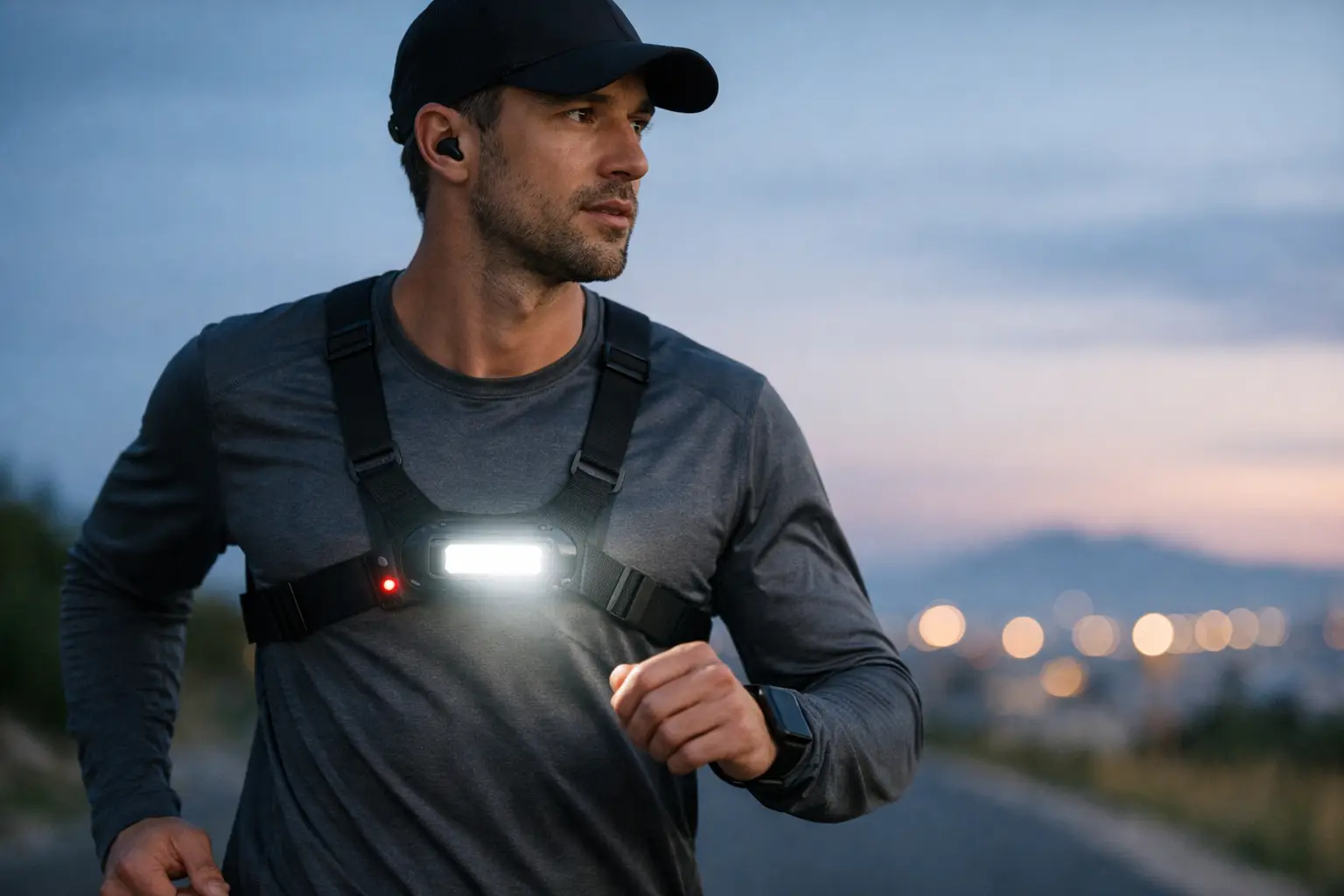
A poorly lit path changes your run fast. One minute you are settling into rhythm, the next you are second-guessing every puddle, kerb and uneven patch of pavement. That is exactly where an LED chest light for running earns its place – not as a gimmick, but as practical kit that helps you see clearly and stay visible without breaking stride.
For runners who train before sunrise, squeeze in evening miles after work, or head out through autumn and winter darkness, visibility is not a nice extra. It is part of running safely and confidently. The right chest light can make dark runs feel less hesitant, less awkward and far more usable, especially when you want gear that works hard for more than one season.
Why an LED chest light for running makes sense
A chest-mounted light sits lower than a head torch, and that changes how the beam works. Instead of shining from your forehead and flattening the ground ahead, it throws light across the surface at a lower angle. In real terms, that can make dips, stones, roots and broken tarmac easier to spot because shadows are clearer.
It also solves a problem plenty of runners know well – the irritation of wearing something on your head for an hour or more. Some people never get on with head torches. They bounce, squeeze, slip, or feel too warm. A chest light spreads weight across your torso instead, which can feel more stable and less distracting.
There is also the visibility factor. Many chest lights do two jobs at once: a forward beam to help you see, and rear or side lighting to help others see you. If you run on roads, shared paths or near cyclists, that extra visibility matters. It is a simple upgrade with a real effect.
Chest light or head torch?
This is where honesty matters. A chest light is not automatically better than a head torch. It depends on where, when and how you run.
If you run technical trails with tight turns and want the beam to follow your exact line of sight, a head torch still has an advantage. You look left, the beam goes left. You look down, the beam drops with you. That direct control can be useful on rough ground.
But for road running, canal paths, parks and steady off-road routes, a chest light often feels more natural. The beam stays steady even when you scan around, and many runners find that easier on the eyes. You are lighting your route, not every glance.
There is another trade-off. Head torches can create more noticeable bounce in your vision because the light moves with every nod and step. A chest-mounted light usually reduces that effect. For some runners, that means less fatigue and a calmer feel on longer runs.
If you regularly run in very dark places, the best answer may be both. A chest light provides broad, useful ground illumination, while a lighter head torch adds directional spotting when needed. That is not excess. It is just choosing dependable kit for the conditions.
What to look for in an LED chest light for running
Brightness gets the attention, but it should not be the only thing you judge. A light with huge lumen claims is not always the best choice if the beam is too narrow, the battery drains quickly, or the unit bounces around after twenty minutes.
Fit comes first. If the harness shifts on hills or loosens over layers, you will notice it all run long. Look for adjustable straps that sit close to the body without restricting breathing. A chest light should feel secure over a base layer, a jacket or a winter top. If it only fits well in one setup, it is less useful than it looks.
Beam pattern matters more than many people expect. A broad flood beam is usually best for general running because it lights the ground in front of you without creating a harsh tunnel effect. A very focused beam can work for speed or distance, but on everyday runs it often feels too narrow.
Battery life is where good intentions meet reality. Think about your longest usual run, then add margin. If you normally run for 45 to 60 minutes, a short battery might be fine. If you train for half marathons, marathons, or winter long runs, you want a light that can comfortably outlast your session. Rechargeable models are usually the right call for runners who care about reducing waste and avoiding the constant churn of disposable batteries.
Weather resistance matters in Britain for obvious reasons. Drizzle, mist and proper rain are part of the deal. A running light does not need to be indestructible, but it should cope with regular wet conditions without turning temperamental.
Then there is ease of use. Can you change brightness with gloves on? Can you charge it simply? Does it clip or strap on in seconds? Running kit earns its place by being used often. If it is fiddly, it gets left behind.
The comfort factor runners underestimate
Comfort is not just about soft straps. It is about whether a light disappears once your run starts.
A good chest light should move with your body, not against it. That means limited bounce, no rubbing around the sternum or ribs, and no awkward pressure when breathing hard. It also means sensible weight. A heavier unit may offer more battery or a stronger beam, but there is a line where extra power becomes extra annoyance.
Layering changes the feel too. In summer, a harness sits directly over a lighter top and any friction becomes obvious quickly. In winter, bulkier layers can improve comfort but affect fit. That is why adjustability matters so much. One-size claims are common, but real comfort depends on having enough range to adapt through the seasons.
For runners who already wear reflective straps or a hydration vest, compatibility is worth thinking through. Too much overlap across the chest can feel cluttered. The best gear is cross-functional and simple. If one piece can help you see and be seen without adding fuss, that is a better long-term choice than buying another disposable extra you barely use.
When a chest light is most useful
The case for a chest light becomes strong in very ordinary running scenarios. Early commutes, winter 5Ks, evening dog-leg routes through estates and parks, steady long runs at the weekend – this is where practical gear earns its keep.
Road runners benefit because visibility to drivers, cyclists and other pedestrians improves. Trail runners benefit because ground texture becomes easier to read. Beginners benefit because dark running feels less intimidating when the route ahead is properly lit.
It can also help with consistency. Plenty of runners lose momentum in colder months because darkness makes sessions feel inconvenient or unsafe. Reliable visibility removes one more excuse. If your goal is to run through winter instead of restarting every spring, a good light is not an accessory. It is part of the habit.
Is brighter always better?
Not really. More brightness can help on unlit trails and country lanes, but it is not automatically more comfortable or more useful.
Too much brightness on roads or shared paths can create glare, wash out your near vision, and drain the battery faster than necessary. Many runners are better served by a medium setting with a balanced beam and decent runtime. A high mode is useful as backup for darker stretches, not necessarily as your default.
This is where sensible design wins over marketing. You want usable light, not just impressive numbers on a product page. Reliability matters more than spectacle.
Choosing gear that lasts
There is no shortage of cheap running accessories that work for a month and then end up forgotten in a drawer. That cycle is bad for your wallet and worse for the planet. A chest light should be something you rely on across seasons, not replace the moment the weather turns rough or the battery starts fading.
That is why durable construction, rechargeable power and everyday practicality matter. Buying less but buying better is not about perfection. It is about avoiding throwaway kit that solves one problem briefly and creates another later. For runners who care about performance and sustainability, that is the smarter standard.
4R stands firmly in that camp. Running gear should help you train better, last properly and avoid the waste built into fast fashion thinking. A chest light is a small example, but the principle is the same – choose kit that earns repeated use.
So, is an LED chest light worth it?
If you run in low light regularly, yes, for most people it is. It improves visibility, often feels more comfortable than a head torch, and makes dark miles more manageable. It is especially strong for road running, urban routes and mixed surfaces where seeing the ground clearly and being seen by others both matter.
It is not the perfect choice for every runner or every route. Technical trail specialists may still prefer a head torch, and some runners will want both. But for everyday training, a chest light solves real problems in a simple way.
The best running gear does not shout for attention. It quietly removes friction, keeps you moving and makes it easier to train on your terms, whatever the light is doing outside.