

Blog
Running Visibility Accessories That Work

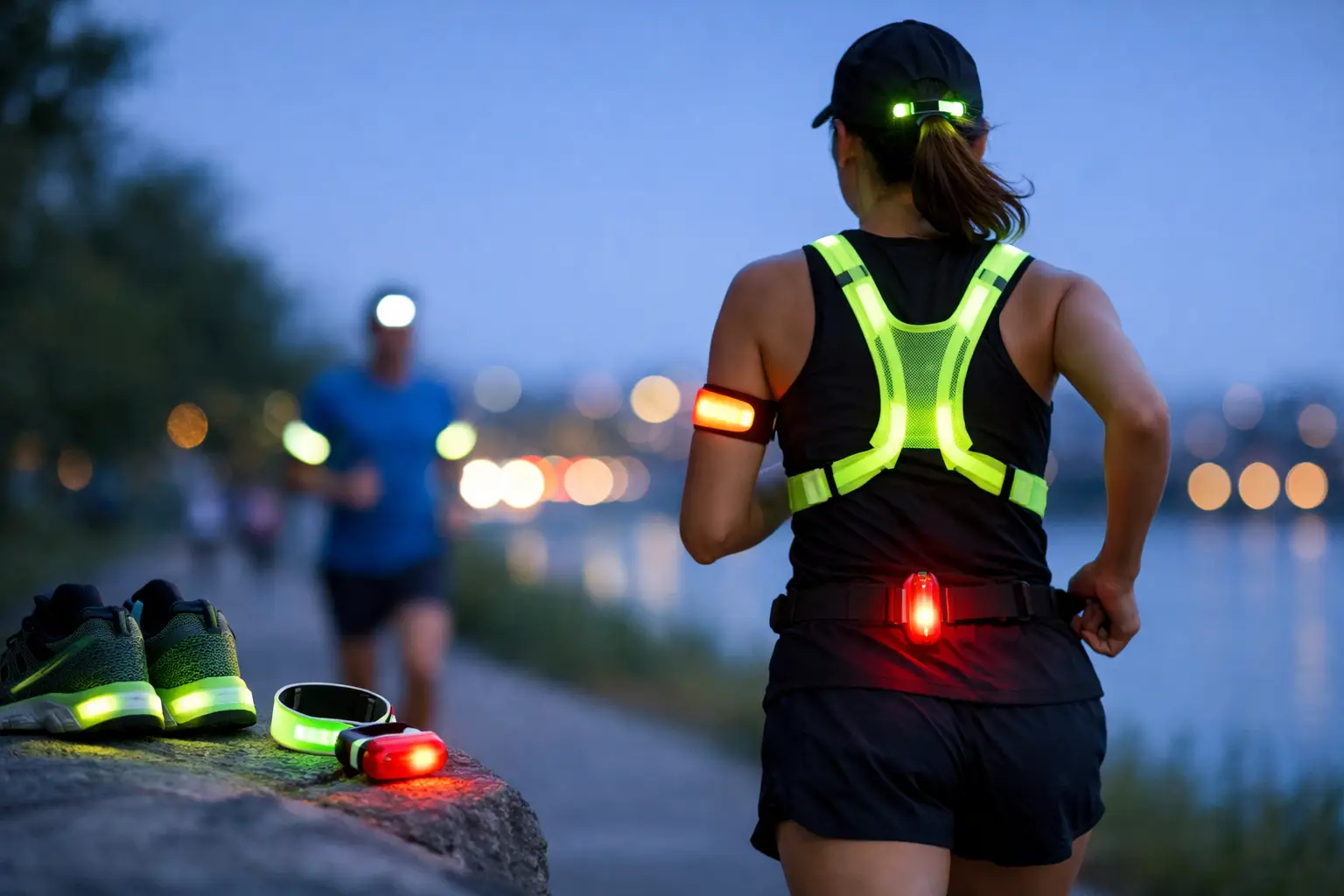
That stretch of road looks familiar in daylight. At 6am or after work in winter, it is a different place entirely. Cars appear faster, cycle lanes feel tighter, and even a well-known path can turn into a poor choice if you are hard to spot. That is where running visibility accessories stop being optional extras and start being practical kit.
For most runners, visibility is not about buying more stuff for the sake of it. It is about choosing a few dependable pieces that help you run safely, comfortably and consistently when light is low. If you run before sunrise, after sunset, or through dull, wet weather, the right accessories do a job your brightest top cannot do alone.
Why running visibility accessories matter
There is a difference between being visible and thinking you are visible. A pale top might stand out on a bright day, but it does very little on an unlit road. Reflective details help when light hits them. Active lights help people see you before that happens. Good running visibility accessories usually combine both.
This matters most in the conditions many runners actually face – dark commutes, winter training blocks, drizzly evenings and shared paths with cyclists or dog walkers. You do not need to be running country lanes in total darkness for visibility to become an issue. Urban streets can be full of blind corners, parked cars and patchy lighting.
The other reason visibility matters is confidence. When you know you can be seen, you spend less mental energy second-guessing every crossing or narrow section of pavement. That makes for a better run. Not perfect conditions, just fewer avoidable risks.
The main types of running visibility accessories
Not every accessory solves the same problem, and that is where runners often waste money. One item might make you more noticeable to drivers from a distance. Another might help you see the surface in front of you. Some do both reasonably well, but very few do everything.
Reflective gear
Reflective accessories work by bouncing light back towards its source. That makes them especially useful around vehicles, bikes and street lighting. Reflective vest straps, ankle bands and trims on clothing can all help, particularly when they move with your stride.
Movement matters. A reflective strip across the chest is useful, but reflective points on the arms, legs or feet can be even more eye-catching because they signal human motion. If a driver sees a moving reflective pattern, they recognise you faster than a static block of brightness.
The trade-off is obvious enough. Reflective gear is only effective when light hits it. On a truly dark trail with no passing traffic, reflection alone is not enough.
LED lights
LED chest lights, clip-on lights and wearable blinkers create their own visibility. That gives them an advantage in low-light conditions where reflection is limited. They can make you noticeable from farther away and from more angles, depending on how they are positioned.
A chest-mounted light is often a strong option for road running because it sits securely, keeps your hands free and helps create a clear point of visibility at torso height. Some runners prefer small flashing lights for short urban runs, but these can be less useful on routes where you need consistent, obvious presence.
The trade-off here is battery life and reliability. If the charge is poor, the benefit disappears quickly. Comfort also matters. If a light bounces, rubs or feels heavy after twenty minutes, it will end up in a drawer.
Head torches and headlights
A rechargeable headlight is less about being seen and more about seeing what is ahead, though it helps with both. For runners on unlit paths, country roads or rougher ground, this is often the piece that changes the whole run. It helps you judge footing, spot puddles, read the edge of a trail and avoid the awkward last-second hop over broken pavement.
Fit is crucial. A head torch that slips with sweat or pressure points is hard work. Beam strength matters too, but more lumens are not always better. On city streets, very high brightness can feel excessive. On dark trails, it may be exactly what you need. It depends on where and how you run.
How to choose running visibility accessories well
The best setup is rarely the biggest one. It is the one you will actually wear every time conditions demand it.
Start with your route. If you mostly run under streetlights in town, reflective straps and a compact LED light may be enough. If your route includes parks, canal paths or roads with weak lighting, you probably need active lighting plus reflective detail. If you run trails or rural lanes, seeing ahead becomes just as important as being seen.
Then think about fit. Accessories should stay put without constant adjustment. A reflective vest strap needs to sit close to the body without digging in. A chest light should not bounce on steady efforts. No runner wants safety kit that turns into a distraction halfway through a session.
Durability matters more than novelty. Cheap lights often look fine out of the box and fail when the weather turns or the charging port starts to wear. A better approach is to buy fewer, harder-working pieces that can survive regular use. That is good for your wallet and better for the planet.
This is where a sustainable mindset matters. Running kit should earn its place. Accessories that are reliable, rechargeable and built for repeat use beat disposable, low-grade gear every time. Performance and responsibility are not opposites. They should work together.
What runners often get wrong
A common mistake is relying on clothing colour alone. Bright colours can help in daylight or dull weather, but they are not a substitute for reflective elements or active light in darkness. Fluorescent fabric is not magic after sunset.
Another mistake is focusing only on front visibility. Cars, cyclists and other path users approach from different directions. You want some visibility from the side and rear as well, especially at junctions or crossings. That does not mean dressing like a festival float. It means thinking in angles.
There is also a tendency to overbuy. You do not need five flashing gadgets clipped to every seam. Too many accessories can become uncomfortable, fiddly and easy to neglect. A cleaner setup usually works better – one dependable light source, one reflective layer or strap system, and a headlight when the route calls for it.
Building a simple, dependable low-light setup
For most runners, a practical setup is straightforward. A reflective vest strap gives broad visibility without adding much weight. A rechargeable chest light adds active visibility and keeps your profile obvious in poor light. A headlight comes in when the route is dark enough that you need to see the ground clearly.
That combination covers most real-world running conditions without pushing you into gear overload. It also works across seasons. In summer, you may only need one piece for early starts. In winter, you may use the full setup several times a week.
If you already have reflective details on your jacket or tights, that can be a useful base, but dedicated accessories usually do more. They are designed to be seen, not just to tick a design box.
One smart habit is keeping your visibility kit together and charged. If your light is always empty or your reflective gear is buried under laundry, even the best equipment is useless. Make it part of your running routine, not an afterthought.
Visibility should not mean disposable kit
There is a wider point here. A lot of sports accessories are sold like impulse buys – cheap, short-lived and easy to replace. That approach creates clutter, waste and disappointment. Runners deserve better.
A well-made visibility accessory should last through repeated training weeks, bad weather and regular charging. It should solve a real problem. It should not become landfill because a strap frayed or a battery gave up after one season.
That is why it makes sense to choose gear from brands that treat running as a long-term practice, not a quick sale. 4R takes that view seriously: practical products, built to keep working, without feeding the fast-fashion cycle that has no place in responsible sport.
Running in low light is part of normal life for a lot of us. Work runs late. Winter shrinks the day. Training still has to happen. The right visibility accessories do not make you invincible, but they do stack the odds in your favour. Pick the pieces that suit your route, wear them consistently, and let safer miles become part of the habit rather than another decision to make at the front door.