

Blog
Best Rechargeable Running Headlight Guide

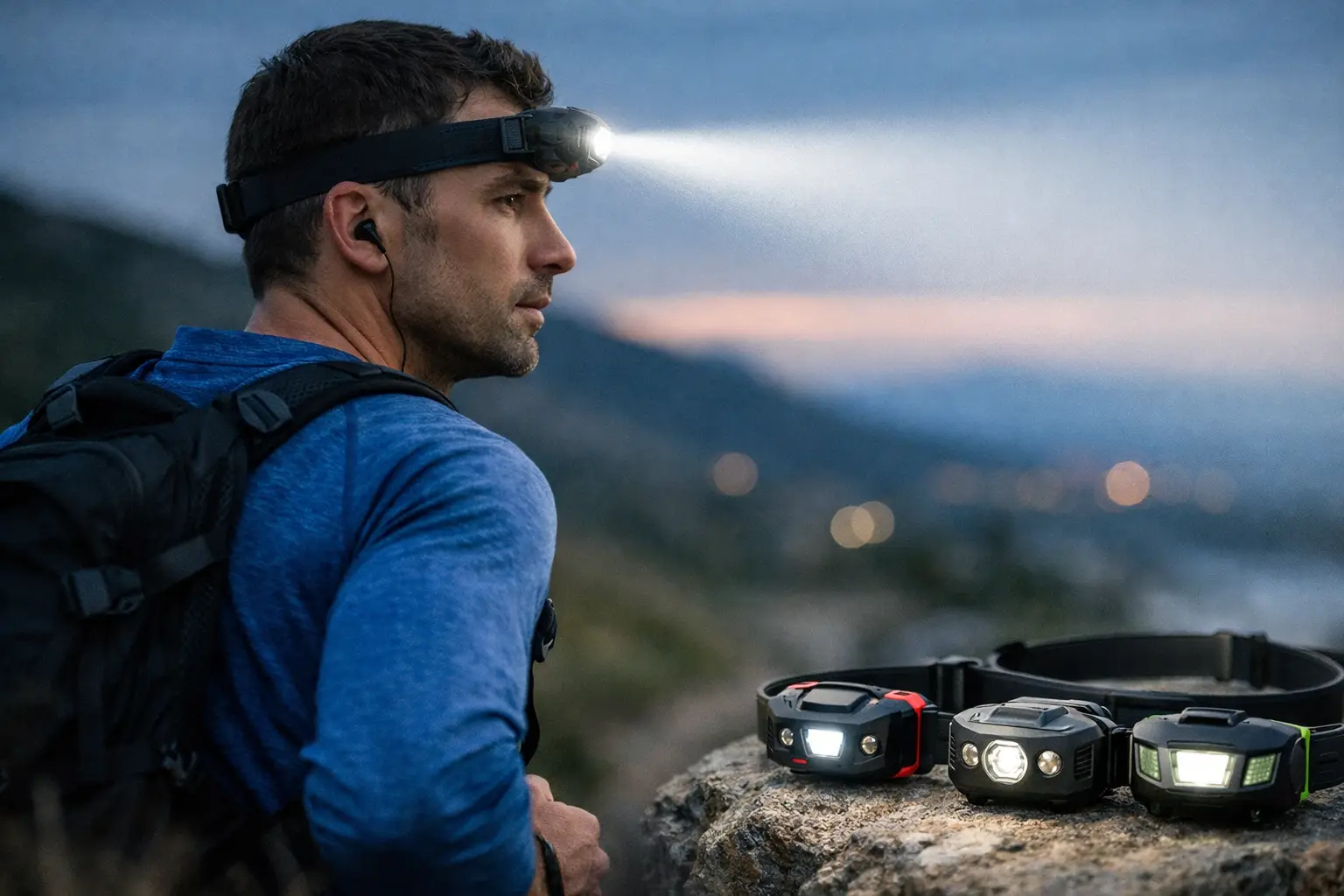
That moment when the streetlights end and your route keeps going is where bad gear gets exposed fast. The best rechargeable running headlight is not just about brightness. It is about staying seen, seeing clearly, and finishing your run without a slipping strap, a dead battery, or another piece of disposable kit headed for landfill.
For runners, this is practical, not flashy. Early starts, winter evenings, unlit paths and mixed terrain all demand gear you can trust. A good headlight should feel secure, light enough to forget about, and powerful enough to give you confidence when the pavement turns rough or the trail narrows.
What makes the best rechargeable running headlight?
The short answer is balance. The brightest model on the shelf is not automatically the right one. If it bounces, feels heavy, or runs too hot, you will notice every flaw after the first kilometre.
A strong running headlight gets four things right. It gives you enough beam power for your route, enough battery life for your usual sessions, a fit that stays put, and charging that is simple enough to become part of your routine. That last point matters more than people think. If charging is awkward, runners put it off. If it is easy, the light gets used.
Weight is usually the first trade-off. More battery can mean more runtime, but it can also mean more bulk on your forehead. For road running in built-up areas, you often do not need a huge lamp with an ultra-long beam. For dark trails, country lanes, or mixed off-road routes, you probably do.
Then there is beam pattern. A narrow, focused beam throws light farther ahead, which helps on faster runs and technical ground. A wider flood beam lights more of what is around you, which can feel better on shared paths or uneven pavements. Many runners do best with a light that combines both or lets you switch between modes.
Best rechargeable running headlight features that matter on real runs
Brightness gets the attention, but comfort keeps you wearing the light. Look for a secure strap that does not dig in and does not loosen with sweat. A headlight can test perfectly in a product lab and still be irritating after twenty minutes on the move.
Rechargeability is another non-negotiable for many runners now, and rightly so. Disposable batteries are inconvenient, expensive over time, and hard to square with a lower-waste mindset. A USB rechargeable unit is simpler to live with and easier to justify if you run regularly through autumn and winter.
Water resistance matters too, especially in Britain where dry weather is never guaranteed. You do not need to train through a storm every week to benefit from a light that can cope with rain, spray and cold starts. If your headlight only performs in ideal conditions, it is not built for real life.
Visibility from the side is often overlooked. Seeing the road is one job. Being seen by drivers, cyclists and other runners is another. Some headlights include side lighting or flashing modes, and that extra visibility can make a genuine difference on darker roads and crossings.
Battery life versus max brightness
This is where marketing claims can get slippery. A light may advertise a very high lumen figure, but only for a short burst. On full power, battery life can drop fast. For most runners, medium mode ends up being the setting that matters most because it is the one you will actually use for the majority of your miles.
If your runs usually last thirty to sixty minutes, you do not need expedition-level battery performance. If you are training for a marathon, ultra, or long winter sessions before work, then battery consistency becomes more important than peak brightness. Buy for your actual habits, not your most ambitious fantasy route.
Fit matters more than spec sheets
A headlight that shifts with every footstrike is exhausting. You start adjusting it, tightening it, tilting it down, and losing focus on the run itself. Lightweight models usually work best for steady road miles, while a more structured fit can help on trails where movement is rougher.
Some runners also prefer a lower-profile light paired with reflective gear rather than one oversized unit doing all the work. That approach can feel more natural and often gives you flexibility depending on weather and route.
How to choose the best rechargeable running headlight for your route
Start with where you actually run. Urban runners with some ambient light need a different setup from those heading onto canal paths, woodland tracks or country roads. There is no point paying for extreme range if your route is mostly lit. There is also no point going minimal if you regularly run where roots, puddles and loose gravel are part of the deal.
For roads and pavements, comfort and visibility to others usually come first. A moderate beam, low weight and reliable battery are often enough. For trails, stronger forward lighting and better stability matter more because your footing depends on what you can see ahead.
Pace also changes the decision. Faster runners generally benefit from a beam that reaches farther in front, giving more reaction time. Slower recovery runs or walk-run sessions can work well with a softer, wider pattern.
Weather should shape your choice too. In cold months, battery performance can dip, and gloves make fiddly buttons annoying. A simple control layout wins here. Gear should help your run, not become one more thing to battle with in the dark.
What to avoid when buying a running headlight
The first trap is buying by lumens alone. Big numbers sell products, but they do not guarantee a better run. If the unit is heavy, unstable or uncomfortable, the extra brightness will not save it.
The second is treating running headlights like generic outdoor gear. A lamp made for camping or occasional dog walks may be fine at low movement, but running exposes weaknesses quickly. Bounce, sweat, chafing and repeated impact all make the standard much higher.
The third is buying cheap throwaway gear that needs replacing every season. That can feel like a saving at checkout, but it usually costs more over time and creates more waste. Durable kit is better for your wallet and better for the planet. That matters to us at 4R because runners should not have to choose between performance and principles.
Why rechargeable is the smarter choice
Rechargeable headlights fit the way most people train now. You finish your run, plug the light in with the rest of your devices, and it is ready for the next session. No hunting for spare batteries. No half-dead backup pair rolling around in a drawer. No unnecessary repeat purchases.
There is also a bigger point here. Running gear should work hard and last. Choosing rechargeable over disposable is a small but meaningful shift away from wasteful habits that the sports industry has normalised for too long. Better products should not be built around being replaced as quickly as possible.
That does not mean every rechargeable model is automatically a good one. Build quality still matters. Charging ports need to hold up. Battery performance should stay dependable after repeated use. But when the product is well made, rechargeable is the clear win for regular runners.
A simple checklist before you buy
Think about your usual run length, how dark your route really is, and whether you need to prioritise range or comfort. Check how the light charges, how long it lasts on the setting you will actually use, and whether the strap looks suitable for repeated movement, not occasional wear.
If you wear a hat in winter, make sure the headlight works with it. If you sweat heavily, consider how the strap material will feel after repeated use. If you run in traffic-heavy areas, do not ignore visibility features that help others spot you sooner.
Most of all, be honest about your routine. The best rechargeable running headlight is the one that fits your real miles, not the one with the most dramatic packaging.
A good run in the dark should still feel like your run – steady, focused and free of distractions. Choose a headlight that earns its place every time you head out, and you will notice the difference where it counts: not on the box, but on the road, the path, and the last stretch home.