

Blog
Rechargeable Running Headlamp Review

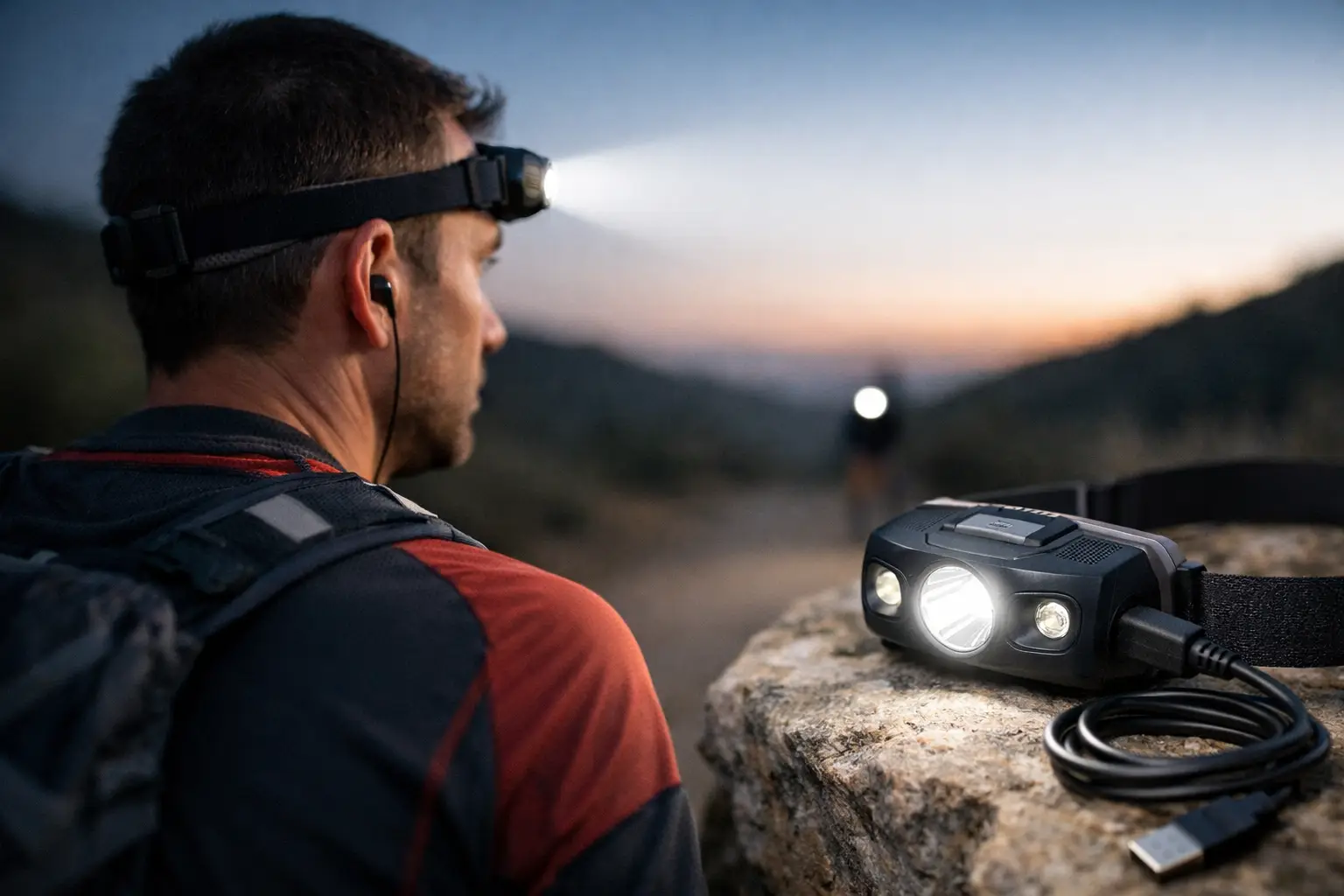
That moment when the street lights thin out and the path ahead turns black is when gear stops being an extra and starts being essential. A proper rechargeable running headlamp review matters because runners do not need gimmicks. They need clear visibility, stable fit, decent battery life and a product that lasts beyond one winter of early starts.
For most runners, a headlamp is not about chasing ultra-distance glory. It is about getting out before work, finishing after dark and feeling seen and steady on the move. That is why the best rechargeable options are not always the brightest on the box. The real test is how they perform when you are cold, sweating, moving and trying not to think about your kit at all.
What a rechargeable running headlamp review should actually judge
A lot of product round-ups lean too hard on lumens. Brightness matters, but only up to a point. If a lamp is blindingly bright for twenty minutes and then fades fast, that is not much use on a 10k or a long easy run. The better question is how usable the light is across the whole session.
Beam pattern is just as important as raw output. Runners usually need a broad, even spread for pavements, parks and mixed-use paths. A tight spotlight can work on technical trails, but on roads and canal paths it often creates tunnel vision. You end up seeing the centre clearly while the edges disappear.
Comfort is another deal-breaker. If the lamp bounces with every stride or the strap starts rubbing after half an hour, it will not become part of your routine. Lighter usually feels better, but balance matters too. A slightly heavier lamp with a stable design can outperform a featherweight one that shifts around constantly.
Then there is battery life. Rechargeable sounds convenient, and it is, but only when the charging system is reliable and the run time matches reality. Some lights advertise impressive numbers on low mode that are not much use in genuine darkness. A good review has to judge battery life on settings runners will actually use.
Rechargeable running headlamp review: the features that count
If you are choosing between models, start with fit and stability. A headlamp should feel secure without needing to be clamped to your skull. Adjustable elastic straps are standard, but the better ones hold their tension over time. Cheap straps often feel fine in week one and loose by week six.
Weight sits right behind that. For steady road running, many people are happiest with something compact and low-profile. On rougher ground, a slightly more substantial unit can be worth it if the beam is stronger and the housing more durable. It depends on where you run most often.
Water resistance matters more than many runners expect, especially in Britain. You are not just planning for heavy rain. You are planning for drizzle, sweat, mud spray and damp storage after a grim November session. A lamp does not need to be indestructible, but it should cope with regular bad weather without becoming temperamental.
Buttons are another underrated detail. If the controls are fiddly with cold fingers, you will notice. If cycling through modes takes five clicks and a lucky guess, you will notice that too. The best designs are simple. One button, predictable modes, no nonsense.
Red rear visibility or side visibility can be genuinely useful if you share roads with traffic. A headlamp helps you see, but it should also help others spot you sooner. That said, a front light is not a complete visibility system on its own. Many runners are better served by pairing it with reflective kit or chest lighting depending on route and traffic levels.
Where rechargeable headlamps shine and where they do not
Rechargeable models make a lot of sense for regular runners. You avoid the constant churn of disposable batteries, which is better for your wallet and better for the planet. If you run in low light several times a week, that convenience adds up quickly.
They also tend to be easier to live with day to day. Plug in after your run, top up at your desk, charge from a power bank when travelling. There is less faff and less chance of discovering you have no spare batteries ten minutes before heading out.
The trade-off is simple. Rechargeable lamps rely on you being organised. If you forget to charge them, there is no last-minute battery swap to save the session. Some runners solve that by keeping a charging cable in their work bag or hall drawer. Others prefer a backup light for peace of mind during winter training blocks.
Battery degradation is worth mentioning too. Over time, any rechargeable unit will lose some capacity. That does not make it a bad buy, but it does make build quality and longevity more important. A durable lamp used for years is a far better choice than a cheap unit replaced every season.
Road running versus trail running
The right headlamp depends heavily on where your feet are landing.
For road and pavement running, you often need moderate brightness, a broad beam and strong visibility to others. You are usually not trying to pick out roots and rocks at speed. Comfort, low weight and reliable run time matter more than huge output claims.
For trail running, especially on unlit or uneven ground, beam quality becomes far more critical. You may need a stronger forward throw and better depth perception. That usually means a slightly larger unit or a higher-powered setting, which can reduce battery life. There is no point pretending one setup is perfect for every runner.
If your week includes both urban miles and the occasional trail session, look for a lamp with useful mid-range settings rather than one extreme strength. Flexibility beats bragging rights.
The common mistakes runners make when buying one
The first is buying based on maximum lumens alone. Brands know big numbers sell. But most runners need consistent, usable light, not a turbo mode they can only tolerate for short bursts.
The second is ignoring bounce. Product photos do not show what happens at 6 minutes per kilometre with tired form and uneven ground. If the design looks top-heavy, there is a good chance it will feel top-heavy too.
The third is overlooking charging practicality. A proprietary cable might not seem like an issue until it goes missing. USB charging is usually the simplest option for everyday use.
The fourth is forgetting the sustainability angle. Cheap accessories that fail early are not bargains. They cost more over time and create more waste. Runners who care about performance should care about durability as well. The two belong together.
What good value really looks like
Value is not the cheapest lamp on the page. It is the one you trust enough to use week after week. That means stable comfort, sensible brightness, dependable battery life and materials that do not feel disposable.
A slightly higher upfront cost can make sense if the product is built to last and designed for regular training. That is especially true for runners who train through autumn and winter rather than waiting for lighter evenings. Reliable kit removes excuses and supports consistency.
This is where challenger brands with a practical mindset often get it right. They focus less on flashy packaging and more on useful design, fair pricing and gear that earns its place. 4R sits squarely in that camp. Runners do not need throwaway accessories. They need dependable tools that fit real training and align with better buying habits.
Who should buy a rechargeable running headlamp?
If you run before sunrise, after work, through winter or on unlit routes, a rechargeable headlamp is a smart purchase. It is especially useful for beginners building routine, because anything that makes dark runs feel safer and simpler increases the chance you will keep showing up.
It is also a strong choice for runners trying to cut down on waste. Rechargeable gear is not automatically sustainable if it is badly made, but a durable model used often is clearly a better direction than burning through disposable batteries and replacing flimsy kit every year.
If you only run in daylight or stick to brightly lit urban routes, you may not need one every day. But many runners are surprised by how often it earns its keep once the clocks change.
A good headlamp will never be the most glamorous bit of running kit you own. It will not shave minutes off your PB or make easy miles feel easy. What it will do is keep you moving when the light drops, help you feel more confident on dark routes and remove one more barrier between you and the run. That is more than enough reason to choose carefully.