

Blog
How to Start Night Running Safely

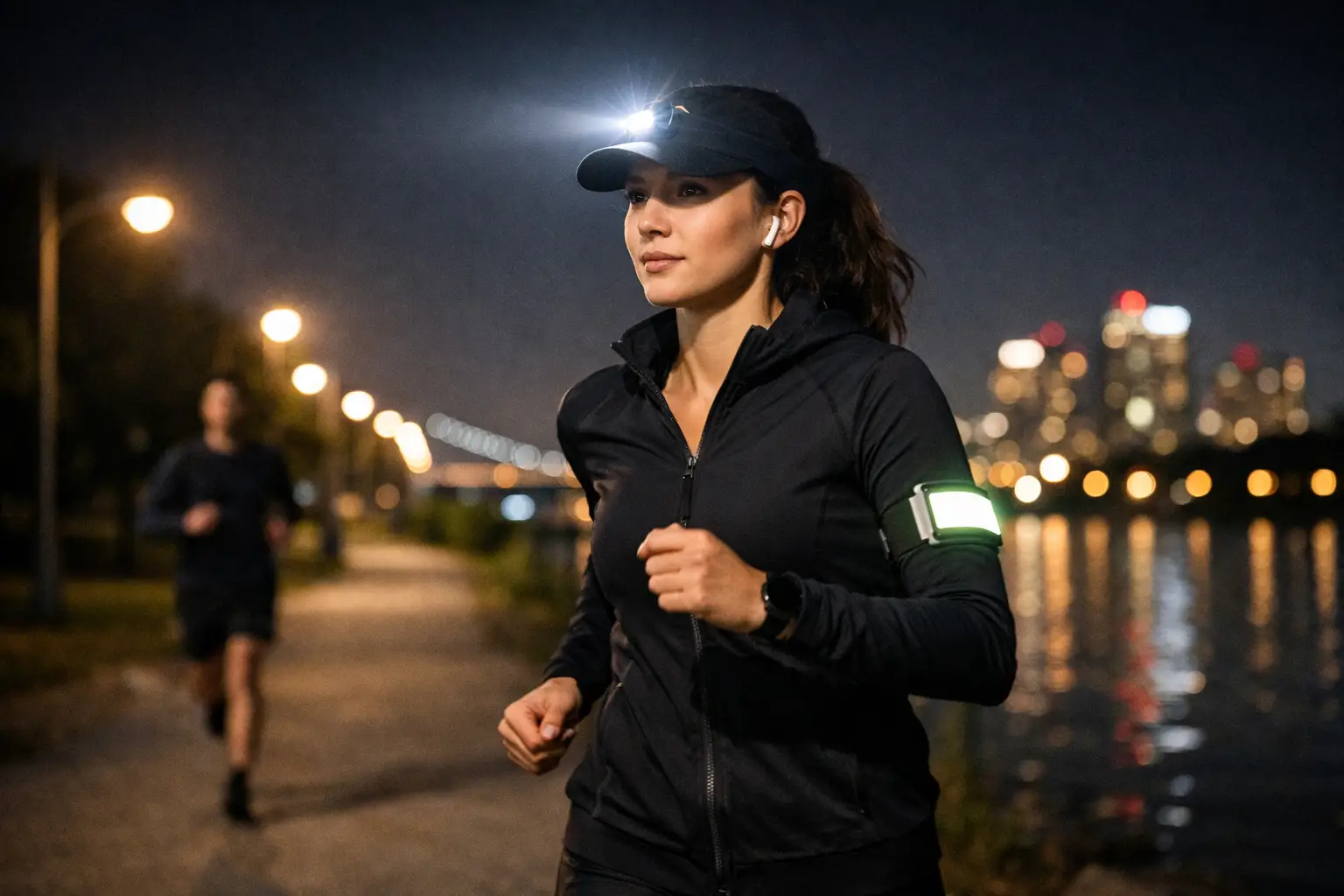
Finishing work at half five, eating something quick, then realising the only time left to run is after dark – that is how night running starts for a lot of people. If you are wondering how to start night running, the good news is that it does not need to feel risky, awkward or overcomplicated. It just needs a bit more thought than a daytime run.
Night running can be one of the easiest ways to train consistently through winter, fit exercise around family life, or avoid crowded routes. It can also feel calm and focused in a way daytime running often does not. But there is a clear trade-off: less visibility means you need to take safety, route choice and kit more seriously.
How to start night running without overthinking it
The biggest mistake beginners make is assuming night running is just normal running in darker conditions. It is not. You do not need specialist kit for every run, but you do need to be visible, able to see where you are going, and prepared for routes to feel different after sunset.
Start small. Pick a route you already know well in daylight, keep the first few runs short, and go at an easy pace. Familiar streets, park loops with lighting, or a steady out-and-back route are usually better than trying a new trail or adding speed work straight away. Confidence matters more than distance at the beginning.
If a route feels slightly off in daylight, it will usually feel worse at night. Trust that instinct. The best night running route is not the most scenic one. It is the one with decent lighting, predictable footing, lower traffic risk, and enough people around that you do not feel isolated.
Choose visibility first, then comfort
When runners buy for night running, they often think about seeing ahead. That matters, but being seen is just as important. Drivers, cyclists and other pedestrians need to spot you early, especially in areas with patchy lighting, parked cars or busy junctions.
Reflective gear helps when light hits it, but it does not replace an active light source. If you are running on roads, near crossings or through poorly lit areas, a rechargeable running headlight or chest light makes a real difference. A headlight follows your line of sight, which is useful for uneven paths. A chest light can feel more stable for some runners and gives a broad, consistent beam. It depends on what feels comfortable and what sort of route you use most.
High-visibility reflective gear is worth treating as standard rather than optional. A bright top helps in twilight, but reflective details are what stand out once it is properly dark. If your usual running kit is all black, navy or grey, that is fine for the gym but not ideal for evening miles.
Comfort still matters. If your socks slip, your shoes need retying, or your kit chafes, those minor annoyances become more distracting at night. Simple accessories can fix a lot of that. No-tie elastic laces save you stopping in the dark to sort your shoes, and anti-chafe balm is one of those products that feels unnecessary until a cold, damp run proves otherwise.
Plan your first few runs properly
You do not need a spreadsheet, but you do need a basic plan. Before heading out, decide your route, how long you will be out, and what conditions you are dealing with. Darkness changes depth perception, shadows hide kerbs, and wet ground can be harder to read under streetlights.
Check the weather. Rain and wind do not just affect comfort – they can reduce visibility, make surfaces slippery and change how safe roads feel. A familiar route on a dry evening can feel completely different in heavy rain.
Take your mobile phone, ideally charged well enough that you are not worrying about battery life halfway through the run. Let someone know where you are going if you are heading out alone, especially if it is your first time running at night or your route is quieter than usual.
There is no shame in keeping it simple. A 20 to 30 minute easy run on known roads is a smart starting point. You are not trying to prove anything. You are building a routine that feels manageable enough to repeat.
What to wear for night running
A lot depends on temperature, route and effort level, but the basics are straightforward. Dress for movement, not for standing still. Most runners need one light layer fewer than they first think, because you warm up quickly once you get going.
For night runs, visibility should be built into what you wear, not added as an afterthought. Reflective details on your top, jacket or accessories help, and a light source is often essential rather than nice to have. If it is cold, keep your hands and ears covered if needed, but avoid bulky layers that make you overheat or restrict movement.
Pay attention to small friction points. Damp clothing, seams and longer winter runs increase the chance of rubbing, especially around the feet, thighs and underarms. Anti-chafe balm is useful year-round, but it earns its place in colder months when more layers and wetter conditions are involved.
If you run straight from work, make your setup easy to use. That matters more than buying lots of extras. Keep your evening kit in one place, charge your light after each run, and avoid anything fiddly enough to become a reason for skipping the session.
Stay aware without becoming tense
Night running should feel alert, not nervous. There is a difference. You want to pay attention to your surroundings, but if you are constantly on edge, the route or timing may not be right for you.
Skip headphones on your first few night runs if you are still getting used to the change in conditions. Once you are comfortable, many runners use one earbud or keep the volume low enough to hear traffic, bikes and other people approaching. Again, it depends on the route. On a quiet canal path, more awareness may be needed than on a busy, well-lit pavement.
Cross roads more carefully than you would in daylight and assume drivers have not seen you until you are certain they have. Reflective kit helps, but it does not guarantee attention from tired drivers, people turning quickly, or anyone dealing with glare from headlights and rain.
Also be realistic about footing. Kerbs, potholes, wet leaves and uneven paving can appear later than you expect under artificial light. Ease off the pace on technical sections rather than forcing your usual daytime speed.
How to build confidence with night running
The easiest way to stick with it is to remove unknowns. Run the same route a few times. Go out at roughly the same time. Use the same kit setup until you know what works. Routine builds confidence faster than motivation does.
Some runners prefer to start with a friend or club session before going solo. That can help, especially if confidence is the main barrier. Others prefer the control of running alone on a simple route close to home. Neither is better. The right choice is the one you will actually do.
If night running never feels comfortable in certain places, do not force it. Use a treadmill, shift runs to mornings, or save longer sessions for weekends in daylight. Being practical is not being inconsistent. It is just adapting your training to real life.
Once you settle into it, night running often becomes less of a compromise and more of a habit. The roads are quieter, the route feels familiar, and the extra preparation becomes second nature. If you need dependable kit for that routine, 4R keeps the focus where it should be – on affordable accessories that make evening running safer, more comfortable and easier to stick with.
Common mistakes when starting night running
Most problems come from doing too much too soon or assuming ordinary kit will do the job. Starting with a long run, wearing dark clothing, heading onto unfamiliar trails, or relying on a weak mobile phone torch are all avoidable mistakes.
Another one is ignoring comfort because safety feels more urgent. Both matter. If your light bounces, your laces loosen, or your top rubs after twenty minutes, you are less likely to keep running at night even if the route itself is fine.
Keep adjusting as you go. The best setup is usually a simple one: a route you trust, gear you do not have to think about, and enough visibility that you can run relaxed rather than cautious.
Night running does not need to be a big shift in identity or training style. It is just another way to get your run done, provided you set yourself up properly. Start short, stay visible, choose easy wins, and let confidence build one run at a time.