

Blog
Anti Chafe Balm vs Vaseline for Runners

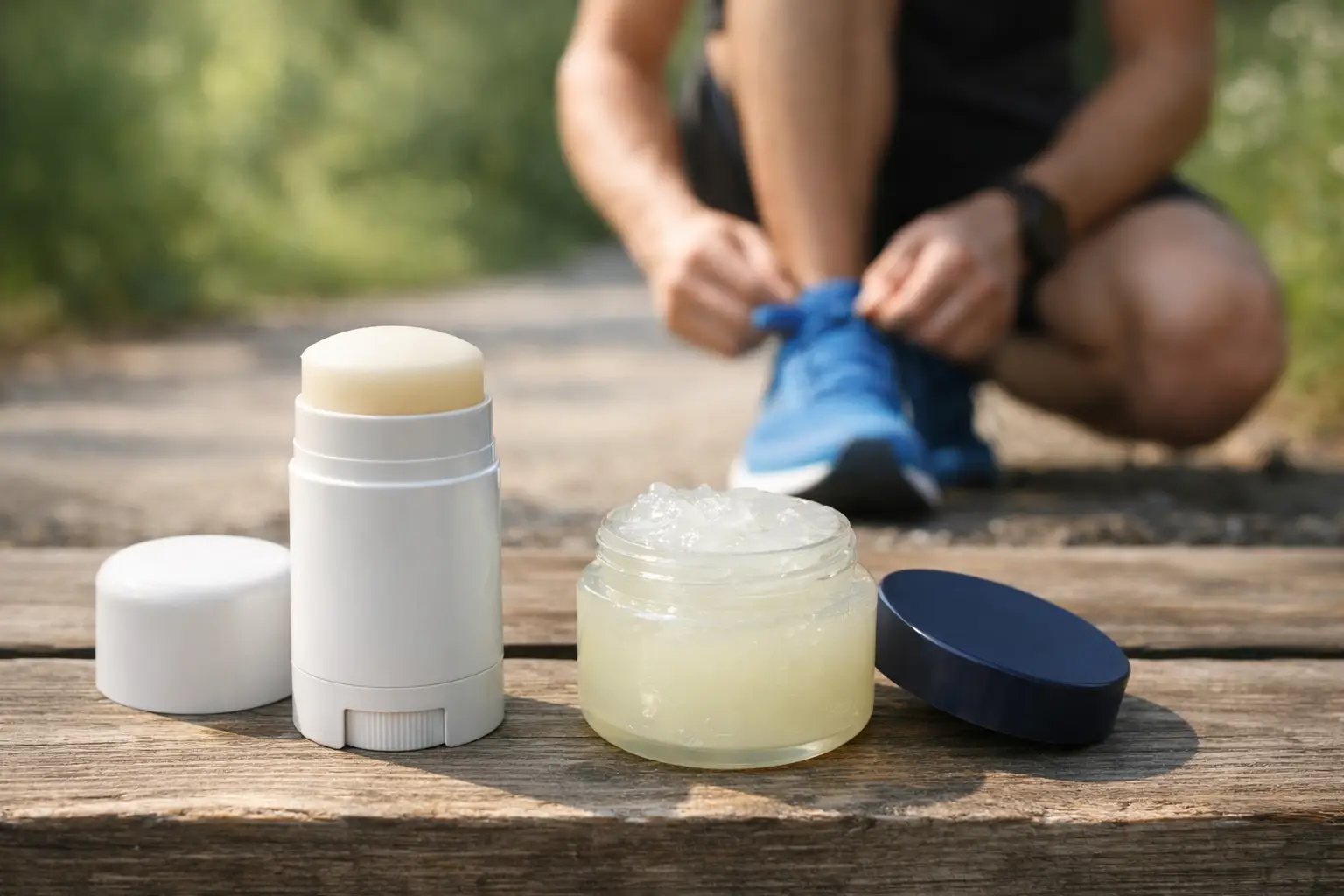
If you have ever cut a run short because your thighs, sports bra line or underarms started burning halfway through, the anti-chafe balm vs Vaseline question is not theoretical. It is the difference between finishing comfortably and spending the rest of the day walking like a cowboy.
Both products aim to reduce friction. Both can help. But they are not the same thing, and for runners that difference matters more than the label or the price tag on the shelf.
Anti-chafe balm vs Vaseline – what is the real difference?
Vaseline is petroleum jelly. It sits on the skin as a thick occlusive layer and reduces friction by creating a slick barrier. That is why plenty of runners have used it for years on hot spots like inner thighs, nipples and feet.
Anti-chafe balm is usually made specifically for movement. It is designed to glide on cleanly, stay in place during exercise and feel less greasy while you sweat. Most balms come in a stick or compact applicator, so they are easier to use quickly before a run.
That difference in purpose shows up straight away. Vaseline is a general skin protectant that can happen to help with chafing. Anti-chafe balm is built for chafing first.
Which works better on a run?
For short, easy runs, either can do the job. If you are heading out for 20 to 30 minutes and you know exactly where you tend to rub, Vaseline may be enough. It is simple, familiar and usually easy to find at home.
The gap starts to widen on longer runs, warm weather sessions and anything involving a lot of sweat or repeated movement. Anti-chafe balm is usually the better fit here because it is made to hold up under running conditions. It tends to apply more evenly, feel lighter on the skin and leave less residue on clothes.
That last point matters more than people think. Greasy product on shorts, leggings and sports bras is not just annoying. It can stain fabric, attract grit and make pre-run prep feel messier than it needs to be.
If you are training several times a week, convenience counts. A balm stick you can swipe on in seconds is easier to make part of your routine than scooping petroleum jelly from a tub and hoping you have not used too much.
Comfort, durability and mess
This is where most runners decide.
Vaseline feels thick. Some people like that because it gives an immediate sense of protection. The downside is that it can also feel heavy, sticky and greasy, especially in warmer weather. If you overapply it, you notice it. If it transfers to fabric, you notice that too.
Anti-chafe balm is usually drier to the touch. It still creates a barrier, but it tends to feel more like a product you can wear rather than something sitting on top of your skin. For runners who dislike greasy textures, that alone can be enough reason to switch.
Durability depends on the formula, your sweat rate and where you apply it. No product is magic. If you are doing a long run in humidity or racing in kit that already rubs badly, you may still need to reapply or sort the clothing issue as well. But in general, a proper anti-chafe balm is more likely to be designed with endurance, sweat and regular movement in mind.
Is Vaseline cheaper?
Usually, yes – at least on the face of it. A tub of Vaseline often costs less than a purpose-made balm, and because it is sold as a multi-use household product, it can look like the obvious value option.
But cost per use is not the whole story. If it feels messy, stains kit or does not hold up well enough on longer runs, the cheaper option can become the less practical one. Running accessories only earn their place if they solve the problem without creating a new one.
That is why many runners are happy to pay a bit more for a balm that is cleaner to use and easier to carry. If something keeps you comfortable through training block after training block, it is doing real work.
Where each one makes sense
There are still situations where Vaseline is perfectly reasonable. If you are testing a new area that rubs, doing a short treadmill run or need a quick fix from what you already have at home, it can help. It is also useful if your skin is very dry and you want a thicker barrier.
Anti-chafe balm makes more sense if you run regularly, sweat heavily, race in warmer weather or want a product that feels purpose-built rather than improvised. It is also better for runners who want less mess in their pre-run routine.
If chafing is a repeated problem rather than an occasional one, a dedicated balm is usually the smarter choice.
Anti-chafe balm vs Vaseline for common trouble spots
Inner thighs are the classic issue. Here, both products can work, but balm often feels more comfortable because it glides on without the heavy, greasy finish. On a long run, that can make a real difference.
Underarms and sports bra lines are slightly trickier because these areas often combine friction with sweat and fabric movement. A lighter anti-chafe balm generally performs better here, partly because it is less likely to smear onto clothing.
Nipples are a more mixed case. Some runners still swear by Vaseline, while others prefer balm or patches. If you only get mild irritation, either may do. If you get proper bleeding or repeated rubbing on long runs, you may need a more targeted solution than either product alone.
Feet are another depends-on-the-shoe-fit area. Vaseline can feel too slippery for some runners, especially if socks start moving around. A balm may offer enough protection without making the area feel overly greasy.
What if you have sensitive skin?
This is the one area where product labels matter. Vaseline is simple and widely tolerated, which is part of its appeal. Some anti-chafe balms include extra ingredients for scent, texture or skin feel, and those may not suit everyone.
If your skin reacts easily, patch test first. The best anti-chafe product is still the one your skin can handle repeatedly. There is no point buying something made for sport if it leaves you itchy before the warm-up is over.
That said, sensitive skin does not automatically mean Vaseline wins. Plenty of runners prefer balms with straightforward formulas and find them more comfortable in use. It comes down to the specific product, not just the category.
The bigger issue – your kit still matters
No anti-chafe product can fully rescue poor-fitting running gear. If your shorts ride up, your bra seam digs in or your top turns into sandpaper when wet, even the best balm is doing damage control.
The most effective approach is usually a combination of better kit and targeted protection. Smooth seams, proper fit and fabrics that handle sweat well can reduce friction before product even enters the picture. Then a balm covers the remaining hot spots.
That is also where buying practical running accessories from a specialist retailer helps. The goal is not to throw products at the problem. It is to make running more comfortable with simple gear choices that work.
So which should most runners choose?
If you run occasionally and want a basic fix from the bathroom cabinet, Vaseline is a fair stopgap. It can reduce friction and get you through a short session.
If you run regularly and want something cleaner, more convenient and more suited to repetitive movement, anti-chafe balm is the better option. It is made for the job, and that usually shows in how it feels on the skin and how easy it is to use.
For everyday training, that matters. Running gear should remove friction, not add little annoyances before you have even left the house. If you want a purpose-made option, 4R keeps things simple with practical running essentials at https://www.4r.ie/.
The best test is boring but reliable – use the product you will actually apply every time. A solution only works if it makes it out the door with you.