

Blog
Best Products for Running in Dark

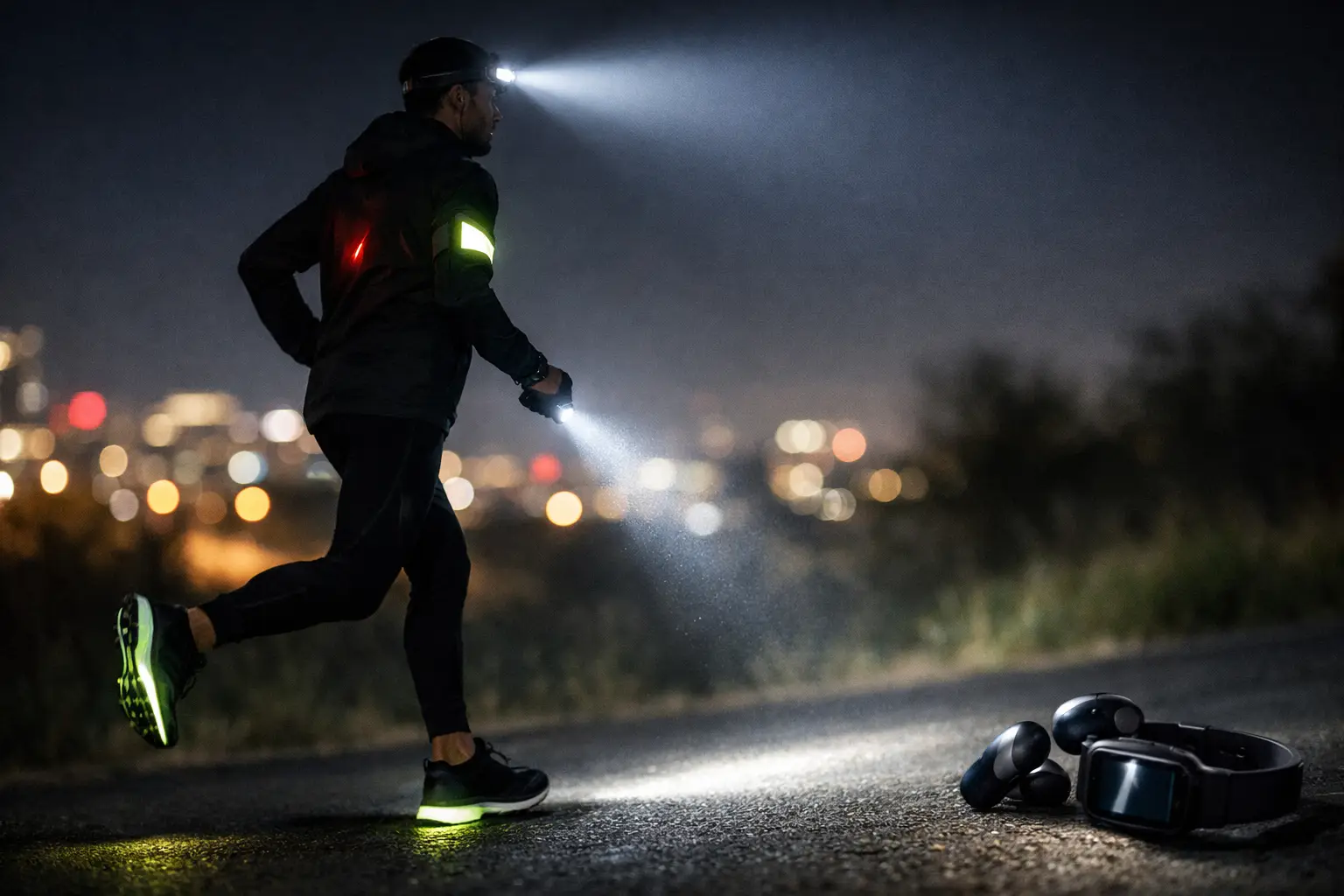
A winter 6am run can feel fine until you realise the pavement disappears under patchy street lighting and drivers only spot you at the last second. That is exactly why the right products for running in dark matter. A few simple upgrades can make early starts and evening miles feel safer, more comfortable and a lot less awkward.
For most runners, the goal is not to build a kit cupboard full of gadgets. It is to cover the basics well enough that you can see where you are going, be seen clearly by other people, and avoid small issues like rubbing, poor fit or fiddly gear turning into reasons to skip a run. The best setup usually comes down to a handful of practical accessories that work every time.
What actually matters when choosing products for running in dark
There are two separate jobs your gear needs to do. First, it needs to help you see the road, path or trail ahead. Second, it needs to help other people see you. Those are not the same thing, and one does not replace the other.
A bright headlight, for example, helps you pick out kerbs, puddles and uneven ground. But that alone may not make you visible enough to drivers approaching from the side or behind. In the same way, reflective gear can catch headlights well, but it does very little on an unlit route if you still cannot see where you are putting your feet.
Comfort matters too. If a chest light bounces, a head torch gives you a headache, or reflective layers feel bulky, you will stop using them. The best running accessories are the ones that disappear once the run starts.
The core products worth buying first
If you run regularly in low light, start with the pieces that solve the biggest problems straight away.
A rechargeable running headlight
This is the most obvious place to start because it solves the visibility problem from your point of view. A good rechargeable running headlight lights the ground ahead, helps you judge surfaces properly and cuts down the hesitation that often creeps into dark runs.
Rechargeable matters because it is simpler and usually better value over time than replacing batteries. Look for a light that is bright enough for your usual route, secure enough not to wobble, and easy to charge without fuss. If you mostly run on lit roads, you may not need maximum power. If you run on canal paths, country lanes or mixed terrain, stronger output becomes far more useful.
There is a trade-off, though. More brightness often means more weight or shorter battery life on the highest setting. For many runners, a mid-range setting with reliable runtime is more practical than chasing the biggest number on the box.
A chest light for better road visibility
Chest lights are a smart option if you want broad forward light and better body-level visibility. Some runners prefer them to head torches because they feel more stable and avoid that top-heavy sensation around the forehead.
They also sit closer to a driver’s natural line of sight, which can help on roads and crossings. The downside is that chest lights may not follow your gaze as precisely as a headlight. If you often look around corners, scan for footing or run technical routes, that difference can matter.
For road runners and commuters, a chest light can be one of the most useful products for running in dark because it combines practicality with straightforward wearability.
Reflective running gear
Light helps you see. Reflective gear helps others see you when their lights hit you. Both are needed.
The most effective reflective items are usually the simplest: reflective vests, bands or details placed where movement is obvious. Reflective points on the arms, ankles and torso tend to stand out well because moving light catches attention more quickly than a static patch on a jacket.
This is where fit makes a difference. A reflective vest that slips about over layers will annoy you. One that sits neatly over a base layer or jacket gets worn consistently. If you only buy one visibility item beyond a light, make it something lightweight that fits over whatever you already run in.
No-tie elastic laces
These are easy to overlook, but they solve a very real problem. In the dark, the last thing you want is to stop on a cold pavement to retie a lace you did not knot properly. No-tie elastic laces give a more secure, slip-on fit and cut down one of the most common little run interruptions.
They are especially useful for early starts, races, and anyone who wants less faff before heading out the door. They are not a dramatic purchase, but they are exactly the sort of practical upgrade that improves consistency.
Anti-chafe balm
Low-light running is often colder, wetter and heavier on layers. That can mean more friction around the feet, underarms, chest or inner thighs, especially on longer runs. Anti-chafe balm does not make you more visible, but it does make dark-weather training more manageable.
This is particularly true if you are wearing a light vest, additional base layers or water-resistant fabrics that move differently from your usual summer kit. A small amount applied before the run can prevent the kind of irritation that makes the final miles miserable.
How to build the right setup for your type of run
Not every runner needs the same gear. The best setup depends on where and how you run.
If you stick to urban roads with reasonable street lighting, your priority is often being seen clearly by traffic and other road users. In that case, reflective gear paired with a lighter-output headlight or chest light is often enough.
If you run in parks, on towpaths or along unlit suburban routes, the balance shifts. You need enough forward light to judge the ground properly, so a stronger rechargeable headlight becomes more important. Reflective elements still matter, but they are not the main event when the route itself is hard to read.
If you run mixed terrain or country roads, this is where it makes sense to use both a headlight and reflective gear every time. Unlit stretches, changing surfaces and poor driver visibility make shortcuts risky. A slightly more complete setup is worth it.
For runners training before work, convenience also matters more than people admit. If charging is awkward or gear takes too long to put on, usage drops. Simple accessories tend to win because they make the run easier to start.
What to avoid when buying night running gear
The easiest mistake is buying gear based on one feature alone. A very bright light is no good if it bounces. A reflective vest is no use if it ends up in a drawer because it feels clumsy over a jacket. Comfort and reliability usually matter more than flashy specs.
It is also worth avoiding cheap accessories that feel disposable from the start. Night running gear gets used in damp conditions, shoved into pockets and charged repeatedly. If the fastening is weak or the strap stretches after a few uses, the low price stops looking like value.
Another common mistake is assuming more kit always means more safety. It depends. If several items rub, slip or distract you, they can make the run feel worse. Start with the essentials, then add one or two extras if they genuinely improve your route or routine.
A simple dark-running kit that works
For most regular runners, a dependable setup looks like this: a rechargeable running headlight or chest light, reflective running gear that fits over your existing clothes, no-tie elastic laces for a secure fuss-free fit, and anti-chafe balm for longer or layered runs.
That combination covers the big issues without overcomplicating things. You can see the ground, other people can see you, your shoes stay sorted, and small comfort problems stay small.
If you are building that setup from scratch, it makes sense to choose products that are durable, affordable and easy to use week after week. That is where focused accessories tend to offer more value than trend-led running extras. At 4R, that practical approach is the whole point.
The best products for running in dark are the ones you will actually use
There is no perfect universal kit list because routes, seasons and preferences differ. But there is a clear pattern: the best products for running in dark are the ones that make your runs safer without making them more complicated.
Good gear should remove excuses, not create new ones. If your light is easy to charge, your reflective kit fits properly, your laces stay put and your clothing does not rub, dark runs stop feeling like a compromise. They just become part of your normal training week.
If you run early, run late or squeeze miles into whatever daylight is available, keep it simple and choose gear that earns its place every time you head out. A safer run is useful. A safer run that still feels comfortable is the one you will keep doing.