

Blog
Best Running Safety Lights for Every Run

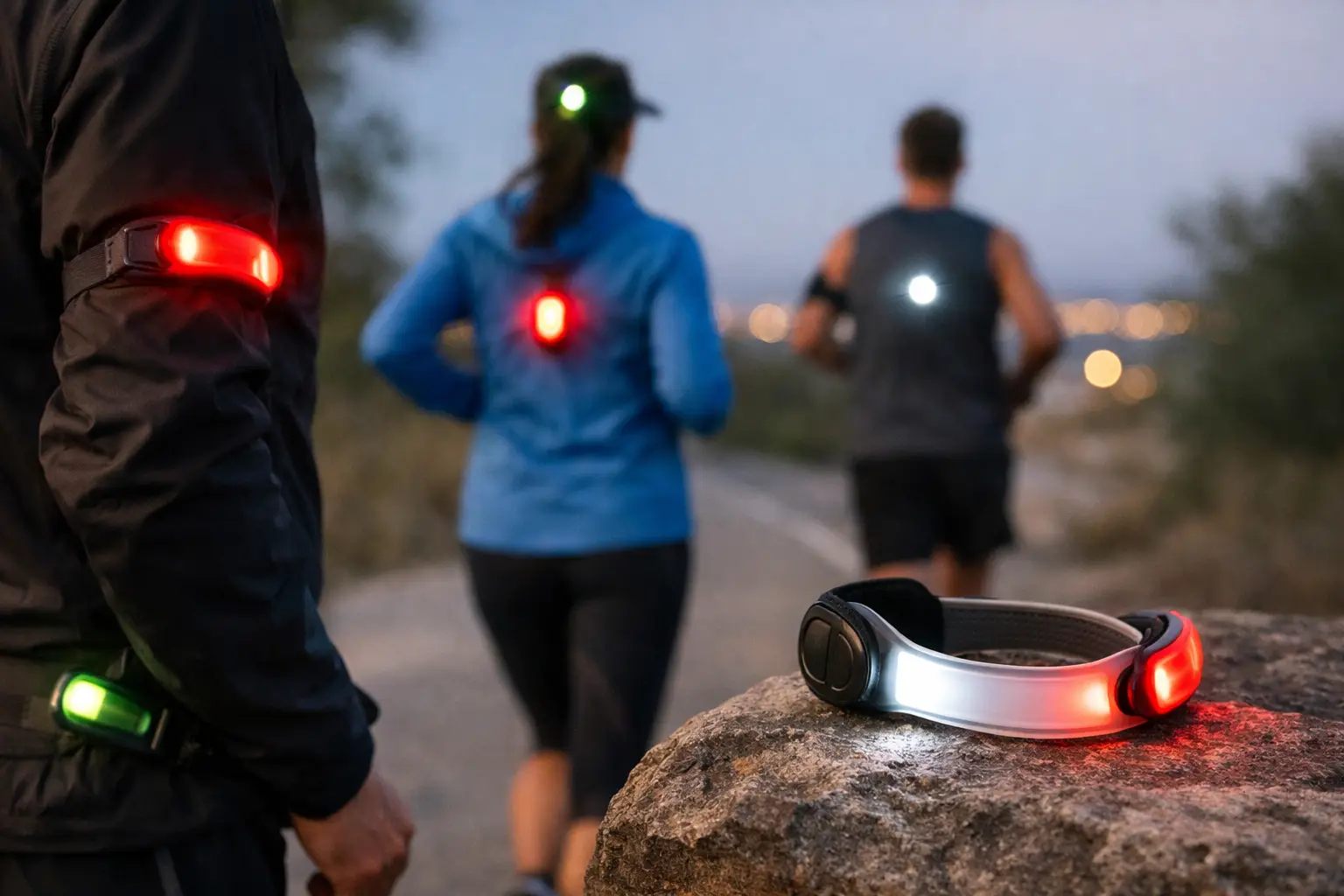
If you run before sunrise, after work, or through winter, the best running safety lights stop being a nice extra and start feeling essential. A reflective top helps when car headlights hit you, but it does very little on an unlit path, a dim side road, or a wet pavement where drivers are already dealing with poor visibility. Good lighting helps you see, helps others see you, and gives you one less thing to worry about when the weather and daylight are working against you.
What makes the best running safety lights?
The short answer is simple: they need to be bright enough to make a difference, comfortable enough that you will actually wear them, and practical enough for regular use. That sounds obvious, but plenty of lights get one or two of those right and miss the third.
Brightness matters, but more lumens do not automatically mean a better run. If you mostly run in built-up areas with street lighting, a compact light that makes you visible to traffic may be all you need. If you run on dark lanes, park trails, canal paths or uneven ground, you need a light that also helps you pick out puddles, kerbs, roots and changes in surface. That usually means a stronger forward beam, not just a flashing red light clipped to your back.
Comfort is where many runners get caught out. A light can look great on paper and still bounce, slip, or feel annoying after fifteen minutes. That is why fit and placement matter as much as raw output. A chest light, head torch, or clip light all solve slightly different problems, and the best choice depends on where and how you run.
Battery life is another area where real-world use matters more than marketing claims. A light advertised at several hours on full power may be fine for short weekday runs but frustrating if you forget to charge it before a long session. Rechargeable lights are often the most convenient option for regular runners, but they need to be easy to top up and reliable over time.
The main types of running safety lights
There is no single best setup for everyone. The best running safety lights for a city commuter are not always the same as the best option for someone running country roads at 6am.
Chest lights
Chest lights are one of the most practical choices for everyday runners. They sit lower than a head torch, which often creates better depth perception on uneven ground. Because the beam is mounted around your torso, shadows can make dips, kerbs and rough surfaces easier to spot. They also tend to feel more stable than clip-on lights, especially if the strap system is adjustable and sits close to the body.
A good chest light setup often includes both a front beam and rear visibility. That is useful if your route mixes pavements, crossings, cycle paths and roads. The trade-off is that some runners dislike wearing another strap layer over winter kit or a waterproof jacket. Fit matters here. If the light shifts with every stride, even a bright model becomes irritating.
Head torches and running headlights
A running headlight is still a strong option, especially if you need to see exactly where you are looking. That is useful on trails, technical paths and routes with poor footing. The biggest advantage is directional control. Turn your head, and the beam follows.
The downside is that some head torches bounce or feel heavy on longer runs. Others can create a slightly flatter view of the ground compared with chest-mounted lighting. If you already know headwear bothers you, this may not be the best route. But for runners who want a clear forward beam and minimal body straps, a rechargeable running headlight can be a very sensible pick.
Clip lights and wearable markers
Clip lights are best thought of as visibility aids rather than primary lighting. They work well clipped to a waistband, jacket zip, hydration vest or armband, and they are usually lightweight and easy to carry. For lit roads or short urban runs, that may be enough.
Where they fall short is route lighting. They rarely give enough forward illumination to help with footing on dark ground. They are best used as part of a wider setup, not as your only light if you are running in genuinely low-light conditions.
How to choose the best running safety lights for your routes
Start with your most common run, not your most ambitious one. If most of your mileage happens on lit suburban roads, you do not need an oversized trail torch. If most of your training is on dark greenways or rural lanes, a tiny flashing clip light is not enough.
Think about whether your main problem is seeing or being seen. Many runners need both, but one is usually the priority. Seeing matters more when the ground is uneven or the route is unlit. Being seen matters most when traffic, cyclists or shared paths are involved. The strongest setups usually cover both.
Weather should influence your choice as well. Winter rain, cold mornings and wet kit can expose weak battery performance and poor construction quickly. A light that is easy to use with cold hands and simple to charge after a soggy run will usually get used more often than one with fiddly controls and overcomplicated settings.
It is also worth being honest about your tolerance for gear. Some runners are happy with a chest harness and rear light. Others want the smallest possible setup that they barely notice. The best product is the one you will wear on every dark run, not the one with the longest feature list.
Features that are actually worth paying for
Rechargeability is near the top of the list for most regular runners. Disposable batteries are inconvenient, and they usually become expensive over time. A USB-rechargeable light is simply easier to live with if you run several times a week.
Adjustability matters more than many people expect. A chest light with poor strap adjustment can bounce over layers, while a head torch without a secure fit can slip as you sweat. The better the fit, the less likely you are to stop noticing the light and get on with your run.
Beam options can also be genuinely useful. A steady front beam for route lighting and a flashing rear mode for visibility covers most situations well. You do not need endless settings, but having at least one lower-power mode helps preserve battery on easier runs.
Reflective details are a good bonus, though they should not replace active lighting. Reflection only works when light hits it. In very dark conditions, active lights do more of the heavy lifting.
When cheap lights are fine and when they are not
There is nothing wrong with wanting value. Most runners do not need elite-level kit for local training loops. Affordable lights can be excellent if they are reliable, easy to use and bright enough for the job.
Where very cheap options often disappoint is comfort, battery quality and weather resistance. A low price can make sense for a backup clip light or occasional use. For your main light through autumn and winter, reliability is worth paying for. It is frustrating to head out on a dark run and realise the beam is weak, the battery drains too quickly, or the strap does not stay put.
That is where practical brands focused on everyday running gear tend to make more sense than premium products loaded with features many runners will never use. If you want kit that covers common runner problems without overspending, that balance matters.
A sensible setup for most runners
For many people, the best approach is not one light but a simple combination. A front-facing chest light or running headlight paired with a rear visibility light gives you much better coverage than either on its own. It is a straightforward setup that works for commuting runs, winter training and early starts.
If you mainly run in town, a lighter setup may be enough, especially if your route stays well lit. If you head out onto dark paths or roads, step up the front beam and do not rely on reflection alone. That is often the point where runners notice the biggest jump in confidence.
At 4R, the focus is on practical running accessories that solve real problems, and that is exactly how safety lights should be chosen. Not for bragging rights, not for gimmicks, and not for features you will never touch. Just dependable kit that helps you run comfortably and stay visible.
The best running safety lights are the ones you keep using
The best running safety lights are not always the brightest or the most expensive. They are the ones that fit well, charge easily, suit your route, and become part of your routine without fuss. If a light is awkward, heavy, or unreliable, it will end up in a drawer.
Choose for your actual runs, not the packaging. A simple, comfortable light that works every time is better than a clever one that annoys you. When dark miles are part of your week, good visibility is not about overthinking your kit. It is about making sure you can step out the door and run with confidence.