

Blog
How to Choose the Best Running Chest Light

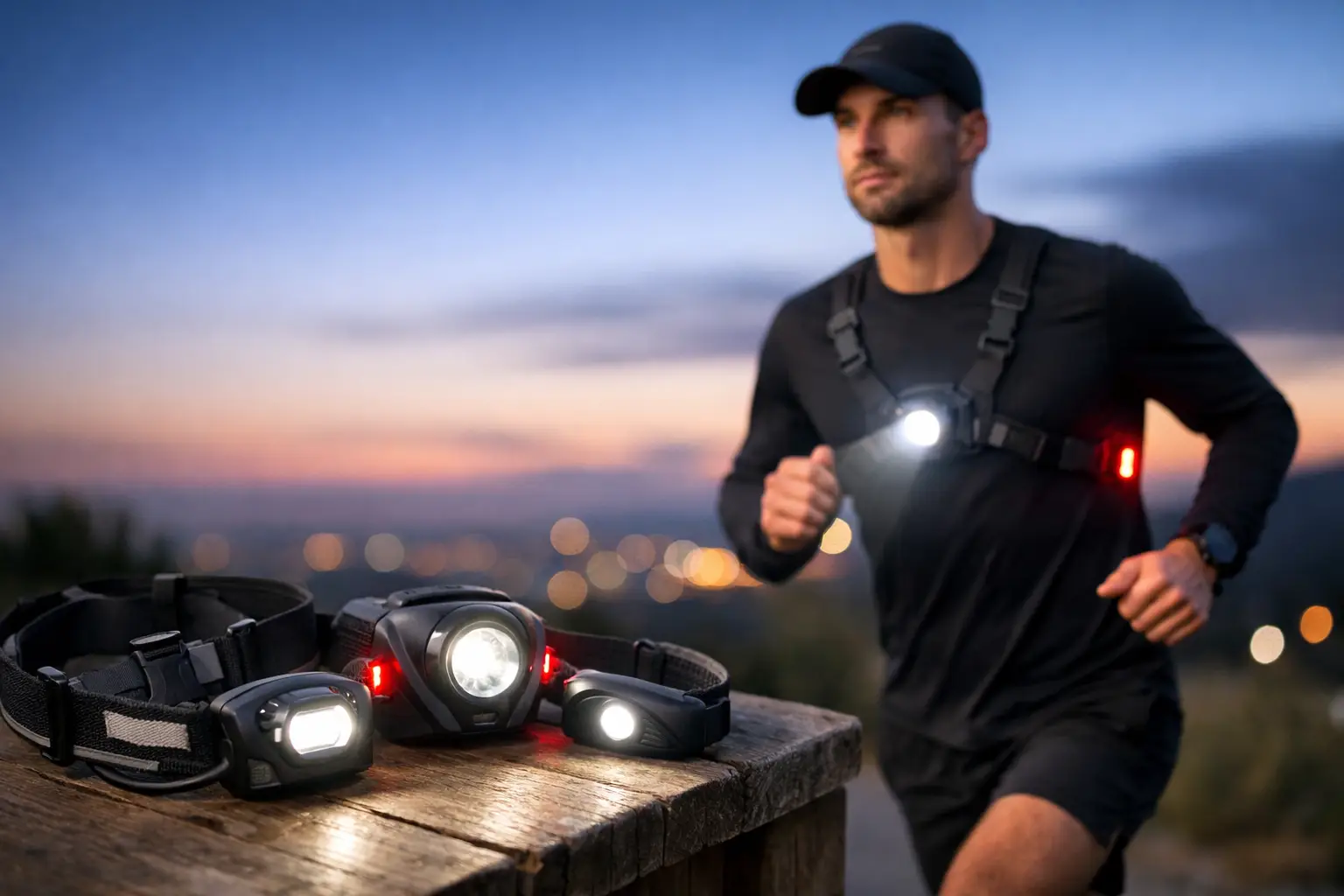
If you run before sunrise or after work, you already know the problem. Street lights are patchy, footpaths are uneven, and a phone torch is useless once your hands start swinging. A good chest light fixes that quickly, but only if it fits well and does not become one more annoyance halfway through a run.
The best running chest light is not always the brightest one on the shelf. For most runners, the right choice comes down to comfort, stability, battery life and whether the beam helps you see the ground ahead without dazzling everyone else. Price matters too. There is no point paying for features built for mountain ultras if you mainly run local roads, parks and canal paths.
What makes the best running chest light?
A chest light sits lower than a head torch, which changes how the beam hits the ground. That lower angle often makes bumps, puddles and kerbs easier to spot because shadows show up more clearly. It can also feel more natural if you dislike having weight on your forehead or the tight pressure of a headband.
That said, not every runner gets on with a chest-mounted light straight away. If the straps bounce, rub or trap too much heat, you will notice it within the first mile. The best running chest light feels secure without needing constant adjustment. It should stay close to the body, spread pressure evenly and work over a base layer in winter or a light tee in summer.
Brightness matters, but only in context. If you run well-lit streets, you need enough output to be seen and to pick out darker sections, not a floodlight. If you run trails, country lanes or unlit greenways, then stronger beam power and better throw become far more useful. A chest light for mixed use needs balance rather than extremes.
Fit comes first
Comfort is where good products separate themselves from forgettable ones. A chest light can have strong output and decent battery life, but if it shifts around with every stride, it will stay in the drawer.
Look for adjustable straps that sit firmly across the chest and shoulders without digging in. Wider straps usually feel better over longer distances because they spread the load. A compact light unit also helps. Big battery packs and chunky housings often sound impressive in product descriptions, but they can feel awkward once you are actually running.
Layering matters here too. In colder months, a chest light may sit neatly over a jacket. In warmer weather, it is directly against lighter clothing, so any rubbing becomes obvious. If you are between sizes or have a broader chest, extra strap range is worth checking before you buy.
Beam pattern matters more than headline lumens
Many runners focus on lumens because it is the easiest number to compare. More lumens can help, but they are not the whole story. Beam shape has a big effect on what you can actually see.
For road running, a broad, even beam is usually more useful than a narrow spotlight. It gives you a wider view of pavement edges, crossings and other people moving around you. For trail running, a combination works better – enough width to read the terrain close in, with enough reach to spot turns, roots or rough ground further ahead.
A chest light that offers several lighting modes is usually the safer bet. Lower settings help preserve battery on lit routes. Higher settings are there when you hit darker stretches. Flashing rear visibility is also useful if the unit includes a back light, especially for roads and shared paths.
Battery life should match your actual runs
Battery claims can look generous until you notice they are based on the lowest setting. If you normally run for 45 minutes a few times a week, that may not be an issue. If you are marathon training, commuting home in winter or spending long sessions on dark trails, battery life becomes a bigger factor.
Rechargeable models make the most sense for most runners now. They are simpler, cheaper over time and easier to keep ready. USB charging is standard and practical. The key question is how quickly the light recharges and how long it lasts at the brightness level you will really use.
There is always a trade-off. Brighter output drains battery faster. Larger batteries add weight. The best option is usually the one that covers your longest regular run with some spare capacity, not the one with the biggest claim on the box.
Weather resistance is not optional
British running weather does not care what your training plan says. If a chest light is going to be part of your regular kit, it needs to cope with drizzle, cold mornings and the odd proper soaking.
A light does not need to be built for river crossings to be useful, but it should have solid water resistance and dependable charging port protection. Buttons should still be easy to use with cold fingers. Straps should not become heavy or uncomfortable when wet. These details seem small until you are halfway through a dark run in sideways rain.
The best running chest light for road running
If your running is mostly streets, pavements and suburban routes, keep your priorities simple. You want a stable fit, moderate brightness, decent side visibility and enough battery for your usual weekly mileage. A lighter unit usually wins here because you are less likely to notice it.
Rear visibility is especially useful on roads. Drivers do not need to be blinded by your front beam, but they do need to spot you early. Reflective clothing still helps, of course, but active lighting gives you an extra margin when conditions are poor.
For this type of runner, paying extra for extreme beam distance may not add much value. Better to choose a reliable rechargeable model with clear controls and a comfortable harness.
The best running chest light for trails and darker routes
Trails ask more from your light. Uneven ground, turns, mud and low branches all demand a clearer view. Here, stronger output and a more capable beam are worth it, as long as the fit stays secure when the terrain gets rough.
Chest lights work particularly well on trails because the lower beam angle can make surface detail stand out. You may find loose stones, roots and dips easier to read than with a head torch alone. Some runners still prefer to pair a chest light with a lightweight head torch for technical ground. That gives better depth and lets you look into corners. It costs more, but for regular trail running it can be a smart setup.
If you only do the occasional dark trail run, though, a good chest light on its own is often enough. Just do not compromise too much on stability or weather resistance.
Features that are useful and features you can ignore
A few extras are genuinely helpful. Lock mode prevents the light switching on in your bag. Battery indicators stop nasty surprises. Easy-press controls matter when you are wearing gloves. Reflective strap details add visibility without effort.
Some features sound better than they perform. App control is rarely necessary for a running light. Very high maximum lumen settings can be more marketing than practical benefit if they only last a short burst. Complicated button sequences are another red flag. If you cannot change modes quickly while moving, the feature set is too clever for its own good.
Price, value and what to expect
You do not need the most expensive option to get a good result. For everyday runners, value comes from reliability, comfort and useful visibility, not premium branding.
A cheaper chest light can work well for occasional winter runs if the fit is decent and the battery is trustworthy. Spend a bit more and you should expect better strap quality, stronger weather protection and a more refined beam. Beyond that, price increases often reflect specialist performance rather than everyday benefit.
That is where brands focused on practical running kit tend to make more sense. If you are buying for regular use, it is worth looking for gear built around comfort, visibility and sensible pricing rather than flashy extras. At 4R, that is exactly the point – everyday running essentials that solve real problems without inflating the cost.
How to choose without overthinking it
If you mainly run roads, choose comfort and visibility first. If you run darker paths or trails, give more weight to beam quality and battery life. If you hate wearing anything restrictive, prioritise a lighter harness with softer straps.
The best running chest light is the one you will actually wear every week. It should feel easy to put on, simple to recharge and dependable when conditions turn grim. You should not have to fiddle with it, second-guess the battery, or cut your route short because the fit is driving you mad.
A good chest light will not make winter miles glamorous, but it will make them easier, safer and much less frustrating. That is usually all a runner needs.