
Blog
What Gear Do I Need For Running? A Beginner’s Checklist

So, you’ve decided to start running. That’s fantastic! But a quick search online can leave your head spinning. It’s a common hurdle that stops many new runners before they even start, leaving them asking, what gear do I need for running that’s *actually* essential? Between high-tech compression socks, GPS watches, and a dozen different types of shorts, it’s easy to feel overwhelmed, worried you’ll spend a fortune on things you don’t need, or show up to the trail feeling unprepared.
Let’s cut through the noise. This guide is your no-nonsense checklist for the essential running gear you need to feel comfortable, safe, and confident from your very first step. We’ll focus on the practical, affordable items that make a real difference-from the right fabrics that prevent chafing to simple visibility gear for those early morning jogs. Consider this your straightforward map to getting started on the right foot, without the stress or the unnecessary expense.
Key Takeaways
- The single most important rule for running apparel is choosing the right fabric. Learn why moisture-wicking materials are essential for comfort and preventing chafe.
- Staying visible to cars and cyclists is non-negotiable for early morning or evening runs. Discover the simple, effective safety items every runner should own.
- Beyond the basics, the answer to “what gear do i need for running” includes small accessories that solve common problems like carrying your keys or phone.
- Your gear needs will evolve as you progress. We’ll show you what to consider buying *after* you’ve established a consistent running routine.
The Foundation: What to Wear Running (Beyond the Shoes)
Okay, let’s get this out of the way: good running shoes are vital. But the clothes you wear are just as important for a comfortable, chafe-free run. If you take away one thing from this section, make it this: avoid cotton at all costs.
Cotton acts like a sponge, absorbing sweat and becoming heavy, cold, and clingy. This leads to discomfort and painful chafing. Instead, you need technical apparel made from moisture-wicking fabrics. These smart materials pull sweat away from your skin and help it evaporate quickly, keeping you dry and comfortable from your first step to your last. Answering “what gear do i need for running” starts with choosing the right fabric.
Tops and Bottoms: The Core of Your Running Wardrobe
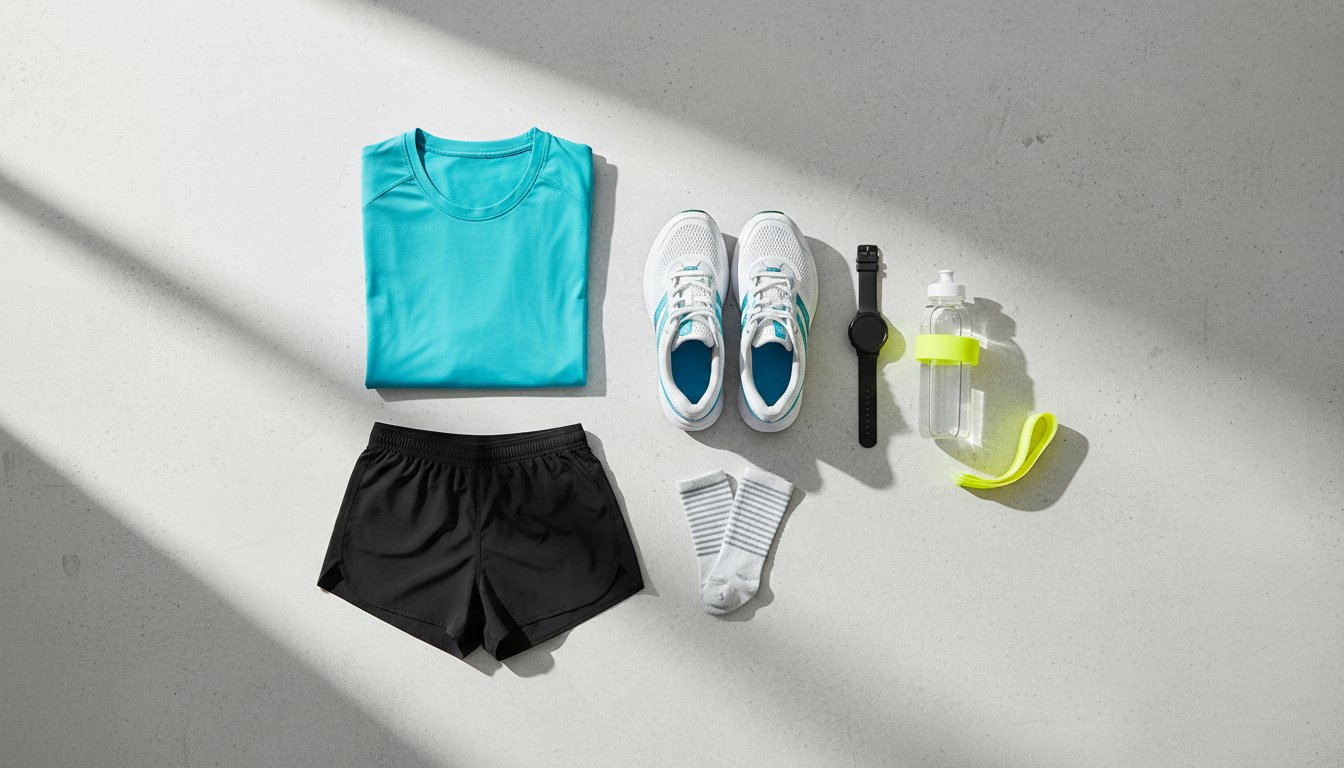
Your core running kit is simple and functional. Look for a technical t-shirt or long-sleeve top made from a polyester or nylon blend. For your bottom half, choose dedicated running shorts or leggings that offer total freedom of movement and have minimal seams to prevent rubbing. For women, a supportive, correctly-sized sports bra is non-negotiable-it’s essential for comfort and support on every run.
Don’t Forget Your Feet: The Importance of Running Socks
Your everyday cotton socks can be a direct route to blisters. Running-specific socks are a small, affordable investment that makes a huge difference. They are designed to protect your feet with features like:
- Moisture-Wicking Materials: Synthetics or Merino wool pull sweat away to keep feet dry.
- Seamless Construction: A smooth toe area prevents rubbing and irritation.
- Anatomical Fit: Light padding and arch support provide targeted comfort.
Layering for UK & Irish Weather
The unpredictable weather here means layering is your best friend. Whether you are training for your first 5k or tackling Long-distance running, a simple system offers total versatility. Think in three parts: a sweat-wicking base layer next to your skin, an insulating mid-layer for warmth (like a fleece), and a weather-resistant outer shell (a lightweight jacket or gilet) to block wind and rain. You can add or remove layers as needed. Remember, you don’t need expensive brands to start-just smart, functional pieces that keep you comfortable.
Stay Safe, Stay Seen: Essential Visibility & Safety Gear
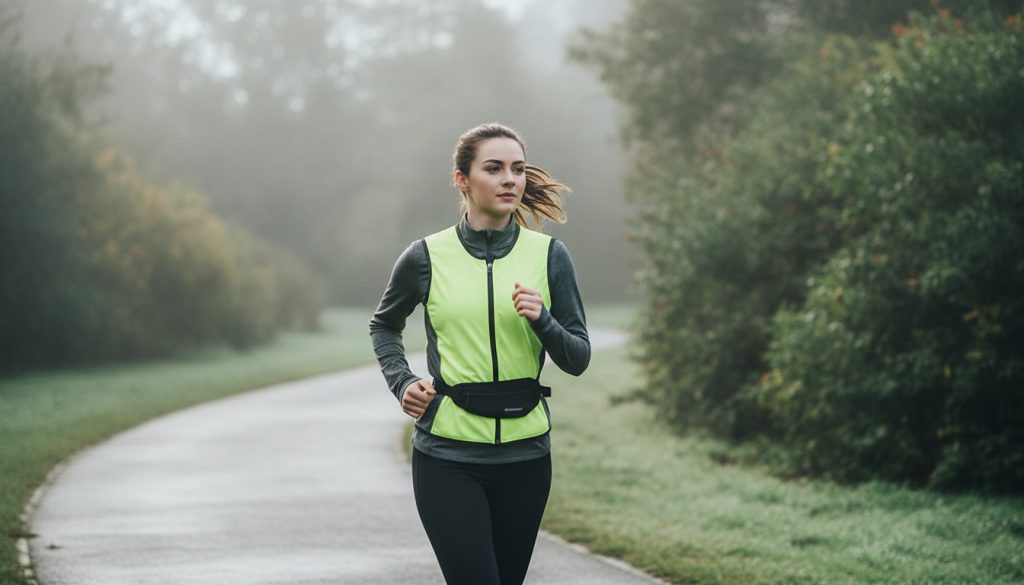
Whether you’re running at dawn, dusk, or on a classic overcast day in the UK and Ireland, being seen is non-negotiable. It’s not just about cars; it’s about cyclists, pedestrians, and other runners sharing your path. When new runners ask, what gear do i need for running, visibility equipment should be at the top of the list, right alongside good shoes. This gear isn’t just for the dead of night-it’s essential any time you aren’t running in bright, clear sunshine. Let’s break down the two key types: gear to help you be seen, and gear to help you see.
Be Seen: High-Visibility & Reflective Gear
It’s important to know the difference here. Fluorescent colours (like neon yellow and pink) are fantastic for daytime and twilight runs as they stand out in natural light. Retro-reflective materials, however, work in the dark by bouncing light from a source, like car headlights, directly back to the driver. Many running tops include small reflective details, but for true safety, dedicated gear is a must. Visibility is a key consideration for every runner when selecting essential gear. Options range from full jackets to lightweight vests or minimalist straps that you won’t even notice you’re wearing.
See our range of High-Visibility Running Vests.
See the Path: Running Lights
If your route takes you along unlit country lanes, park paths, or trails, you need a light to see where you’re putting your feet. The main choices are head torches and chest lights. While head torches are a classic, many runners now prefer chest lights for a few practical reasons:
- Less Bounce: Strapped to your core, a chest light provides a more stable beam of light.
- Better Depth Perception: The lower angle casts shadows that help you see bumps and dips in the terrain.
- More Considerate: You won’t accidentally blind an oncoming runner or walker when you turn your head.
A good light is a simple solution to keep you running safely and confidently, no matter how dark it gets. It’s a crucial piece when considering what gear do I need for running on poorly lit routes.
Discover the popular 4R LED Running Chest Light.
Comfort is Key: Accessories to Solve Common Running Problems
You’ve got the shoes and the technical tee, but the secret to truly enjoyable running lies in the small details. These are the affordable, practical accessories that solve the common annoyances that can derail your motivation. Think of them as small investments for big comfort gains. When you’re asking what gear do i need for running, don’t overlook these problem-solvers. They are the difference between finishing strong and cutting a run short due to a preventable irritation.
The Ultimate Run-Ruiner: Chafing
Nothing stops a runner in their tracks quite like the raw, stinging sensation of chafing. It’s caused by repetitive friction, usually a combination of moisture from sweat and skin rubbing against fabric or itself. A five-kilometre run can feel like a marathon when chafing starts. Common trouble spots include:
- Inner thighs
- Underarms
- Along the sports bra line
- Nipples (especially for male runners)
Thankfully, the solution is incredibly simple and effective. A quality anti-chafe balm creates an invisible, sweat-resistant barrier on your skin, allowing it to glide smoothly without irritation. It’s a must-have in any runner’s kit. Get our Anti-Chafe Balm Stick and run in complete comfort.
Convenience and Fit: Laces and Headwear
Two other areas where a small upgrade makes a huge impact are your feet and head. If you constantly stop to retie your shoes or can’t seem to get the pressure just right, no-tie elastic laces are a game-changer. They provide a secure, flexible fit that adapts to your foot as it swells during a run, and you’ll never have to worry about a shoelace tripping you up again.
Equally important is protecting your head and face. A lightweight, breathable running cap is essential for shielding your eyes from the sun and keeping rain from blurring your vision. On hot days or for intense sessions, a moisture-wicking headband or versatile buff can keep sweat from dripping into your eyes and manage unruly hair, letting you focus completely on your stride.
Addressing these small points of friction-both literally and figuratively-is what transforms running from a challenge into a rewarding habit. The right gear makes every run better.
Levelling Up: Gear You’ll Want as You Progress
Once you have the basics sorted and are running consistently, you’ll start to notice little challenges. Where do you put your key? What do you do for water on a longer run? These next items aren’t essential for day one, but they solve common problems and make your runs much more comfortable and convenient.
Think of this as the next step in answering the question, what gear do i need for running to truly hit your stride. It’s all about adding practical solutions as you need them.
Carrying Your Essentials: Phones, Keys, and Gels
Juggling your phone, keys, and a bank card is a hassle. While some shorts have pockets, items can bounce around and become distracting. Here are the most common solutions:
- Running Belts: The most versatile option. A good belt sits snugly on your waist, prevents bouncing, and has enough room for a phone, keys, and even a gel or two. They offer easy access without breaking your stride.
- Armbands: A simple choice just for your phone. They keep it secure, but some runners find them uncomfortable or restrictive over longer distances.
- Shorts with Zip Pockets: Excellent for a single key or a card, but most aren’t designed to hold a modern smartphone without it bouncing uncomfortably.
Hydration on the Go
For runs under 45 minutes, you likely don’t need to carry water. But as you push past the 60-minute mark or run in warmer weather, hydration becomes crucial for performance and safety. Your main options are simple and effective:
- Handheld Bottles: Ergonomically designed bottles with a hand strap. They are straightforward and great for runners who want quick, easy access to their water.
- Hydration Belts: These belts include small, fitted holsters for one or two water bottles, combining your carrying and hydration needs in one piece of kit.
- Hydration Vests: For long-distance runners, a vest offers the most capacity for water (via a bladder or soft flasks) and plenty of storage for fuel and other essentials.
Tracking Your Runs: Watches and Apps
Seeing your progress is a huge motivator. To start, your smartphone is all you need. Free apps like Strava or Nike Run Club use your phone’s GPS to track your distance, pace, and route. When you’re ready to leave the phone behind, a dedicated GPS running watch is the perfect upgrade. It offers more accurate, real-time pace and distance data right on your wrist, along with features like heart rate monitoring to help guide your effort. It simplifies your run, letting you focus on the road ahead.
Finding practical solutions that work for you is key. Explore our range of ethically made running accessories at 4r.ie to find your perfect fit.
Lace Up With Confidence: Your Next Steps
Getting started with running is simpler than it seems. The key is to focus on the essentials first: comfortable, moisture-wicking clothing and, most importantly, the right pair of shoes. Prioritising your safety with high-visibility gear is also a non-negotiable for early morning or evening runs. Answering the question of what gear do i need for running is less about buying everything at once and more about building a kit that keeps you safe, comfortable, and motivated.
As runners ourselves, we design practical gear to solve common problems without the high price tag. Our range of ethically made and sustainable accessories is built to support your journey from your first kilometre to your next big race. Plus, we offer free delivery in Ireland and the UK on all orders over €40. Ready to run? Check out our essential, affordable running accessories.
Remember, the best gear is the gear that gets you out the door. Take that first step, enjoy the process, and welcome to the running community. Happy running!
Frequently Asked Questions
Do I really need to buy special running clothes?
While you can start in a cotton t-shirt, technical running clothes make a huge difference in comfort. Unlike cotton, which gets heavy with sweat, moisture-wicking fabrics pull moisture away from your skin to keep you dry and prevent painful chafing. You don’t need expensive brands; look for affordable, functional pieces. It’s a practical upgrade that makes running much more enjoyable from the very beginning, and one you are unlikely to regret making.
What’s the single most important piece of safety gear for a new runner?
Without a doubt, visibility gear is the most important safety item. If you run in the early morning, at dusk, or at night, you must be seen by cars and cyclists. A simple reflective vest or a rechargeable high-viz LED chest light is a non-negotiable piece of equipment. Your safety is paramount, and ensuring you are clearly visible to traffic is the most effective way to protect yourself while you are out on the road or trail.
How do I carry my phone and keys when I run?
You have several great options for carrying essentials. A running belt is a popular choice because it distributes weight evenly and keeps items secure without bouncing. Another option is an armband for your phone, though some runners find them restrictive. Many modern running shorts and leggings now also come with dedicated, secure zip pockets designed specifically for a phone and a key, offering a simple, built-in solution for carrying your gear without extra accessories.
Are expensive running accessories better than affordable ones?
Not necessarily. The best gear is the gear that works for you, fits your budget, and is built to last. An expensive accessory isn’t better if it’s uncomfortable or doesn’t solve a real problem. Focus on function and durability over brand names or high price tags. Many affordable products offer fantastic performance and are often made with sustainable, ethical practices in mind. Smart, practical choices are always the winning strategy for everyday runners.
What should I wear for my first 5k race?
The golden rule for your first 5k is: nothing new on race day. Wear the exact outfit-from socks and shoes to your shirt and shorts-that you have trained in comfortably. This prevents any surprise chafing, blisters, or other discomforts. When you’re figuring out what gear do i need for running a race, the answer is always the trusted, tested gear you already own. Your focus should be on the finish line, not an itchy new tag.
How do I stop my glasses from fogging up when I run in the cold?
Foggy glasses are a frustrating but fixable problem. Before your run, try applying a commercial anti-fog spray designed for lenses. A classic DIY trick is to put a tiny drop of shaving cream on each lens, rub it in, and then gently buff it completely clear with a soft cloth. Also, consider wearing a visor or headband instead of a full beanie, as this allows more heat and moisture to escape from your head, reducing the fog.