
Blog
UK Winter Running: The Complete Guide to Staying Warm, Safe, and Motivated


The curtains are drawn, the wind is howling, and the thought of lacing up your trainers feels more like a chore than a choice. We get it. The annual debate over layering, the worry about unseen ice on dark pavements, and the nagging concern of being visible to traffic can sideline even the most dedicated runner. But conquering uk winter running is simpler than you think, and it doesn’t mean putting your goals on ice until spring.
This is your complete, no-nonsense guide to running through the UK’s toughest season. We’re breaking down everything you need to stay warm, safe, and motivated. Inside, you’ll find a practical checklist for essential gear to nail your layering every time, simple safety tactics for low-light conditions, and real-world tips to keep that fire lit when the sofa is calling your name. Let’s get you running confidently all winter long.
Key Takeaways
- Master the 3-layer system to effectively manage sweat and block the damp cold, ensuring you stay warm without overheating.
- Learn the crucial difference between reflective gear and active lights, and why you need both for maximum safety on dark winter roads.
- Discover which essential accessories protect your hands, head, and feet, and find out if your current running shoes are truly up to the task.
- Overcome the biggest mental hurdles of UK winter running with simple, proven strategies to keep you motivated until spring.
Embracing the Challenge: What Makes UK Winter Running Unique
Running through a UK winter is a unique test of resolve. It’s not just about braving cold temperatures; it’s about tackling a specific set of challenges that can make even the most dedicated runner think twice. From the persistent dampness that chills you to the bone to the limited daylight hours, uk winter running demands a different kind of preparation and mindset. The reward? A profound sense of accomplishment and resilience that a sunny park run just can’t match.
The main obstacles you’ll face aren’t always obvious. They include:
- The relentless wind and unpredictable, driving rain.
- Short days and long, dark hours for training.
- Constantly changing ground conditions, from thick mud and wet leaves to treacherous black ice.
The ‘Damp Cold’ vs. ‘Dry Cold’ Explained
Ever wondered why 5°C in the UK can feel far colder than -5°C in a snowy, alpine region? The answer is humidity. Damp air conducts heat away from your body much faster than dry air, stripping your warmth and making you feel chilled far more quickly. This constant battle against moisture is why dressing correctly is non-negotiable, and why understanding the risks of hypothermia is so important. Your first line of defence is always a moisture-wicking base layer that pulls sweat away from your skin, keeping you dry from the inside out.
Darkness and Low Visibility: The Biggest Safety Hurdle
For most of us, uk winter running means running in the dark. Whether it’s a pre-work dash or a post-work stress-buster, you’ll be logging your miles without the sun. Even daytime runs can be gloomy, with heavy cloud cover, fog, or drizzle seriously reducing visibility. Relying on standard street lighting isn’t enough; it often creates inconsistent pools of light and deep shadows, making it hard to spot hazards on the path and even harder for drivers, cyclists, and other pedestrians to see you clearly.
The 3-Layer System: Your Blueprint for Staying Warm and Dry
Dressing for a cold run isn’t about piling on as many clothes as possible. The secret to comfortable uk winter running is a smart, adaptable layering system. The goal is simple: trap warm air, pull sweat away from your skin, and block out the wind and rain. Getting this right prevents you from getting a chill and makes your run far more enjoyable. Mastering this system is one of the most valuable expert winter running tips you can learn.
Think of it as a flexible toolkit. For a mild, damp 10°C day, you might only need a base layer and a protective shell. When the temperature drops to a frosty 0°C, all three layers work together to keep you performing at your best.
Layer 1: The Base Layer (Wicking)
This is your second skin, and its only job is to wick sweat away to keep you dry. This is crucial because wet skin in cold air leads to a rapid drop in body temperature. For this layer to work, it must be snug against your skin. And here’s the number one rule: never wear cotton. Cotton absorbs moisture and will leave you cold and damp.
- Materials: Choose synthetic fabrics like polyester or natural fibres like merino wool.
- Fit: Snug, but not restrictive.
Layer 2: The Mid-Layer (Insulation)
Your mid-layer is your insulator. Its purpose is to trap the body heat you generate, creating a warm pocket of air. The thickness of this layer depends on how cold it is. A technical fleece or a lightweight insulated top is perfect. Look for tops with a half-zip or full-zip, which gives you an easy way to ventilate and release excess heat as you warm up mid-run.
Layer 3: The Outer Shell (Protection)
The final layer is your shield against the elements. Its job is to block wind and rain, which are common challenges in uk winter running. It’s vital that this layer is also breathable to allow sweat vapour to escape.
A windproof jacket is ideal for cold, dry, and blustery days. For runs in the rain or sleet, you’ll need a fully waterproof jacket to stay dry. Choose the right shell for the day’s forecast.
Be Seen, Be Safe: A Non-Negotiable Guide to Winter Visibility
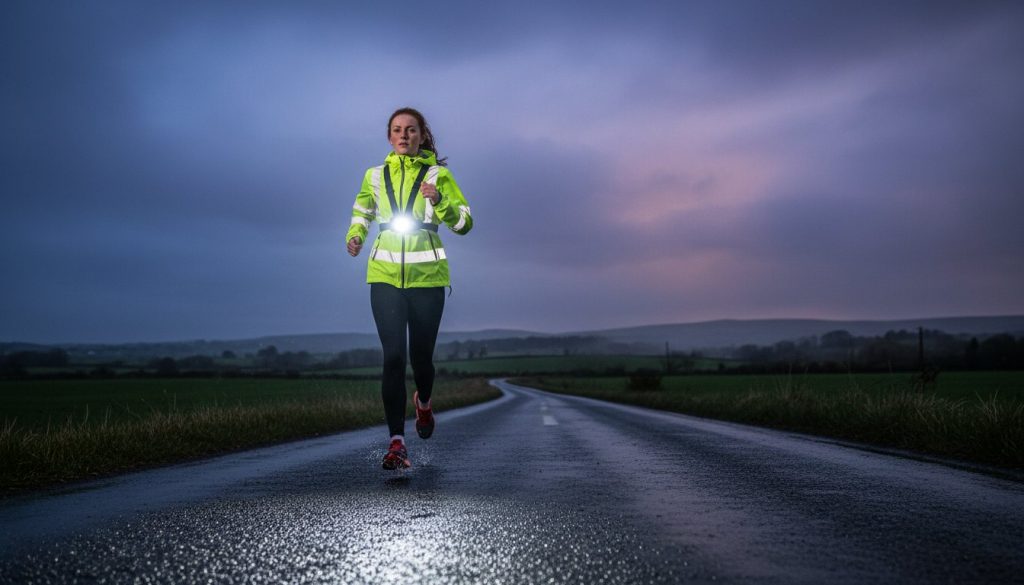
When the days get shorter and the nights draw in, visibility becomes the most important piece of your running kit. For safe uk winter running, you need to be seen by drivers, cyclists, and pedestrians. This means combining two types of visibility: passive (reflective gear that bounces back light) and active (lights that create their own light). Relying on just one isn’t enough in gloomy or dark conditions. Using both ensures you’re visible from every angle.
Choosing Your Lights: Head Torches vs. Chest Lights
An active light is a non-negotiable for running in the dark. The two most popular choices are head torches and chest lights.
- Head Torch: Its main advantage is that the light beam follows your gaze, perfect for scanning for hazards. However, the light can sometimes feel like it’s bouncing with your stride.
- Chest Light: This provides a very stable, wide beam that illuminates the ground directly in front of you without bouncing. The downside is that the beam is fixed forward.
For most urban street-lit running, 100-200 lumens is plenty. For unlit trails, you’ll want 300 lumens or more. Explore our range of practical running lights.
High-Visibility and Reflective Gear
It’s a common mistake to think hi-vis and reflective are the same. Hi-vis clothing, usually in fluorescent yellow or pink, is designed to stand out in low light during the day-think grey, overcast afternoons. Reflective gear, however, only works in the dark when a light source like a car headlight hits it. For maximum safety, you need hi-vis for daytime gloom and reflective strips for your night runs. A simple, affordable reflective vest or sash with 360-degree coverage is one of the best investments you can make.
Safe Route Planning for Winter
Your gear is only half the battle; smart planning is crucial. When you’re starting out, stick to familiar, well-lit routes where you know the terrain and traffic patterns. It’s always a good idea to let someone know where you’re going and when you expect to be back. As many essential winter running tips will tell you, being predictable is being safe. Be extra cautious on quieter roads, as drivers may be less likely to expect a runner to appear out of the darkness.
From the Ground Up: Essential Winter Accessories and Footwear
When the temperature drops, your summer kit just won’t cut it. The key to comfortable and safe uk winter running is protecting your extremities and ensuring you have a solid footing on slick surfaces. We lose a surprising amount of heat through our head and hands, and cold, wet feet are a runner’s worst enemy. Investing in a few essential pieces of gear makes all the difference between a miserable slog and a refreshing winter run.
Head, Hands, and Neck
Protecting the parts of your body most exposed to the elements is non-negotiable. These small additions provide a massive boost in warmth and comfort, allowing you to focus on your stride, not the chill.
- A Warm Hat or Headband: A simple thermal beanie or a fleece-lined headband prevents crucial heat loss from your head.
- Gloves or Mittens: Essential for preventing numb, painful fingers. Mittens often provide more warmth by keeping your fingers together.
- Buff or Neck Gaiter: A versatile tube of fabric that can be worn around your neck or pulled up over your face to protect against biting winds.
Traction and Footing: Shoes and Socks
Your lightweight, breathable summer running shoes might not be up to the task of handling icy pavements or muddy park trails. Look for trainers with a more aggressive outsole for better grip or a waterproof membrane (like GORE-TEX) to keep your feet dry. For particularly slick or off-road routes, a pair of trail running shoes can be a fantastic investment. Just as important are your socks-always choose a moisture-wicking fabric like merino wool or a synthetic blend. Cotton socks absorb sweat, leaving your feet cold, damp, and prone to blisters.
Comfort and Practicality
Winter running comes with its own unique comfort challenges. Chafing can still be a major issue when layers get damp from rain or sweat. A simple anti-chafe balm applied to problem areas before you head out is a run-saver. Another small but brilliant upgrade is a set of no-tie elastic laces. They make it much easier to adjust your shoes or take them off when your fingers are too cold to manage traditional knots.
Finally, don’t forget to hydrate. It’s easy to overlook thirst when it’s cold, but you’re still losing fluids. A few sips of water before and after your run will keep you performing at your best.
Winning the Mental Game: How to Stay Motivated All Winter
Let’s be honest: the hardest part of a winter run is the first step out the front door. When it’s dark, cold, and wet, your warm bed is a powerful rival. But winning this mental battle is the key to a consistent and rewarding season. The real victory isn’t about pace; it’s about lacing up your shoes and getting out there.
Instead of chasing personal bests, set realistic and achievable goals. Aim to run twice a week, even if it’s just for 20 minutes. Celebrate your consistency. Every run you complete is a deposit into your fitness bank for spring and a huge boost for your mental well-being during the darker months. Mastering the mental side of uk winter running is what builds true resilience.
Practical Motivation Tips
Making the process easier is the best way to guarantee you’ll stick with it. A little preparation goes a long way in removing friction between you and your run.
- Find a running partner. Arranging to run with a friend or joining a local club creates accountability. It’s much harder to skip a run when you know someone is waiting for you.
- Prepare the night before. Lay out all your gear-from your base layer to your reflective vest. When you wake up, your decision is already made for you. All you have to do is get dressed.
- Plan your post-run reward. Have a warm drink, a hot shower, and a comfortable space ready for your return. Knowing that comfort is waiting makes braving the cold much more manageable.
Shift Your Mindset
How you think about your run can change everything. You can dread the cold, or you can use it to your advantage. It’s a simple shift, but it makes a world of difference for your motivation.
- Reframe the challenge. Instead of thinking of it as ‘suffering’ through the cold, see it as an opportunity to build mental toughness. You’re not just running; you’re becoming a stronger, more resilient person.
- Embrace the quiet. A frosty early morning run offers a unique sense of peace and quiet that you just don’t get in other seasons. Enjoy the crisp air and the stillness of the world.
- Remember the feeling. The most powerful motivator of all is remembering how good you feel after a run. That sense of accomplishment and the endorphin rush will carry you through the toughest days.
Stay consistent, stay safe, and remember that every winter run you finish is a win. You’ve got this.
Your Winter Running Season Starts Now
Running through the colder months doesn’t have to be a chore. With the right approach, uk winter running can be one of the most rewarding parts of your year. Remember the essentials: master the three-layer system to stay warm and dry, and prioritise high-visibility gear to stay safe in low light. Winning the mental game is just as important, so focus on your ‘why’ to keep that motivation strong.
Having the right kit makes all the difference. At 4R, we create practical, affordable accessories trusted by the UK and Irish running community. Our gear is ethically made and sustainable, because we believe you shouldn’t have to compromise on your values. Gear up for winter with our ethically made running accessories and run with confidence all season long.
Now, get out there and enjoy those crisp, quiet miles. Your winter adventure awaits.
Frequently Asked Questions
What temperature is genuinely too cold to run in the UK?
There’s no official “too cold” temperature for UK winter running, as it depends on wind chill, humidity, and personal tolerance. However, most experienced runners draw the line at around -10°C to -15°C, which is rare in the UK. The biggest risk comes from icy surfaces, not the air temperature itself. Always listen to your body; if you feel pain from the cold or are shivering uncontrollably, it’s time to head inside and warm up.
How do I stop my phone battery from dying in the cold?
Cold temperatures drain lithium-ion batteries very quickly. To prevent this, keep your phone warm by storing it close to your body-an inside pocket of your jacket or a running belt worn under your outer layer works perfectly. Starting your run with a 100% charge is also crucial. For extra protection on long, cold runs, consider a thermal phone pouch. These simple steps will help preserve your battery life when you need it most for safety or tracking.
Is it better to run on a treadmill when it’s icy outside?
Safety should always come first. If paths are covered in black ice, a treadmill is undoubtedly the safest option to avoid a serious fall and injury. It allows you to get your workout done without the risk. If you are determined to run outside, seek out softer, less-travelled trails or parks where the ground may have more give. However, when conditions are treacherous, don’t view the treadmill as a compromise-view it as smart and sensible training.
How many layers should I wear for a 5°C run in the UK?
For a 5°C run, a two or three-layer system is ideal. Start with a moisture-wicking base layer to pull sweat away from your skin. Add a long-sleeved thermal running top for insulation. Finally, a lightweight, wind-resistant gilet or jacket can protect your core without causing overheating. Remember to also protect your extremities with gloves, a headband or hat, and warm socks. Avoid cotton, as it holds moisture and makes you colder.
Do I really need a running light if I only run on lit streets?
Yes, absolutely. A running light is less about helping you see and more about ensuring you are seen by others. Streetlights can create inconsistent lighting, shadows, and glare for drivers, making a moving runner difficult to spot. A high-viz chest light or head torch provides a constant, focused beam of light that cuts through the dark and alerts cars, cyclists, and pedestrians to your presence long before they are close. It’s a vital piece of safety equipment.
How do I properly warm up and cool down in cold weather?
In the cold, it’s best to start your warm-up indoors with five minutes of dynamic stretches like leg swings and torso twists. Then, begin your run with a slow jog for the first 5-10 minutes to ease your body into it. For your cool-down, avoid stopping abruptly outside. Walk the final few minutes of your route, then get inside quickly. Once you’re in the warmth, perform your static stretches to help your muscles relax and prevent them from tightening up.
What are the best ways to prevent slipping on wet leaves or ice?
To stay upright on slick surfaces, adjust your form. Take shorter, quicker strides and try to land with your foot underneath your body’s centre of gravity. Scan the ground ahead and slow down significantly for corners or patches of ice. Wearing trail running shoes with deeper, grippier lugs can make a huge difference on wet leaves and mud. For icy conditions, consider investing in removable traction cleats for your shoes to ensure a secure grip.