

Blog
UK Reflective Running Gear That Earns Its Place

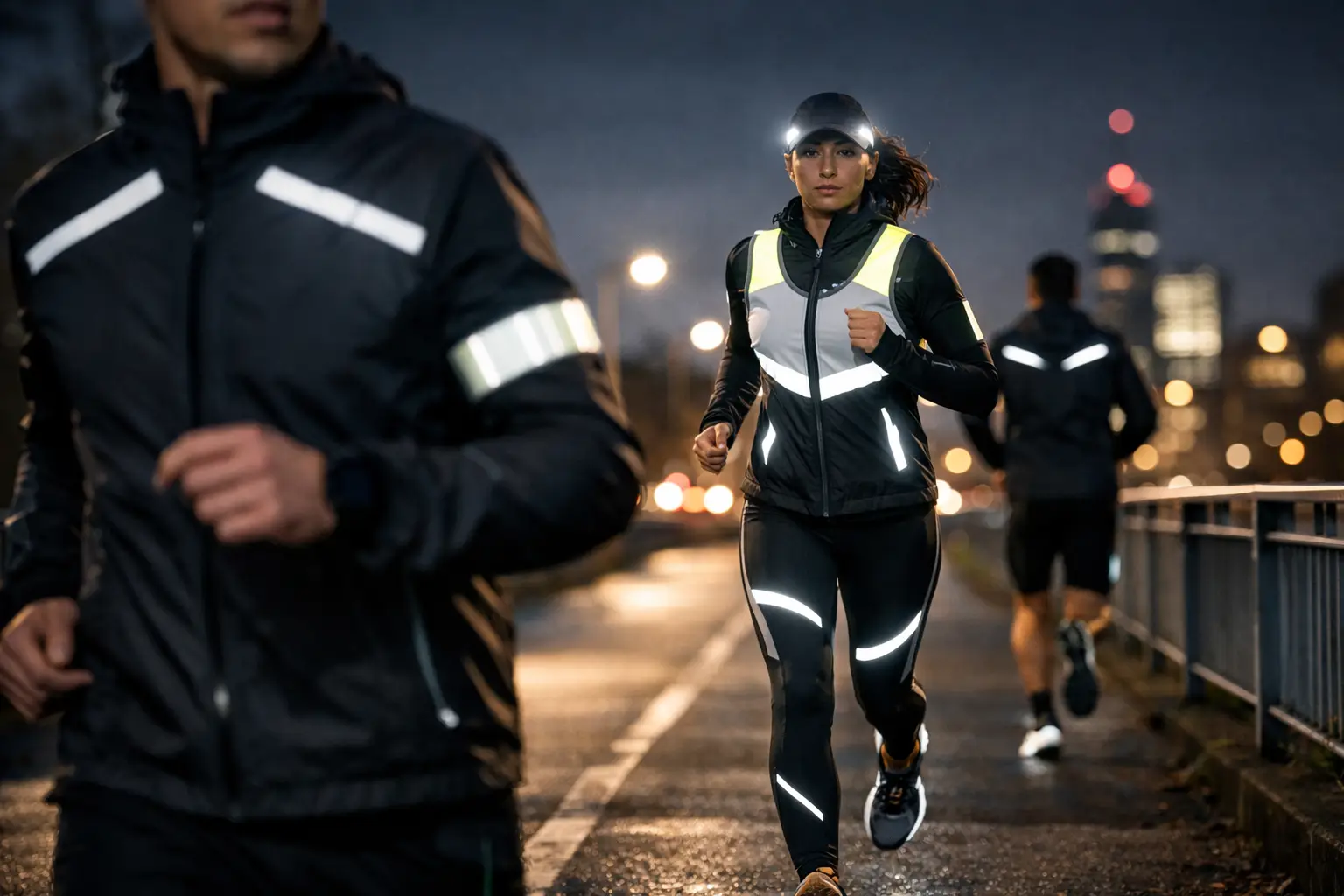
A dark 6am pavement can make a runner disappear long before they feel unsafe. Streetlights leave gaps. Rain dulls contrast. Drivers are managing glare, traffic and wet roads. UK reflective running gear is not a style extra for winter – it is a practical part of getting out consistently when daylight is in short supply.
The right setup helps others pick you out earlier, without turning a simple run into a battle with stiff, sweaty or badly placed kit. It should earn its place mile after mile, survive regular use and avoid becoming another disposable purchase that lasts one season.
What reflective running gear actually does
Reflective material works by returning light towards its source. When car headlights, bike lights or a torch hit it, the reflective sections appear bright to the person holding or driving with that light. That makes it particularly useful on roads, shared paths and streets with changing light levels.
There is one limitation worth being clear about: reflection is not the same as illumination. If there is no external light aimed your way, reflective detailing cannot light you up on its own. On unlit routes, in heavy rain or when you need to be seen from further away, a light with its own power source adds another useful layer.
Think of visibility as a system, not a single purchase. Reflective surfaces help headlights find you. An LED chest light or head torch helps you see the ground and makes your presence clearer. Sensible route choices and road awareness do the rest. No piece of gear replaces running facing oncoming traffic where practical, listening for hazards and giving junctions your full attention.
Choosing UK reflective running gear for real routes
The best choice depends on where, when and how you run. A runner doing well-lit town loops has different needs from someone covering country lanes after work. Start with your most common conditions rather than buying for an imaginary expedition.
Prioritise movement, not just a bright patch
Reflective detail on the chest and back is useful, but moving points can be especially easy to notice. Ankles, wrists and arms create a recognisable running motion in vehicle lights. A reflective vest with adjustable straps can provide broad coverage over a running top, jacket or layers without demanding a separate outfit for every temperature.
Fit matters here. A vest that bounces, twists or rubs will end up in a drawer, however visible it looks in a product photo. Look for adjustable straps that sit securely while still allowing a full arm swing and natural breathing. Test the fit over the layers you actually wear in January, not only over a thin summer tee.
Avoid assuming more fabric always means more useful visibility. A bulky fluorescent gilet may be excellent in daylight but uncomfortable under a waterproof or overly warm on a hard session. Lightweight strap-based reflective gear can be the better all-year solution because it layers easily and takes up almost no room in a kit bag.
Add active light where darkness demands it
For paths without reliable lighting, a rechargeable head torch gives you the ability to spot uneven ground, puddles, roots and dropped kerbs. A chest light can be a strong alternative for runners who dislike a beam moving with their head or who want light cast lower and more steadily across the surface ahead.
The trade-off is battery management. Rechargeable lights reduce the waste and ongoing expense of single-use batteries, but only if you make charging part of your running routine. Plug in after a dark run, rather than discovering a flat battery when you are already laced up at the door.
Use modes with care. A flashing light may catch attention, while a steady beam is generally better for seeing the path. On shared trails, angle lights down enough to avoid dazzling walkers, cyclists and other runners. Being visible should not mean making everyone else squint.
Do not confuse fluorescent with reflective
Fluorescent yellow, orange and pink can stand out brilliantly in daylight, overcast conditions and the low light around dawn or dusk. But fluorescent fabric does not perform the same job as reflective material in direct headlights after dark. A bright running top is a welcome layer, not a replacement for reflective details or active lighting.
For most UK runners, combining both makes sense: a visible daytime colour, reflective elements for vehicle lights, and a rechargeable light for genuinely dark stretches. It is straightforward, effective and far more useful than relying on one feature to handle every condition.
Build a setup you will actually wear
The strongest running kit is the kit that leaves the house with you. If your reflective gear feels fiddly, chafes at the collarbone or only works with one jacket, it will be skipped on rushed evenings. Keep the system simple enough for tired-weekday decisions.
A practical dark-running setup can centre on an adjustable reflective vest, then add a rechargeable head torch or chest light when the route calls for it. Keep your mobile phone secure, use no-tie elastic laces if stopping to retie shoes frustrates your rhythm, and apply anti-chafe balm before a longer wet run where layers may rub. Each item has a clear job. None needs to be overcomplicated.
For a road-heavy route, make visibility from the front, sides and rear your priority. For woodland or canal paths, prioritise seeing the surface ahead as well as being noticeable to others. For a short urban run under streetlights, a reflective vest may be enough, but assess the actual route rather than the postcode. One badly lit crossing can change the answer.
Make durability part of the decision
Running gear is often sold as though it needs replacing with every new season. That is fast-fashion thinking dressed up as performance. Your visibility kit should be dependable, repairable where possible and useful across changing weather, not designed for a few photos and a quick trip to landfill.
Choose adaptable pieces over a collection of specialist one-use items. An adjustable reflective vest can work over a tee in spring, a long-sleeve layer in autumn and a jacket in winter. A rechargeable light can serve early runs, dog walks, power cuts and travel. This is better value for your training and easier on the planet than endlessly buying novelty kit.
Care also affects performance. Wipe mud and road spray from reflective surfaces, follow the washing instructions and avoid harsh treatment that can damage coatings or electronics. Let lights dry before charging if they have been caught in a downpour. Check straps, clips and charging ports occasionally, especially before the darker months begin.
A lower-priced product is not automatically poor value, and an expensive one is not automatically durable. The useful questions are simpler: Will it fit your regular layers? Can you recharge it easily? Will you use it on most dark runs? Is it made to keep going rather than be quickly replaced?
A quick pre-run visibility check
Before heading out, take thirty seconds to check the conditions. Is it fully dark, misty or raining? Does your route include unlit sections? Are your light batteries charged? Is your reflective gear visible over the outermost layer, rather than hidden beneath a waterproof?
If you run with music, keep the volume low enough to hear approaching bikes, traffic and people. If weather reduces visibility, slow down near crossings and assume a driver has not seen you until their actions show otherwise. Visibility gear gives you a stronger chance of being noticed; it does not hand over control of your safety to someone else.
From Newry to London, from a suburban loop to a remote lane, dark miles can still be some of the best miles of the week. Choose gear that helps you show up, stay comfortable and be seen – then let the run do what it does best: clear your head and move you forwards.