

Blog
Are Reflective Straps Adjustable for Every Run?

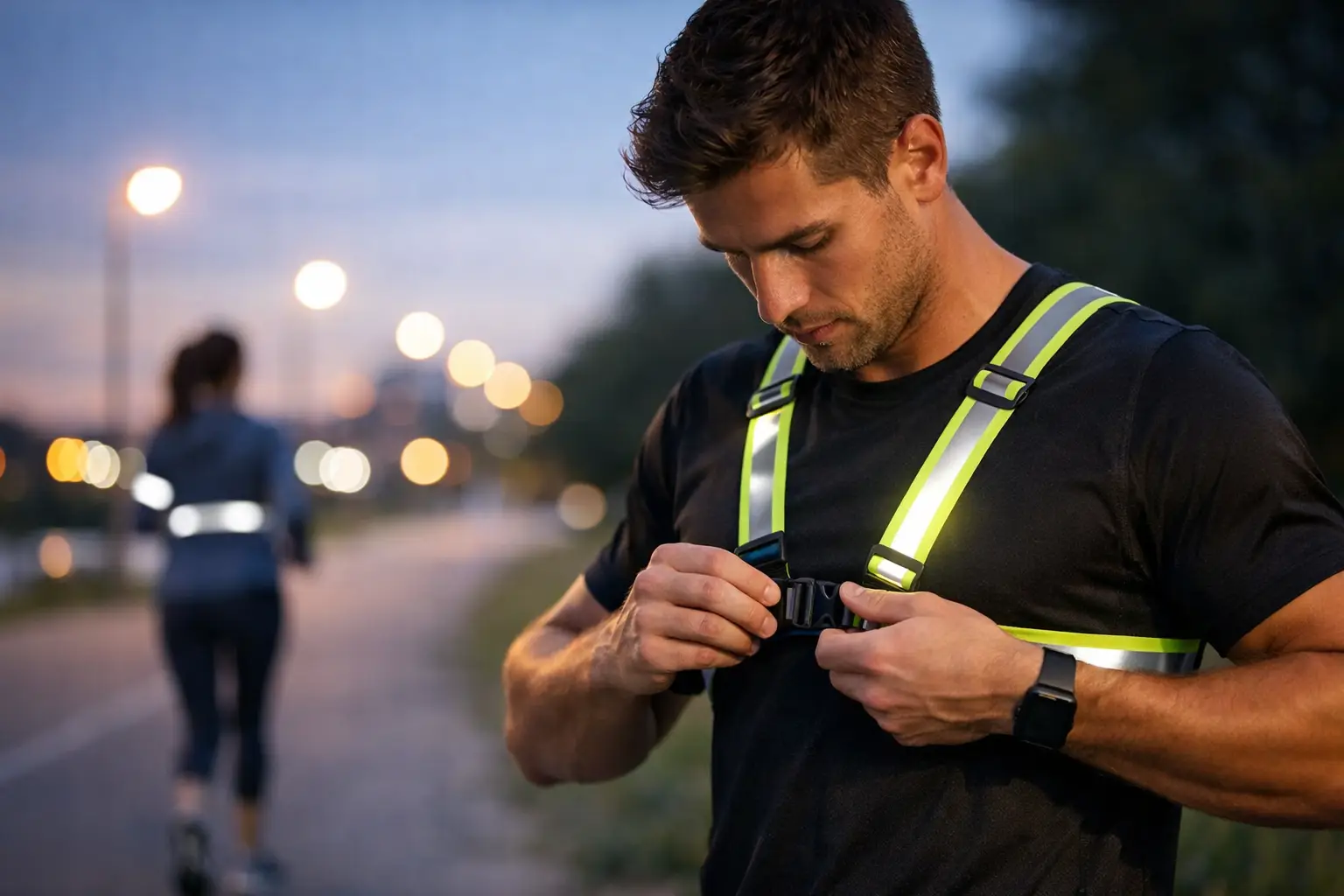
A reflective strap that bounces, twists or gradually rides up is more than an annoyance when the light is low. It takes your attention off the road, your form and the run itself. So, are reflective straps adjustable? Most quality reflective vest straps are designed to be, but the range and style of adjustment matter just as much as the fact that an adjuster exists.
For runners, the goal is simple: a close, comfortable fit that keeps reflective sections visible from multiple angles without restricting a full arm swing or a deep breath. You should be able to put it on over a T-shirt in mild weather and adapt it over a running jacket when winter arrives. That flexibility is what turns a visibility accessory into kit you will actually use.
Are reflective straps adjustable enough for different bodies?
Adjustable reflective straps generally use sliding buckles on the shoulders, around the waist, or both. This lets you shorten or lengthen the vest to sit securely across the chest and back. The best setup is not necessarily the tightest one. It is the one that stays put while allowing natural movement through your shoulders, ribs and torso.
A good reflective harness should accommodate differences in height, chest shape and layering. A runner in a lightweight summer top needs a very different setting from the same runner wearing a base layer, mid-layer and waterproof shell on a wet Northern Irish evening. Fixed-size reflective bands can work for a narrow use case, but they are less forgiving when conditions change.
Look for adjustment in two places. Shoulder straps control where the vest sits vertically, while waist straps control how closely it sits against your body. If only the waist adjusts, a taller or shorter runner may find the reflective sections sit too high or too low. If only the shoulders adjust, the harness may still move from side to side. Both adjustment points give you a far more reliable fit.
That said, one-size adjustable gear has limits. Very petite runners, very broad-shouldered runners and anyone layering bulky winter kit should check the stated fit range before buying. Adjustability is useful, not magical. A strap that is at the extreme end of its range can be harder to secure and less comfortable over distance.
How should adjustable reflective straps fit?
Put the straps on over the layers you expect to wear for that run. Start by loosening every adjuster, then settle the shoulder sections so the rear panel lies flat between your shoulder blades. Tighten the waist gradually until the harness feels secure, rather than cinched.
You should be able to breathe deeply and rotate your torso without feeling the straps pull. Take a few jogging steps, swing your arms and reach forward as if checking a watch. If the vest shifts towards your neck, slides up at the waist or rubs under the arms, make small adjustments before heading out.
The simplest test is a short shake-down outside. Run for a minute, include a few turns and a gentle acceleration, then reassess. A harness that feels fine while standing still can behave differently once your stride settles in. Fine-tuning takes seconds and can save you from spending five miles tugging at your kit.
Avoid overtightening. Compressing the chest can make breathing feel restricted, especially during intervals, hills or colder runs when you are already working harder. Overly tight straps can also create friction points where webbing meets bare skin or thin technical fabric. A stable fit should feel almost unnoticeable once you are moving.
Fit changes with the season
Layering is where adjustable straps earn their place. In spring and summer, reduce the straps so they do not flap over a vest or short-sleeve top. In autumn and winter, open them out to sit smoothly over a jacket. Do not force a harness over thick clothing at its tightest setting, as this can stretch buckles and make the reflective elements sit unevenly.
If you regularly run before work, after dark or through changeable weather, take a moment to reset your straps each time you change layers. It is a small habit with a real payoff. Your visibility gear works best when it is comfortable enough to become automatic.
Reflective straps versus reflective clothing
Reflective straps are not a replacement for every visibility solution. They are a practical, lightweight layer that can be worn over clothing you already own. That makes them particularly useful for runners who want fewer single-purpose garments in the wardrobe.
A reflective running jacket may offer broad visibility, but you might not need a new jacket for every type of outing. An adjustable reflective harness can move from a running top to a waterproof, a walking coat or cycling layers. Used well, it adds function without feeding the disposable cycle of buying more kit than you need.
The trade-off is coverage. A strap harness often provides reflective bands across the front, back and sides, but the overall reflective surface may be smaller than a fully reflective garment. For busy roads, unlit lanes or particularly poor weather, pair reflective straps with a proper running light or chest light. Reflection needs an external light source, such as vehicle headlights, to shine back. Active lighting helps you stand out before that beam reaches you.
Choose colour and light placement carefully too. Bright clothing can help during daylight and dusk, but reflective material is most effective when headlights hit it. A front-facing white light and rear red light add another layer of awareness. No single item makes running risk-free, but combining visibility tools gives other road users more chances to see you.
Common adjustment problems and easy fixes
Straps slipping loose usually point to a buckle that has not been threaded correctly, webbing that is twisted, or an overly loose starting fit. Flatten the strap before feeding it through the adjuster and make sure the loose end is secured so it cannot flap. If the material is wet, muddy or coated with sweat residue, clean it and let it dry before checking the hardware again.
If the harness rubs, first check its position. Rubbing under the arms often means the shoulder straps are too loose or the waist section is sitting too high. Rubbing around the neck can mean the shoulder straps are too short, pulling the vest upwards. A thin long-sleeve layer can also provide a useful barrier on colder days, but fit should be corrected rather than hidden.
Bouncing usually means the waist is too loose, especially when carrying a phone, keys or a small light on the harness. Keep carried weight modest and evenly distributed. Reflective straps are designed primarily for visibility, not as a substitute for a running pack. Adding too much weight can pull the fit out of position and reduce comfort.
Before every low-light run, give the buckles, stitching and reflective panels a quick check. Replace gear with cracked hardware, damaged elastic or reflective material that has become badly scuffed and dull. Durable gear should be used for as long as it performs properly, not discarded for fashion, but safety kit must still do its job.
Make your visibility gear work harder
The most sustainable piece of running gear is the one that earns repeated use across real life. An adjustable reflective strap can cover the early run, the dog walk, the school-run commute and the evening walk home, rather than sitting unused until a specific event. That is the kind of practical, long-lasting choice we believe runners deserve.
At 4R, based in Newry and built for runners who refuse to choose between performance and principle, we favour gear that solves an everyday problem without creating unnecessary waste. Fit your reflective straps properly, look after them and use them whenever the light starts to fade. Your next run does not need more clutter. It needs kit you can trust to stay with you.