

Blog
Smart Running Lights for Safer Miles After Dark

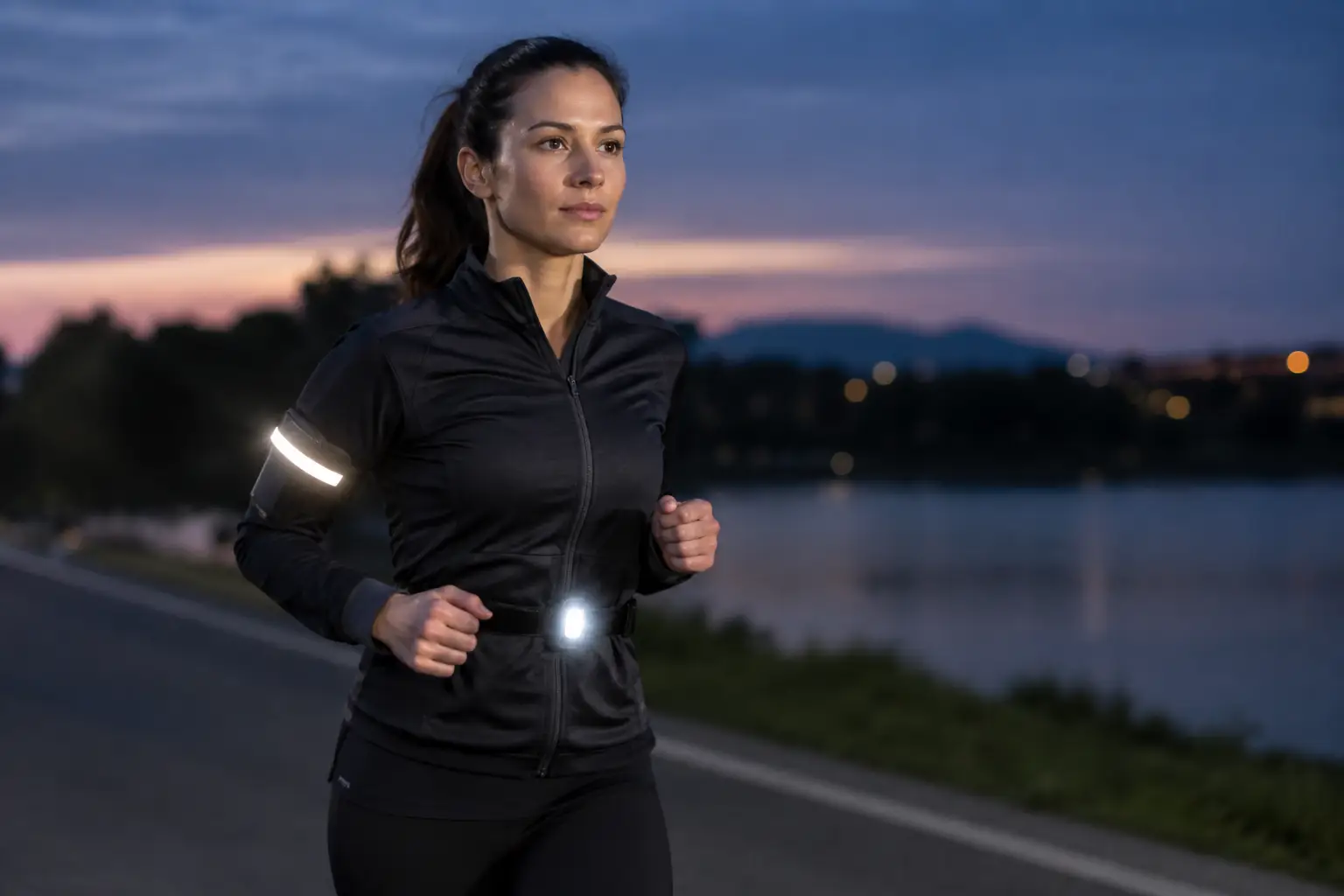
A dark run can be the best part of your day. The roads are quieter, the air is cooler and the miles feel properly yours. But once daylight drops, smart running lights stop being a nice extra and become part of your essential kit. They help you spot uneven ground, signal your position early and keep moving with confidence through autumn mornings, winter evenings and every gloomy spell in between.
The aim is not to turn yourself into a mobile floodlight. It is to create useful, reliable visibility without adding bulk, distraction or another throwaway gadget to your drawer. The right light earns its place run after run.
What smart running lights should actually do
“Smart” can mean app-connected, but that is not the feature most runners need. For practical running, smart means a light that responds well to real conditions: a sensible beam, easy controls, dependable battery life and modes that let you adapt when visibility changes.
A canal path, a country lane and a busy urban pavement create very different risks. On an unlit trail, you need enough forward light to read roots, puddles and changes in surface. Along a road, being noticed by drivers matters at least as much as seeing the ground. In heavy rain or mist, a poorly positioned light can reflect back at you and reduce your own view.
The best setup is therefore rarely about chasing the highest lumen number on the box. A massive beam can be useful for fast trail running, but it may be excessive for a well-lit route and unpleasant for other path users. Think about where you run, how quickly you run and how long you are usually out.
See and be seen are separate jobs
A white forward-facing light helps you see. A rear red light and reflective details help others see you. Treat these as two separate jobs, because they demand different placement and output.
For seeing the path, look for a broad, even beam rather than a tight, harsh spotlight. A wider pool of light gives better awareness at the edges of your vision, where kerbs, loose gravel and turns often catch runners out. Adjustable brightness is useful here. You can conserve battery on familiar pavements, then increase the output when you reach an unlit section.
For being seen, movement and placement matter. Flashing or pulsing modes can attract attention on the road, while reflective vest straps pick up vehicle headlights without needing power at all. A mix of active light and passive reflectivity gives you a stronger safety margin than relying on one or the other.
Head torch, chest light or vest straps?
Each option has a place. Your best choice depends on your route and what you find comfortable enough to wear consistently.
A rechargeable head torch is the familiar choice for trails, unlit parks and early-morning routes. It points where you look, making it useful for checking a bend, a gate or the next few metres of rough ground. The trade-off is that it can bounce if the strap is poorly adjusted, and a narrow beam can create deep shadows. Set it snugly, angle it slightly downwards and test it before leaving home.
A chest light places the beam lower and can make uneven surfaces easier to read. Because it moves less than a light on your head, some runners find it more comfortable on longer outings. It also keeps the weight away from your forehead under a cap or in wet weather. The downside is that a chest-mounted beam does not follow your gaze, so you may still want a small head torch for technical routes.
Reflective vest straps are a simple, low-fuss layer for road running. They are light, adjustable and easy to pull over a jacket, T-shirt or hydration vest. On their own, they do not help you see potholes, but paired with a front white light and rear red light, they make your body shape more recognisable to drivers. That matters. A single tiny light can be mistaken for a bike, a reflector or a distant vehicle. Clear human movement is easier to read.
For many everyday runners, a chest or head light plus reflective straps is the practical answer. If you are running on rural roads, add a rear light. If you are on technical trails, prioritise a stable forward beam with enough battery for delays.
Choose features for your actual running life
Battery anxiety has ended more runs than a lack of fancy features. Check claimed run times carefully, especially at the brightness setting you genuinely plan to use. The longest figure is often based on a low-power mode that may not suit a completely dark route.
Rechargeable lights are usually the sensible choice for regular runners. They reduce the pile of disposable batteries and make more financial sense over time. Build charging into your routine: charge after a wet, dark run rather than discovering an empty battery at the door two days later. If your runs regularly last beyond an hour or two, choose a unit with clear battery indicators and a lower-power mode you can use if needed.
Weather resistance matters too. Northern Irish rain is not exactly a rare event, and neither is a sweaty summer run. A light should cope with both. Check that the charging port is properly protected and that switches remain usable with cold or wet fingers. A product that performs beautifully only in dry conditions is not dependable running gear.
Comfort is a performance feature, not a luxury. If a strap chafes your neck, slides over your jacket or pinches your ribs, you will leave it at home. Adjustability matters because your running layers change through the year. Try your lighting setup with the jacket, gloves, cap or hydration vest you actually use in darker months.
Finally, favour gear with a useful life beyond one season. Replaceable straps, durable housings and rechargeable batteries are better choices than novelty lights designed to fail after a handful of runs. Running kit should not be disposable fashion in fluorescent packaging. Buy less, choose well and use it hard.
Set up your lights before you need them
Do not wait for the first pitch-black evening to learn what each button does. Familiarity is a safety feature. Turn the light on at home, cycle through the modes and practise adjusting it while wearing your usual layers.
Before heading out, check the charge, wipe any dirt from the lens and make sure straps are not twisted. Angle a head torch down enough to light the ground ahead without shining directly into oncoming faces. With a chest light, position it where your arm swing will not constantly knock it. A rear light should be visible from behind, not hidden by a jacket hem, hair or a running belt.
On mixed routes, adjust rather than leaving the light on full power all the time. A lower setting can be enough under streetlights. Increase it before the dark section begins, not halfway through a muddy descent. If you use a flashing mode near traffic, keep your forward light stable where possible so you can still judge the surface clearly.
A safer after-dark running routine
Lights are part of a wider decision, not a permission slip to ignore conditions. Tell someone your route if you are heading out alone, especially on isolated paths. Keep one ear free around traffic and avoid routes with poor sightlines when visibility is low. Slow down on unfamiliar ground. A few seconds off your pace is a fair trade for staying upright.
Visibility also changes with the weather. Rain, fog and glare from wet roads can make drivers see less, even when you feel well lit. Give vehicles more space, assume you have not been noticed and make your movements predictable at crossings. Bright clothing helps, but it is not a substitute for lights and reflectivity after dark.
If you run with a friend, do not simply follow their beam. Leave enough room to see the surface for yourself. If one person is using a powerful light, agree on the route and pace before setting off so nobody is pushed into a dark patch at the wrong moment.
Make darkness part of the plan, not the obstacle
Running through darker months does not need to mean shorter, less enjoyable training. With smart running lights that suit your route, a considered mix of reflectivity and active light, and a charged battery, darkness becomes another condition you know how to handle.
Choose dependable gear, look after it and wear it every time the light is fading. Your next run can still be the one that clears your head, builds your fitness and sends you home feeling stronger – just make sure the road, trail and everyone around you can see you coming.