

Blog
Best Gear for Rainy Runs That Earns Its Place

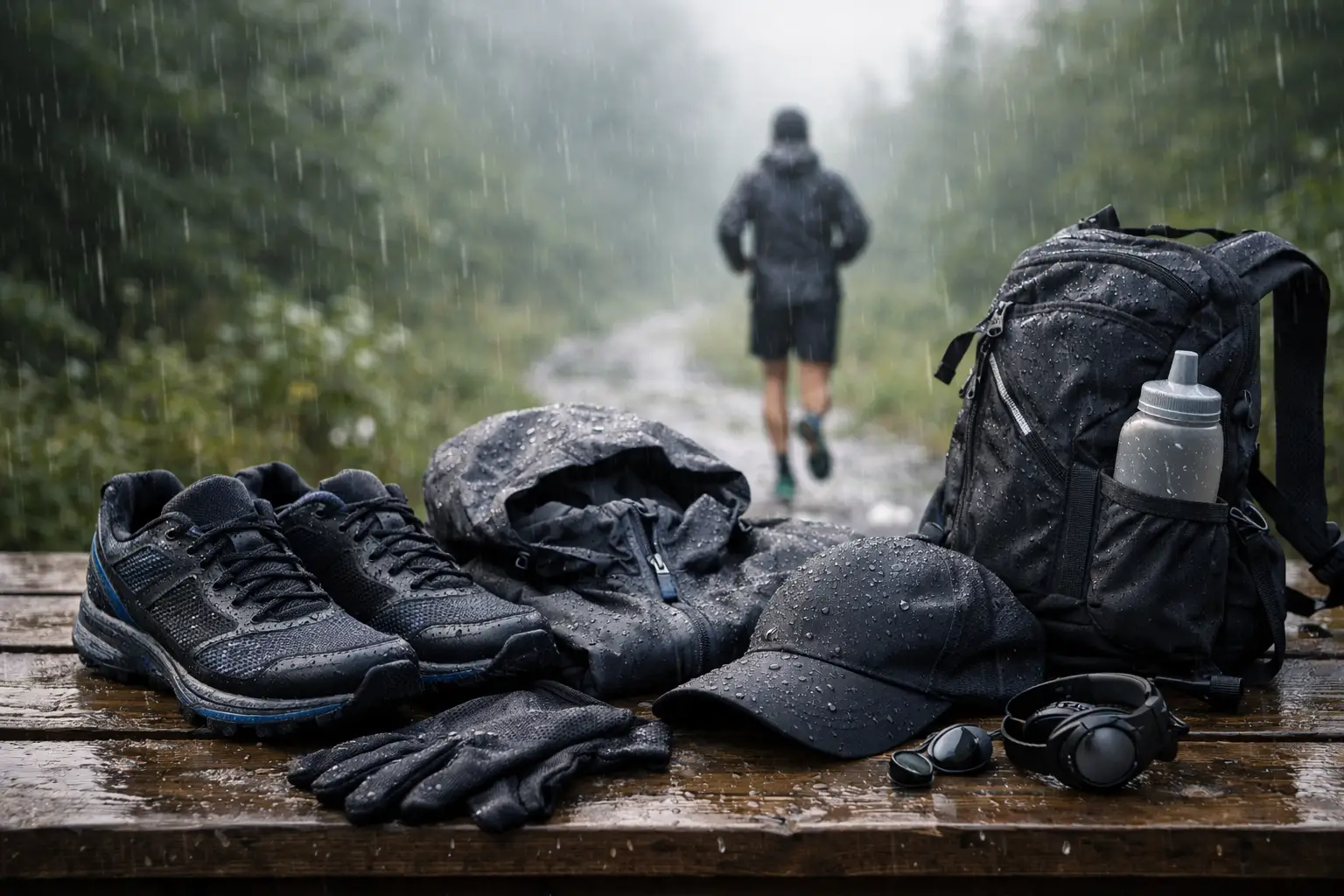
The best gear for rainy runs is not the kit that promises to keep every drop out. It is the kit that keeps you comfortable, visible and moving when the pavements are slick, the wind is up and turning back feels tempting. Around Newry and across Ireland, we know a light shower can become a proper soaking before the first kilometre is done. A smart wet-weather set-up makes those miles feel like training, not a test of patience.
The aim is simple: stay warm enough, avoid the clammy feeling of trapped sweat, reduce rubbing, and make sure other road users can see you. Buy fewer pieces, choose them well, and use them through more than one dramatic forecast.
Best Gear for Rainy Runs: Start With What Matters
Rain changes more than your comfort. It reduces visibility, makes surfaces unpredictable and can expose small weaknesses in your usual kit. A cotton top that is fine on a dry jog becomes cold and heavy. A dim light that seemed adequate at dusk may disappear against rain-soaked roads and car headlights.
Prioritise the pieces that solve a real problem on your regular route. For most runners, that means a breathable outer layer, moisture-managing base layers, reliable lighting, reflective details and anti-chafe protection. Add the rest only when the weather and distance justify it.
A running jacket should breathe, not boil you
A rain jacket earns its place when it blocks wind and light-to-moderate rain without turning into a portable sauna. Look for a lightweight running-specific layer with ventilation, a close but unrestricted fit and an adjustable hood if you genuinely use one. A jacket that flaps, traps heat or rubs at the neck will soon stay in the drawer.
There is a trade-off worth accepting: fully waterproof fabrics can feel less breathable during hard efforts. For an easy run in persistent rain, stronger weather protection is useful. For intervals or a tempo session, a highly breathable wind-resistant shell may leave you more comfortable, even if you finish slightly wet. Rain from the sky is not the only moisture to manage. Sweat is usually the bigger challenge.
Avoid buying a bulky jacket simply because it sounds more protective. Running layers need to move, pack down and work with the effort you are putting in. A durable jacket worn for three winters is a better choice than a cheaply made “waterproof” replaced after a few miserable outings.
Choose technical layers under the shell
Your base layer does the quiet work. Synthetic performance fabrics or responsibly sourced merino move moisture away from the skin and dry far faster than cotton. In cool rain, choose a long-sleeve technical top beneath your shell. In milder conditions, a short-sleeve top may be enough, especially if you run warm.
The right answer depends on temperature, wind and pace. Do not dress for how cold it feels at your front door. Dress for the body temperature you will reach ten minutes into the run. If you are unsure, start slightly cool rather than heavily insulated.
For your lower half, tights can be useful in cold, driving rain, while shorts remain practical in wet but mild weather. Fabric that becomes restrictive when soaked is the enemy. Test new kit on a shorter route before trusting it on a long run.
Be Seen Through Rain and Gloom
Rainy runs often happen in poor light. Low cloud, early sunsets and spray from passing traffic make visibility a safety essential, not an optional extra. Bright clothing helps, but it is not enough by itself. Fluorescent colours work best in daylight; reflective materials come alive when headlights hit them.
A reflective vest or reflective straps add movement-based visibility around your torso and arms. That movement matters because drivers notice a human shape in motion more readily than a small reflective patch on a shoe. Wear reflective elements where they are not hidden by a jacket, pack or long hair.
For dark routes, use active lighting as well. A rechargeable chest light gives forward illumination and makes you visible from a distance, without the bouncing and narrow beam that can make some head torches frustrating. A head torch still has a place on trails, uneven paths or routes where you need to scan well ahead, but choose a stable fit and charge it before every run.
Never assume a street-lit route removes the need for lights. Wet tarmac reflects glare, rain blurs windscreens and drivers may be concentrating on hazards closer to their vehicle. Make your presence obvious from every angle.
Prevent the Small Discomforts That End Runs
The most annoying rainy-run problems are often not dramatic. They are the wet sock that starts sliding, the lace that loosens, or the small patch of rubbing that becomes unbearable by kilometre eight. Deal with them before you leave.
Apply anti-chafe balm to known friction points: between the thighs, under the arms, along bra lines, around the waistband, and wherever your hydration vest or belt sits. Wet fabric increases friction, so a product that feels unnecessary on a dry 5K can make a major difference in rain. Reapply for longer runs if needed, particularly where water and movement are constant.
No-tie elastic laces are another small upgrade with a practical payoff. They help maintain a secure, consistent fit when soaked laces become difficult to adjust with cold hands. Set the tension carefully. Too loose and your foot can slide on wet descents; too tight and you may create pressure across the top of the foot.
Socks deserve more attention than they receive. Pick technical running socks that hold their shape when wet and avoid thick cotton pairs, which absorb water and invite blisters. If your feet are especially prone to rubbing, a thin moisture-wicking sock with a close fit is often more effective than piling on heavy fabric.
Footwear: grip first, waterproofing second
For most road runners, good outsole grip and a secure upper matter more than fully waterproof shoes. Waterproof road shoes can keep out a shower, but once water enters through the ankle opening, they may hold it in and take longer to dry. On a short, cold run this may be worthwhile. On a long run in steady rain, quick-draining shoes are often the more comfortable choice.
Trail runners face a different calculation. Mud, wet roots and loose surfaces demand deeper, more aggressive lugs. Road shoes are not designed to negotiate slippery woodland paths simply because the forecast says rain. Match the grip to the ground, slow down on painted lines and metal covers, and accept that a sensible pace is part of wet-weather gear.
Check your shoes regularly. A worn outsole loses grip precisely when you need it most. Extending the life of a shoe beyond its useful condition is not sustainable if it raises your chance of falling. Responsible buying means choosing durable kit and replacing it when performance is genuinely spent, not pretending worn-out gear still does the job.
Build a Rain Kit You Will Actually Use
The most useful kit is easy to reach, comfortable enough to wear and suited to your normal running life. A runner doing two evening road runs a week may need a lightweight shell, reflective straps, a rechargeable chest light, technical socks and anti-chafe balm. Someone training for a hilly trail event will also need stronger traction, a dependable head torch and layers that cope with longer exposure.
Do not chase a separate outfit for every weather variation. That is fast-fashion thinking in performance clothing: more products, more waste, more things that barely get used. Build a small rotation of hard-working pieces that layer together and last. Wash them according to the care label, air-dry when possible and recharge lights after use rather than discovering an empty battery at the door.
At 4R, based in Newry, we believe runners should not have to choose between dependable performance and better consumption. Wet weather is part of the sport, particularly on these islands. Choose gear with a clear purpose, look after it, and let the rain become the reason you went out rather than the excuse you stayed in.