

Blog
Running Safety Lights That Earn Their Place

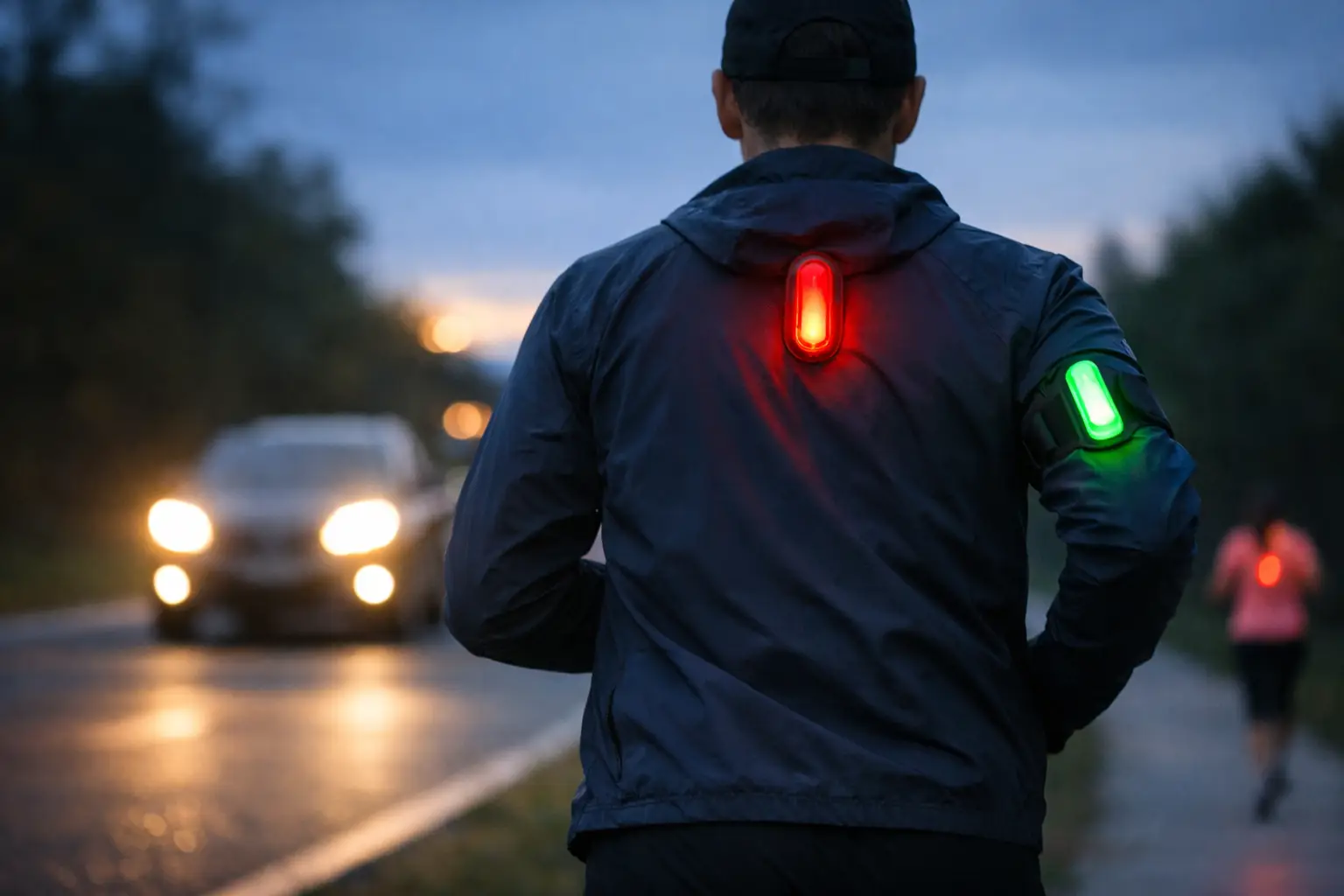
A dark mile can change quickly. One moment you are moving freely through a quiet lane or town path; the next, you are stepping around a pothole, crossing a side road, or sharing space with a cyclist who did not see you soon enough. Running safety lights are not an optional extra for winter training, early starts or late finishes. They are practical kit that helps other people notice you before they need to react.
The aim is not to turn every run into a floodlit event. It is to make your movement clear, predictable and visible from the angles that matter. That means choosing lights that work with your route, weather, pace and clothing, then using them consistently rather than leaving them in a drawer until the clocks change.
Why Running Safety Lights Matter After Dark
Reflective clothing is valuable, but it has a limitation: it needs light to bounce back. A driver’s headlights may catch a reflective logo or vest strap, but that does little on an unlit path, around a blind bend or when you are approaching from the side. Active LED lights create their own signal. They can make you more noticeable to drivers, cyclists and other runners before they are close.
Visibility is not only about being seen head-on. A runner crossing a junction, moving along the edge of a country road, or turning through a car park needs to be visible from the front, rear and sides. This is why a small rear light can be as useful as a brighter front light, and why reflective straps still deserve a place in your kit bag.
There is also a confidence benefit. When you know your presence is easier to spot, it is simpler to focus on your stride, breathing and route. That does not replace good judgement. You still need to assume that a driver has not seen you, slow down at crossings and stay alert around traffic. But dependable visibility gear gives you a stronger margin for error.
Choose Running Safety Lights for Your Route
The best setup depends on where you run. Buying the biggest, brightest light without thinking about its job often leads to wasted money, unnecessary weight and a light that rarely gets used.
For pavements, parks and urban routes
If streetlights cover most of your route, your main need is to be seen rather than to light the ground. A compact LED chest light, rear clip light or illuminated vest strap is usually enough. Look for a clear flash pattern and a secure fit that does not bounce with every step.
A chest-mounted light has a useful advantage here. It sits high on the body and gives oncoming traffic a visible point of reference. Pair it with a rear light or reflective detail so that you are recognisable when moving away from vehicles too.
For country lanes and unlit paths
Unlit roads require two separate jobs: seeing hazards and being seen. A rechargeable head torch can illuminate uneven ground, puddles, loose gravel and kerbs. A chest light can also give a useful forward beam, particularly if you prefer the light lower down and closer to the line of your feet.
For running beside traffic, do not rely on a head torch alone. Its beam points where you look, so it can turn away from an approaching driver as you check a junction or glance down at the road. Add a steady or flashing rear light and reflective vest straps to create visibility even when your head moves.
For trails, hills and mixed terrain
Trail runners need enough beam control to read the ground without flattening depth perception. Roots, rocks and sudden drops are harder to judge under a narrow, overly intense spot beam. A head torch with a wider setting is often more comfortable for technical ground, while a chest light can reduce shadows cast directly in front of your feet.
Battery life matters more when you are far from home. Cold conditions can shorten run time, and a long stop because of weather, navigation or an injury will drain a light faster than planned. Start with a full charge and choose gear with a realistic runtime for your longest expected outing, not just your usual 5K.
Brightness Is Not the Whole Story
Lumens are useful, but they are not the only measure worth considering. For well-lit streets, an excessively bright beam can dazzle pedestrians and other runners. For dark trails, too little light makes foot placement stressful. The right output is the one that gives you a comfortable view of your immediate route while making your presence obvious without causing glare.
A few practical features tend to matter more than headline brightness. You want a button that works with cold fingers, modes you can understand without stopping, and a battery indicator that does not leave you guessing. A simple unit with reliable charging is better than a complicated light with ten settings you never use.
Flash modes are particularly useful for visibility in traffic, but use them with care on shared paths. A rapid strobe can be distracting at close range, especially for cyclists and other runners. A steady beam at the front with a more noticeable rear flash is often a sensible balance.
Fit Decides Whether You Will Wear It
The light you own but find annoying is not safety gear. It is clutter. Before buying, think about how it will sit over a base layer, jacket or running vest. A head torch should have a stable, adjustable band that stays put without creating pressure across your forehead. A chest light should remain centred rather than swinging across your body.
Weight matters, but balance matters more. A slightly heavier light that stays secure can feel better than a lighter model that bounces at every stride. If you run in wet conditions, look for weather resistance and covered charging ports. Winter running in the UK and Ireland asks a lot from small electronics, and flimsy gear often fails at the exact moment it is needed.
It is also worth thinking about your other essentials. If you run with a mobile phone, water, gloves or a light jacket, test the full setup before heading out on a long route. Straps can catch on packs, and a chest light may sit differently over a waterproof than it does over a T-shirt.
Build a Visibility Setup That Lasts
There is no need to buy a separate novelty accessory for every dark run. A small, durable system will serve you better: one rechargeable front light for seeing ahead, one rear light for traffic awareness, and reflective straps or details that work when headlights hit them. These pieces cover most situations without filling a drawer with disposable gear.
Choose rechargeable lights where possible and look after them. Wipe off road grit and sweat after wet runs, allow equipment to dry before charging, and avoid leaving batteries flat for months. Check straps, clips and charging cables regularly. The point is not to replace your kit every season because a plastic clasp snapped or a battery was neglected.
That approach fits running better than fast-fashion thinking. Useful gear should earn its place through repeated miles, not a bright colour, a gimmick or a short-lived trend. At 4R, we believe runners deserve practical equipment that performs without asking the planet to absorb the cost of throwaway consumption.
Small Habits That Improve Night-Run Safety
Put your lights on before you leave home, not when daylight disappears halfway through the run. In late autumn and winter, conditions can dim faster than expected, especially under trees, in rain or on rural roads. A quick battery check takes seconds and removes an avoidable risk.
Think about placement as well. A rear light is most effective when it is not blocked by a jacket hem, hydration pack or long hair. Keep front-facing lights high enough to be seen, but angled down enough that they do not shine directly into other people’s eyes. If you are running with a group, avoid blinding the person beside you each time you turn your head.
Finally, make your route choices match the conditions. Even the best lighting does not make an icy pavement safe, a narrow lane wide, or a distracted driver attentive. Choose well-used paths when you can, tell someone where you are going for longer runs, and keep the volume low if you wear headphones.
Darkness should not be the reason your running routine stops. Choose running safety lights that are comfortable, dependable and built for repeated use, then let the quiet miles do what they do best: clear your head, build your fitness and carry you forward.