

Blog
Night Running Visibility Routine Example

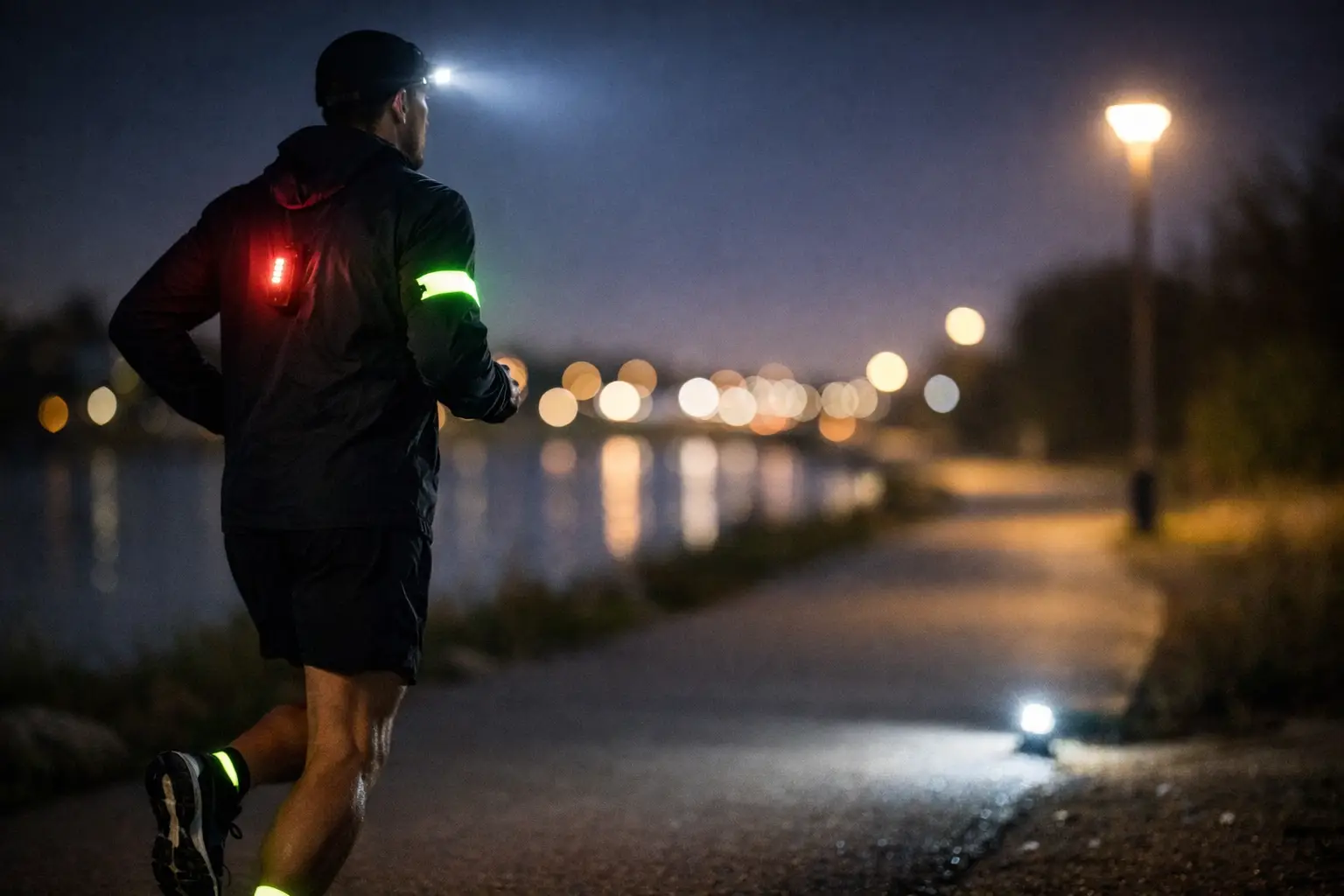
You only need one near miss with a silent bike, a late-turning car or a badly lit crossing to realise that good intentions are not a visibility plan. A proper night running visibility routine example is less about buying random bits of kit and more about building a repeatable habit that makes you easier to spot from every angle.
That matters because night running can be brilliant. Roads are quieter, schedules are easier to keep, and plenty of runners simply feel stronger after dark. But the trade-off is obvious – drivers are tired, pavements are uneven, and being “probably visible” is not the same as being clearly seen.
A night running visibility routine example that actually works
The best routine is the one you will follow when you are rushed, tired and tempted to skip steps. Keep it simple enough to repeat and strong enough to cover the basics every time.
Start with your route. Before you even touch your kit, decide where you are going and how exposed that route is. A well-lit urban loop with regular crossings needs a slightly different setup from a canal path, country lane or dim suburban estate. If your route includes bends, parked cars or narrow sections, assume drivers will see you later than you would like.
Then build your visibility in layers. Think chest, head, movement and contrast. A chest light or front-facing light helps people see you coming. A headlight lets you see the ground and signals your position, but it should not be your only visibility tool because its beam direction changes as you move. Reflective straps or a reflective vest catch headlights from a distance, especially at junctions. Lighter-coloured clothing helps too, though on its own it is nowhere near enough.
A practical routine might look like this. You put on light or reflective outerwear first so your largest visible surface is already working for you. You add reflective vest straps over the top so your torso is marked clearly. Then you fit a rechargeable headlight with the beam angled slightly down, not straight ahead into traffic or the eyes of other path users. After that, switch on a chest light or front light if you use one, and do a ten-second mirror or phone-camera check to make sure nothing is twisted, covered or sitting too low.
Finally, test movement. Walk a few steps, swing your arms and jog on the spot. If straps bounce, lights slip or clothing blocks reflective areas, fix it before you leave. Small annoyances become big distractions one mile in.
Why the routine matters more than a single product
Runners often make the same mistake: they rely on one item and hope it solves everything. One reflective logo on a jacket is not a system. One tiny clip light on your waistband is not a system either.
Visibility works best when it covers different conditions at once. Reflection is strongest when external light hits it, so it helps most when a car’s headlights are pointed your way. Active lighting makes you noticeable even before that. Good contrast in your clothing can help in street lighting, but it is weaker on dark roads. The strongest setup combines all three.
This is also where durability matters. If your light battery dies halfway through the week, or your reflective gear sits unused because it is fiddly and uncomfortable, the routine falls apart. Buying fewer, better pieces that earn a place in your regular rotation is usually the smarter move. That is better for your wallet and better than treating running gear like throwaway fashion.
What to check before every night run
Keep the checks short so they become automatic. Battery first. If it is below a level you trust, charge it or swap plans. Weather next. Rain changes visibility fast and makes reflective surfaces even more useful, but it can also affect beam clarity and road behaviour. Then check fit. Loose straps twist. Headlights that tilt up waste their beam. Jackets worn over reflective elements can cancel out your setup without you noticing.
It is also worth checking your shoes and laces. That might sound unrelated, but night running punishes avoidable distractions. If your laces come loose in a dark section or you need to stop and sort uncomfortable kit, your attention shifts away from the road around you. A routine should reduce friction, not add to it.
Your route should match your visibility setup
Not every night run needs maximum kit, but every night run needs honest judgement. If you are heading through a well-lit town centre at a quiet hour, a lighter setup may be fine. If you are crossing poorly lit roads, running through patchy lighting or moving between traffic and footpaths, you need more presence.
There is also a pace factor. Faster sessions can mean less time to react to potholes, kerbs or people stepping out unexpectedly. Easy runs are often more forgiving, but they can drift into complacency. Either way, if you cannot clearly see the ground ahead and be seen by others, the route is asking too much of your setup.
A simple routine for different types of runner
Beginners usually benefit from the most straightforward version: one reliable headlight, one reflective torso layer, one planned route, and one battery check before leaving. Keep the variables low. The goal is not to feel kitted out for the sake of it. The goal is to remove guesswork.
More experienced runners may want a slightly more layered system, especially in winter when darkness arrives early and weather shifts quickly. If you run after work, your routine needs to work when time is tight. That means gear stored together, lights charged in one place and a route decision made before you get changed.
If you run in a group, do not assume the group makes you visible enough. A pack can be easier to notice, but only if there is enough light and contrast for drivers or cyclists to read what they are seeing. Group runners still need personal visibility, especially on the edges of the pack or when the group stretches out.
Common mistakes that weaken a visibility routine
The first is overtrusting street lighting. A road can look bright to you and still leave you hard to pick out against the background. The second is wearing dark kit with one reflective detail and calling it done. The third is using a headlight aimed badly, which can leave the ground dim while dazzling others.
Another common mistake is forgetting side visibility. Being seen from the front is only part of the picture. Many close passes happen at crossings, bends and side roads where your profile matters. Torso straps and reflective elements that catch light from different angles help here.
Then there is the battery trap. Rechargeable lights are brilliant when they are part of a habit. They are useless when left flat on the kitchen side. Tie charging to something fixed in your week, such as laying out your kit after your Sunday run or plugging lights in with your watch.
How to build your own night running visibility routine example
Take five minutes and write your routine in the order you actually get ready. Not the ideal version. The real one. If you always forget to charge your light, the issue is probably not discipline. It is that your setup asks you to remember too many separate tasks.
Store your night kit together. Keep your light, reflective gear, comfortable layers and any small essentials in one place. Charge items where you can see them. If something is awkward, replace it with something simpler. The best routine is the one that survives busy evenings, bad weather and low motivation.
You should also review your setup every few weeks. Are you using everything you put on, or are some pieces just creating clutter? Does your route change with the season? Are darker mornings now part of your schedule too? A visibility routine should evolve with your training, not stay fixed out of habit.
For runners who care about buying responsibly, this is where a practical brand matters. 4R’s approach makes sense because dependable, ethically made gear that lasts is exactly what a night routine needs. You should not have to choose between performance, affordability and doing better by the planet.
Night running does not need to feel risky or overcomplicated. It just needs respect, consistency and gear that earns its place. Build a routine you can repeat without thinking, and every run after dark starts from a stronger place.