

Blog
Running Gear Trends 2026 That Will Matter

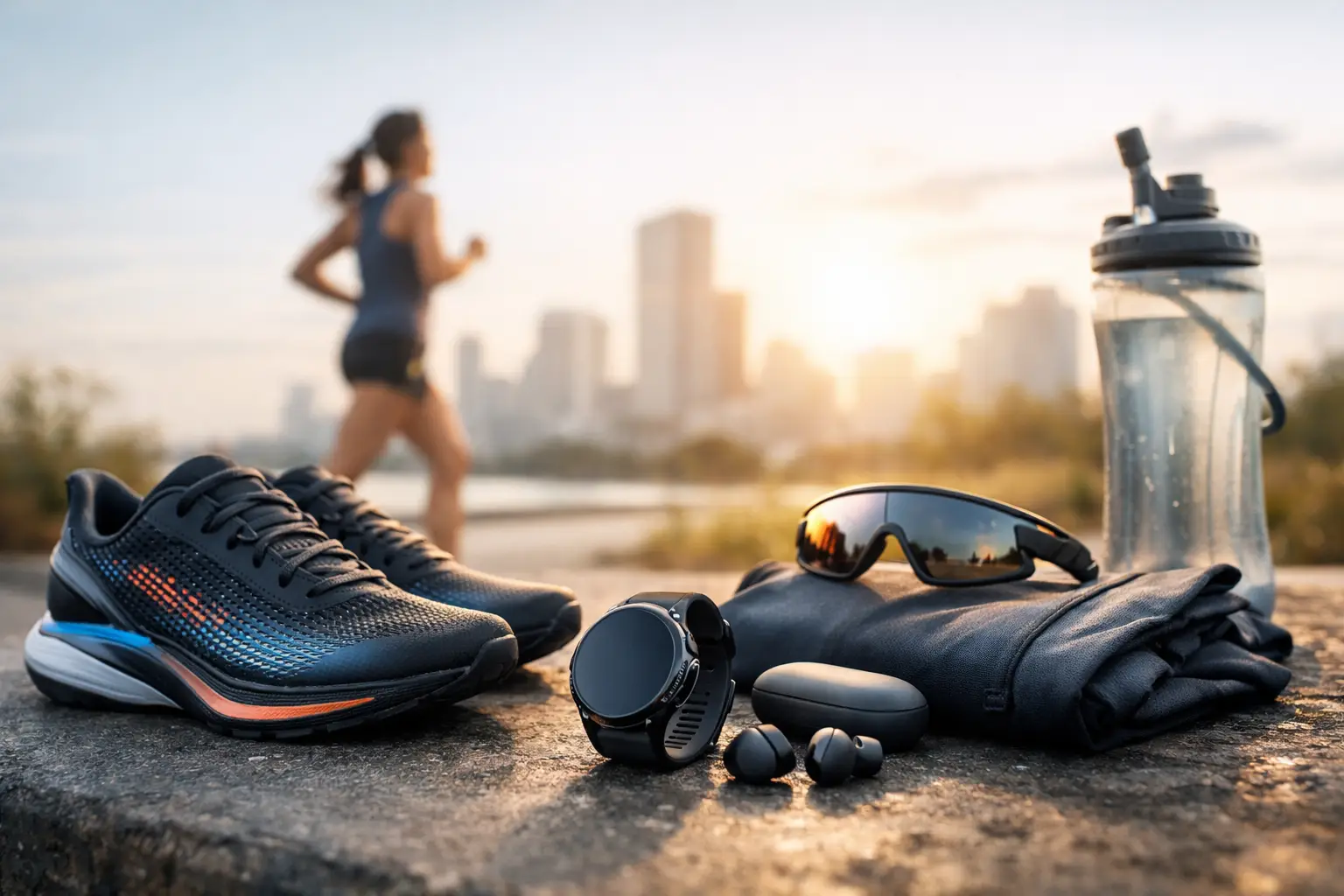
A lot of running kit still gets sold on the same lazy promise – lighter, faster, newer. But the most interesting running gear trends 2026 are moving in a better direction. Runners are getting sharper about what actually helps on the road, trail and pavement, and what just adds cost, clutter and waste.
That shift matters. If you run three times a week before work, squeeze in long miles at the weekend, or head out after dark through winter, you do not need a wardrobe full of gimmicks. You need gear that works, lasts, and earns its place every time you lace up.
Running gear trends 2026 are getting more practical
The biggest change is not a single product. It is a mindset. Runners are buying with more discipline. Instead of chasing every launch, they are looking for fewer pieces that solve real problems – chafing, poor visibility, awkward storage, unreliable lighting, kit that wears out too quickly.
That is good news for everyday runners. For years, the market leaned heavily on aspiration. Elite imagery, premium pricing, and endless seasonal drops made it seem like serious running required constant upgrades. In 2026, that idea looks tired. The stronger trend is functional, repeat-use gear with clear value.
This does not mean innovation is slowing down. It means innovation is finally being judged properly. If a product improves comfort, safety or consistency, runners notice. If it is only new for the sake of it, they move on.
The rise of fewer, better pieces
One of the clearest trends is restraint. More runners are resisting fast-fashion sportswear cycles and choosing gear that can handle repeated miles, repeated washes and more than one season. That includes apparel, but it is especially obvious in accessories.
A reliable chest light, a rechargeable headlight, reflective straps that do not feel flimsy, and no-tie laces that stay secure all fit this shift. These are not flashy purchases. They are useful ones. And useful gear tends to stay in rotation.
There is a sustainability angle here, but it is not just about ethics. It is also about frustration. Runners are tired of replacing things that should have lasted longer. Durability has moved from nice extra to buying criterion.
Sustainability is becoming more honest
Sustainability in running has often been dressed up in vague language and one-token-material marketing. Runners are getting less patient with that. In 2026, the brands that win trust will be the ones that can show durable construction, ethical production and sensible product design, not just green slogans.
There is a trade-off, of course. A product made with better materials is only a better choice if it performs well enough to keep using. Nobody benefits from sustainable kit that sits unused in a drawer because it rubs, slips, overheats or fails in the rain. Performance and responsibility have to work together.
That is why long-life accessories feel especially relevant right now. A rechargeable light that reduces battery waste, reflective gear that can be used across seasons, or anti-chafe support that prevents abandoned runs all make practical sustainability easier. They reduce replacement cycles without asking runners to compromise on function.
Repairability and repeat use will matter more
Expect more attention on products that can handle repeated use without becoming unreliable. For runners, that means secure closures, washable materials, battery systems that hold charge, and fabrics that do not lose shape quickly.
The smartest purchases in 2026 will not always be the most technical sounding. Often, they will be the ones that remove small annoyances over and over again. That is what makes gear worth keeping.
Visibility gear is moving from optional to essential
If one category is clearly strengthening, it is visibility and low-light safety. More people are running early, running late, and fitting training around real life rather than daylight. That makes lighting and reflective gear less of a niche concern and more of a standard part of a runner’s setup.
The old problem was that safety gear often felt clunky or looked like an afterthought. That is changing. Running gear trends 2026 show a push towards visibility products that are lighter, easier to wear and genuinely compatible with movement.
Chest lights are a good example. They are gaining traction because they offer stable forward illumination without the bounce or discomfort some runners feel with head-based lighting. Headlights still have a strong place, especially where directional beam control matters, but more runners are realising that comfort affects whether safety gear actually gets used.
Reflective straps and vests are also becoming more versatile. Instead of being bulky add-ons for winter only, the better versions are adjustable, packable and easy to throw on year-round when conditions call for them. That flexibility matters because the best safety kit is the kit you do not talk yourself out of wearing.
Smarter lighting, not just brighter lighting
Brightness alone is not the point. Beam pattern, battery life, recharge speed and fit all matter. For urban runners, too much glare can be as annoying as too little light. For rural routes, battery confidence is critical. For commuters who run before dawn, rechargeability and convenience can make the difference between regular use and forgotten gear.
That means runners should be wary of headline specs without context. A light that is technically powerful but awkward to wear may be less useful than a slightly simpler one that stays comfortable for an hour and charges reliably.
Comfort accessories are getting the attention they deserve
Not every trend needs to be futuristic. One of the most welcome shifts in 2026 is that runners are taking everyday comfort more seriously. Chafing prevention, lace security and easy layering may not sound exciting, but they directly affect consistency.
This is where practical gear beats aspirational marketing every time. A run cut short by rubbing fabric or laces coming loose is not a marginal problem when it keeps happening. Small points of friction turn into skipped sessions, shorter routes and gear you stop trusting.
No-tie elastic laces are a good example of a simple product earning more respect. They help with quick transitions, but more importantly they can create a more consistent fit. That matters for beginners and regular runners alike. The same goes for anti-chafe essentials. Products in this space are no longer treated as emergency extras. They are becoming part of a normal running kit, especially for longer distances, warmer months and runners building frequency.
There is an important nuance here. Comfort gear is personal. What works brilliantly for one runner may be unnecessary for another. But the broader trend is clear – runners are spending less on novelty and more on solving repeat discomfort.
Multi-use design is beating single-purpose clutter
Another trend worth watching is cross-functionality. Runners want gear that fits real routines, not idealised ones. If a piece works for a dark winter run, a dog walk, a quick commute and travel, it offers stronger value than something built for one narrow moment.
This does not mean every product should try to do everything. That usually ends badly. But accessories that serve multiple use cases without losing performance are becoming more attractive, especially when budgets are tighter and storage space is limited.
That is one reason practical brands are in a strong position. Runners are looking for products that slot into life easily. Not because they are less committed, but because they are realistic. A dependable piece used often is better than a premium piece used rarely.
What runners should ignore in 2026
Some trends deserve scepticism. Overcomplicated smart features, tiny upgrades inflated into major breakthroughs, and aesthetic-led launches with weak durability should all be treated carefully. If the main selling point is novelty, the long-term value is usually questionable.
This is especially true when products become harder to charge, harder to wash or more fragile in the name of innovation. Convenience still matters. Running gear should reduce friction, not create it.
There is also the issue of false economy. Cheap kit that fails quickly is not affordable. It is expensive in slow motion. The stronger buying habit for 2026 is simple: buy less, buy with purpose, and expect gear to keep up.
How to read the running gear trends 2026 sensibly
The best way to approach new gear this year is to start with your actual running life. Think about when you run, where you run, what repeatedly annoys you, and what you keep replacing. That will tell you more than any trend report.
If you mostly run in low light, invest in visibility first. If discomfort ruins longer sessions, sort that before chasing marginal performance gains. If your kit drawer is full of barely used extras, stop buying category-first and start buying problem-first.
For brands like 4R, that shift is a good thing. It rewards gear that is built for everyday use, made responsibly and priced for real runners rather than hype. And it gives runners permission to want more from their kit than a fresh colourway and a clever slogan.
The strongest trend in 2026 is not more stuff. It is better judgement. Choose gear that helps you run more comfortably, more safely and more consistently, and you will be ahead of the trend that actually counts.