

Blog
Reflective Gear That Earns Its Place on Every Run

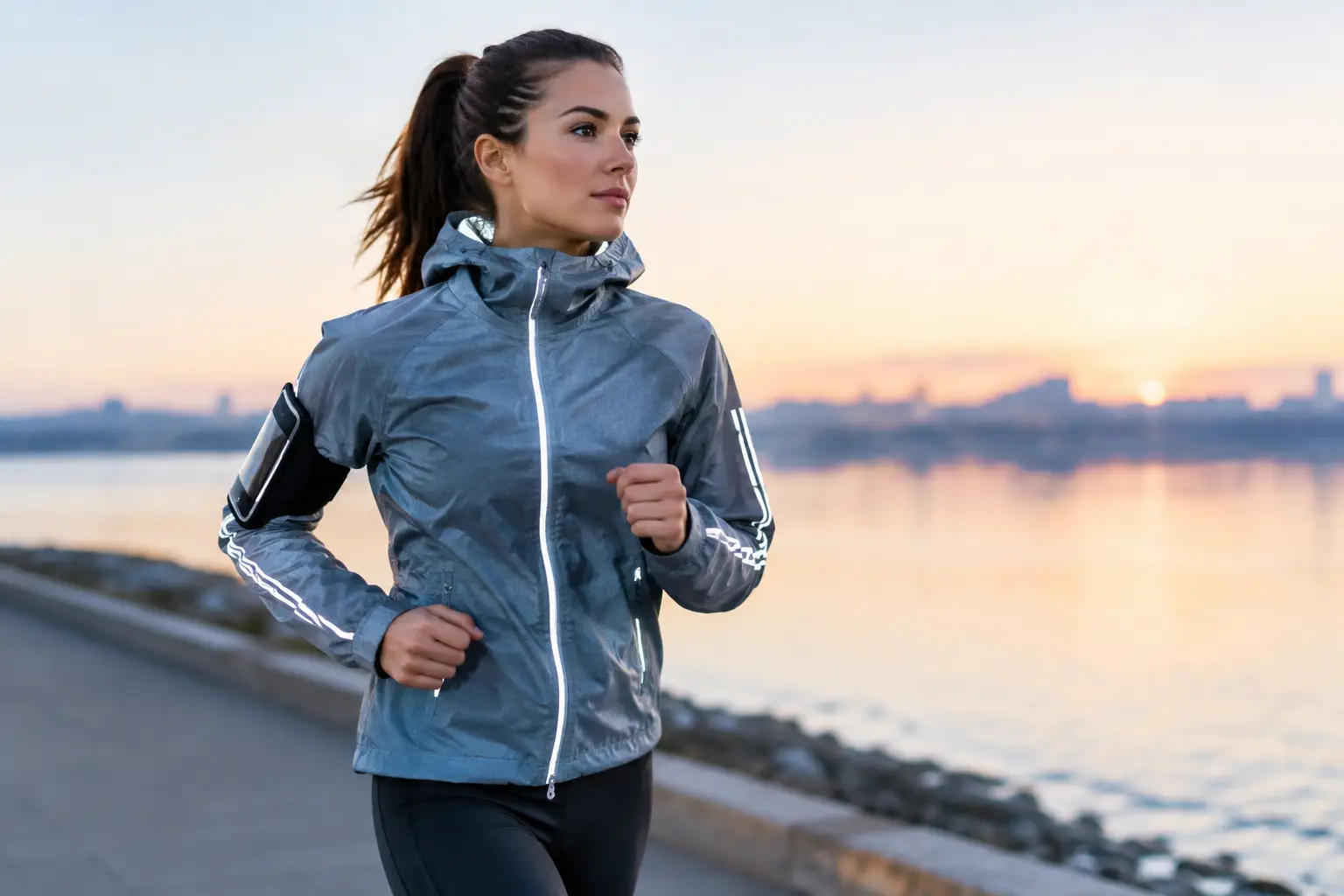
A dark winter morning should not cancel your run. But hoping drivers spot you is not a visibility plan. Reflective gear gives you a better chance of being seen when headlights catch you, whether you are ticking off easy miles before work, heading around the estate after sunset, or running rural roads with little street lighting.
For runners, visibility is not about buying the loudest-looking kit or filling a drawer with gadgets. It is about choosing dependable pieces that work in real conditions, sit comfortably over your layers and keep doing their job season after season. That is better for your running and far better than disposable sportswear built for one short-lived trend.
Why reflective gear matters after dark
Reflective material returns light towards its source. When a car’s headlights, a bike light or a torch hits it, the material appears bright to the person holding that light. This makes it particularly useful on roads, shared paths and crossings where other people may approach from behind or around a bend.
There is an important limit: reflectivity needs an external light source. On an unlit trail, reflective details alone do not help you see the ground, roots or ice. They also cannot be relied on to make you visible to someone without lights. A runner who wants to see and be seen should think in layers: active light to illuminate their route, reflective elements to catch approaching beams, and sensible route choices wherever possible.
The need changes with conditions. A well-lit town route on a clear evening may call for reflective straps and bright clothing. Country lanes in rain, fog or deep darkness demand more caution, more coverage and usually a proper rechargeable headlight or chest light. Visibility is never a licence to take risks around traffic.
What good reflective running gear looks like
The best choice is usually simple. It should be easy to put on, stable once you are moving and useful across more than one season. If an item rubs your neck, bounces against your chest or takes five minutes to adjust, it will soon be left at home.
Look for coverage that moves with you
Small reflective logos are a useful extra, but they are not the same as purposeful visibility equipment. More noticeable reflective panels or straps create a clearer signal, especially when they sit on moving parts of your body. Arm and leg movement can help other road users recognise that the bright shape ahead is a person running, not a roadside marker.
Reflective vest straps are a practical option because they can be worn over a T-shirt in mild weather, then adjusted over a jacket when temperatures drop. They avoid the need to own a separate high-visibility top for every season. That is the kind of cross-functional design runners should demand: less clutter, more use.
Fit matters. Straps should sit flat without restricting your breathing or arm swing. Before a longer run, test the fit with your usual layers, keys, mobile phone and hydration gear. A loose vest can shift and become irritating; one pulled too tight can turn an easy run into a frustrating one.
Pair passive reflection with active light
A chest light or headlight solves a different problem from reflective material. It helps illuminate hazards and gives you an active point of light that others can spot. Chest-mounted lighting can be especially comfortable for runners who dislike the weight or beam movement of a head torch. A headlight, however, directs illumination where you look and can be the better option for technical paths.
Neither is automatically best. The right choice depends on your route, pace and preference. What matters is that the light has enough charge, a secure fit and controls you can use with cold fingers. Rechargeable models make strong practical sense too: no repeated battery purchases and less waste heading for landfill.
Use the settings thoughtfully. The brightest mode is not always necessary in a well-lit area, and an aggressive flashing pattern can distract other path users. Save higher output for darker ground and poor conditions. Charge the light after use rather than discovering a flat battery at the front door.
Choose comfort over clever extras
Running kit earns its place through repeated use. A reflective item does not need unnecessary pockets, bulky clips or complicated electronics to be worthwhile. It needs to be dependable when you are tired, late home from work and tempted to skip the run altogether.
Breathable, adjustable gear is often the better long-term buy because it works through changing weather and body temperature. Consider how it will feel over bare skin in summer, over a mid-layer in autumn and under a waterproof in wet weather. If it only works with one outfit, it is less versatile than it first appears.
How to build a visibility setup without overbuying
Start with the routes you actually run, not an idealised version of your training. Someone doing three kilometres on lit pavements has different needs from a runner training for a spring half marathon on unlit lanes. Buy for the most demanding conditions you genuinely face, then use the equipment often enough to make it worthwhile.
A sensible setup might begin with adjustable reflective straps, then add a rechargeable light if your route is dark. If you run in traffic-heavy areas, place reflective details where they can be seen from the front, sides and back. If you run trails, prioritise enough active light to read the terrain safely. You do not need a new fluorescent outfit every time the clocks change.
Before leaving, take ten seconds for a quick check. Is your light charged? Are your straps adjusted over the layer you are wearing? Will the weather reduce visibility? Is there a better-lit alternative to the narrow road you planned to take? These small decisions are part of being a prepared runner, not an overcautious one.
It also helps to tell someone where you are going when heading out alone, particularly for long early-morning or late-evening runs. Carry your mobile phone in a secure pocket or running belt, and stay alert around junctions, driveways and crossings. Headphones can still have a place, but keep the volume low enough to hear traffic, bikes and other people.
Make reflective gear last longer
Sustainability starts with using what you buy for longer. Reflective surfaces can lose effectiveness when they are badly cared for, so check the product instructions rather than treating every item like a standard cotton top. Excess heat, harsh detergents, fabric softener and rough washing can all shorten the life of technical materials.
Air-drying is often the kinder choice for performance gear. Wipe lights clean after muddy runs, make sure charging ports are dry and store them somewhere you will remember to charge them. Inspect straps, buckles and stitching periodically, especially if you run several times each week.
When a product finally reaches the end of its usable life, replace only the part that has failed where possible. A worn strap should not mean throwing away a working light. Rejecting fast-fashion waste is not about owning nothing. It is about buying fewer, better items that are designed to keep moving with you.
From Newry, 4R believes runner-focused gear should be practical, affordable and built to outlast the hype. Your kit does not need to shout for attention. It simply needs to help you get out safely, run freely and come home ready for the next mile.
The darker months can be some of the best running months: quieter roads, crisp air and that satisfying feeling of getting it done before the day gets busy. Wear gear you trust, choose your route with care, and let every visible mile build momentum.