
Blog
Five Essentials for Rainy Runs That Work

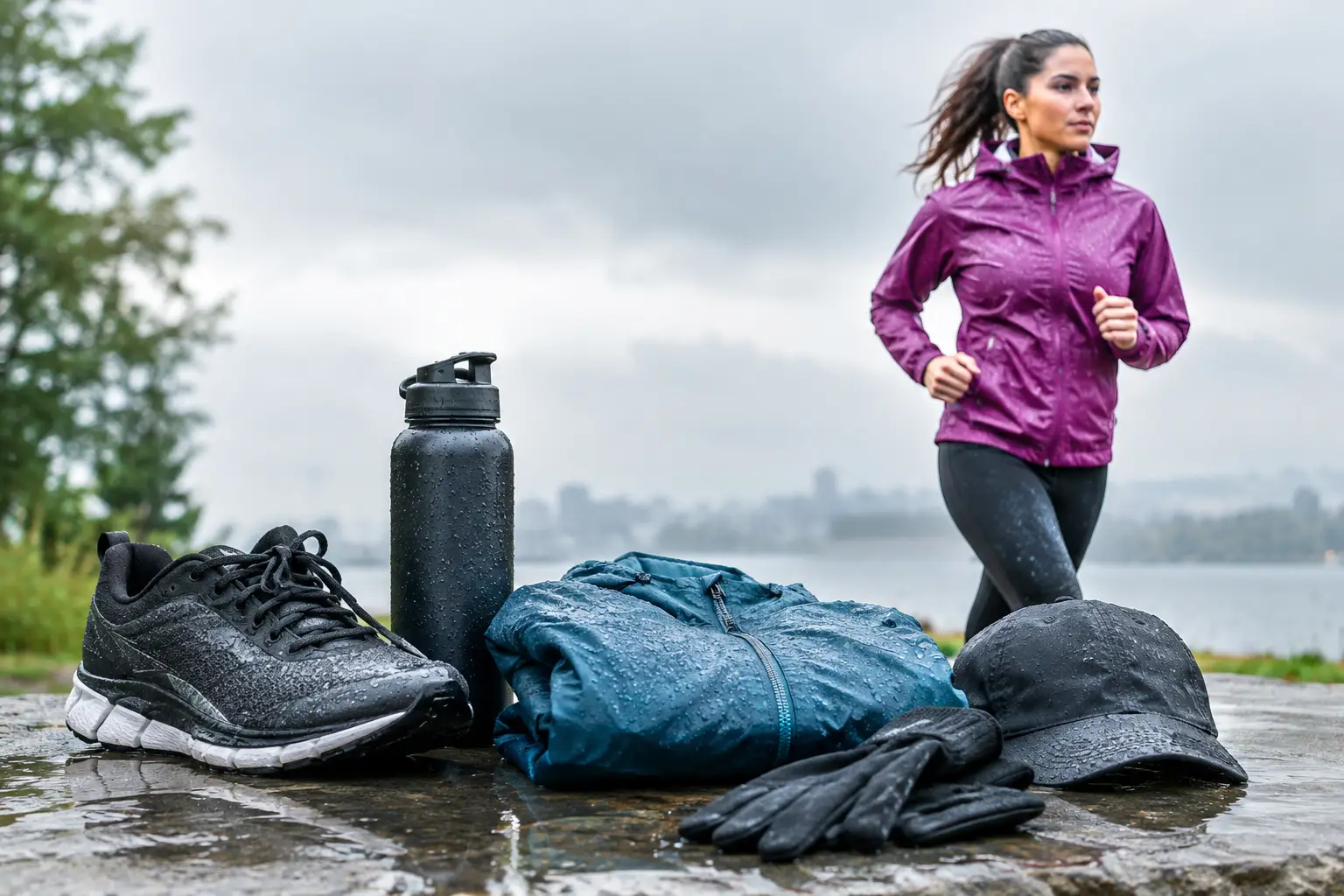
Rain changes a run before you have taken the first stride. Pavements get slick, visibility drops, fabric clings and a familiar route can suddenly feel harder. But with the right approach, rainy miles can be some of the most satisfying you run. These five essentials for rainy runs focus on comfort, safety and gear that earns its place in your kit bag season after season.
The five essentials for rainy runs
1. A breathable outer layer, not a plastic sauna
The goal of a running jacket is not to keep every drop of water out at all costs. If it traps your body heat and sweat, you will finish just as wet and considerably more uncomfortable. Look for a lightweight outer layer with a water-resistant or waterproof finish, ventilation and enough room to move your arms freely.
For steady drizzle or a short run, a breathable water-resistant layer is often the better choice. It cuts the wind and sheds most rain without making you overheat. For sustained heavy rain, exposed coastal routes or colder winter conditions, a properly waterproof jacket becomes worth the extra protection.
Fit matters as much as fabric. A jacket that flaps relentlessly in the wind wastes energy and patience. One that is too tight restricts your stride and makes layering difficult. Choose practical kit you can wear across changing conditions, rather than buying a separate throwaway top for every forecast. That is better for your wardrobe, your budget and the planet.
2. A peaked cap to keep rain out of your eyes
A running cap is easy to overlook until rain is blowing straight into your face on a dark morning. The peak channels water away from your eyes, helping you see uneven paths, puddle edges and oncoming traffic. It also stops rainwater running down your forehead and into your face.
This small addition makes a bigger difference than many runners expect. A lightweight, quick-drying cap works well through most of the year. In colder weather, pair it with a thin layer that covers your ears if needed, but avoid piling on heavy headwear. You will warm up quickly once you are moving.
If you wear glasses, a cap is even more useful. It will not stop lenses fogging or collecting spray completely, but it gives them a fighting chance. Slow down where visibility is poor. No personal best is worth guessing where the kerb ends.
3. Proper visibility for the darker miles
Rain does not only make you wet. It makes you much harder to see. Car windows mist up, street lighting reflects off wet roads and drivers may be focused on standing water rather than runners at the roadside. Reflective details are helpful, but they rely on somebody else’s lights finding you.
For early mornings, evenings and gloomy daylight, add active lighting. A rechargeable chest light or head torch helps you see the ground ahead, while an LED chest light or reflective vest straps make your position clearer to others. The best option depends on where you run. On an unlit trail, you need light directed at the surface. On well-lit urban routes, being seen should be the priority.
Position matters. Light mounted on your chest tends to move less than a handheld torch, leaving your hands free and your posture natural. Check the charge before heading out, especially in cold weather, when batteries can drain more quickly. Give yourself enough light to be noticed from a distance, not only when someone is already close.
4. Socks and shoes that manage water sensibly
Your shoes will get wet eventually. Trying to prevent that completely usually leads to disappointment, particularly on Irish and British footpaths where rain can collect faster than drains can clear it. Instead, focus on reducing the damage water does to your feet.
Choose technical running socks that move moisture away from the skin and hold their shape when damp. Cotton is a poor choice for wet runs because it stays saturated, rubs easily and raises the risk of blisters. A snug, breathable synthetic or merino blend is generally more useful, though the best choice depends on your temperature and how far you are running.
Your shoe choice should match the route. Road shoes with dependable grip are usually enough for wet pavement, provided the outsole is not worn smooth. For muddy trails, use a shoe with deeper lugs and stable footing. Do not treat every puddle as harmless either. It may hide a pothole, loose stones or a raised drain cover.
After the run, remove the insoles, loosen the laces and let shoes dry naturally in a ventilated space. Do not place them directly on a radiator or use intense heat. It can damage glues and materials, shortening the life of footwear that should have plenty more miles in it.
5. Anti-chafe protection and secure laces
Wet kit increases friction. A little rainwater mixed with movement can turn a comfortable long-sleeve top, waistband or pair of socks into a serious irritation. Apply anti-chafe balm before you leave, especially on areas you already know are prone to rubbing: thighs, underarms, bra lines, waistbands, toes and around a hydration vest.
This is preventative kit, not an afterthought. It is particularly valuable for longer runs, but even a quick 5K can cause a sore spot when clothes are soaked through. A compact balm lasts well and prevents the kind of discomfort that can make the next few runs miserable.
Your laces also deserve attention. Water, mud and repeated foot strike can loosen conventional knots, while cold fingers make mid-run adjustments frustrating. No-tie elastic laces can keep the fit consistent and remove one more distraction from a wet-weather run. They suit runners who prefer an easy on-and-off shoe, although those with very specific fit needs may still favour traditional laces for more adjustment.
Make the route fit the weather
Good kit helps, but smart decisions matter just as much. In heavy rain, choose routes with decent lighting, reliable footing and an easy way home if the weather worsens. Leave exposed ridgelines, flooded paths and slippery wooden boardwalks for another day. A shorter loop close to home can be the stronger training choice when conditions are genuinely rough.
Watch your pace on corners, painted road markings, metal drain covers and wet leaves. These surfaces can be far more slippery than ordinary tarmac. Give yourself permission to run by effort rather than pace. Rain and wind alter the conditions, so forcing the numbers often turns useful training into unnecessary risk.
It also pays to set up your post-run recovery before leaving. Put a dry towel, warm layer and fresh socks by the door. The faster you get out of wet clothing, the more likely you are to enjoy the run afterwards rather than shiver through it.
Buy less kit, choose better kit
Rainy running does not require a cupboard full of specialist clothing. It requires a few dependable pieces that work together, can be used repeatedly and do not fail when the forecast turns. That is the case for choosing durable functional gear over cheap, disposable sportswear designed for a single season.
At 4R, we believe runners should not have to choose between practical performance and responsible consumption. Gear should solve a real problem, last through regular use and help you step outside with confidence, whether you are running through a Newry shower or heading out on a damp weekday morning elsewhere.
The rain is not a reason to stop. Prepare properly, respect the conditions and let the weather become part of the miles you are proud to have run.