
Uncategorized
Are Elastic Laces Good for Running?
Mar
You notice your laces most when they annoy you. They come loose mid-run, create pressure on the top of your foot, or take too long to sort when you’re trying to get out the door. That is usually when runners start asking whether elastic laces are actually a better option.
Are elastic laces good for running?
Yes, elastic laces can be very good for running, but not for every runner and not for every shoe. Their main advantage is simple – they make your shoes easier to get on, easier to adjust, and often more comfortable across the top of the foot. For many everyday runners, that is a real upgrade.
The trade-off is that elastic laces do not always give the same locked-in feel as traditional laces. If you like a very precise fit, run hard corners, race over uneven ground, or need stronger heel hold, standard laces may still suit you better. The right answer depends on how you run, what shoes you wear, and how secure you like your fit.
Why runners switch to elastic laces
Most runners are not looking for anything fancy from their laces. They want comfort, consistency and one less thing to think about. Elastic laces appeal because they solve a few common problems at once.
First, they create a more forgiving fit. Feet swell on longer runs, in warmer weather, and sometimes even during a normal easy session. Traditional laces can start to feel too tight once that happens. Elastic laces stretch a little with your foot, which can reduce pressure without making the shoe feel sloppy.
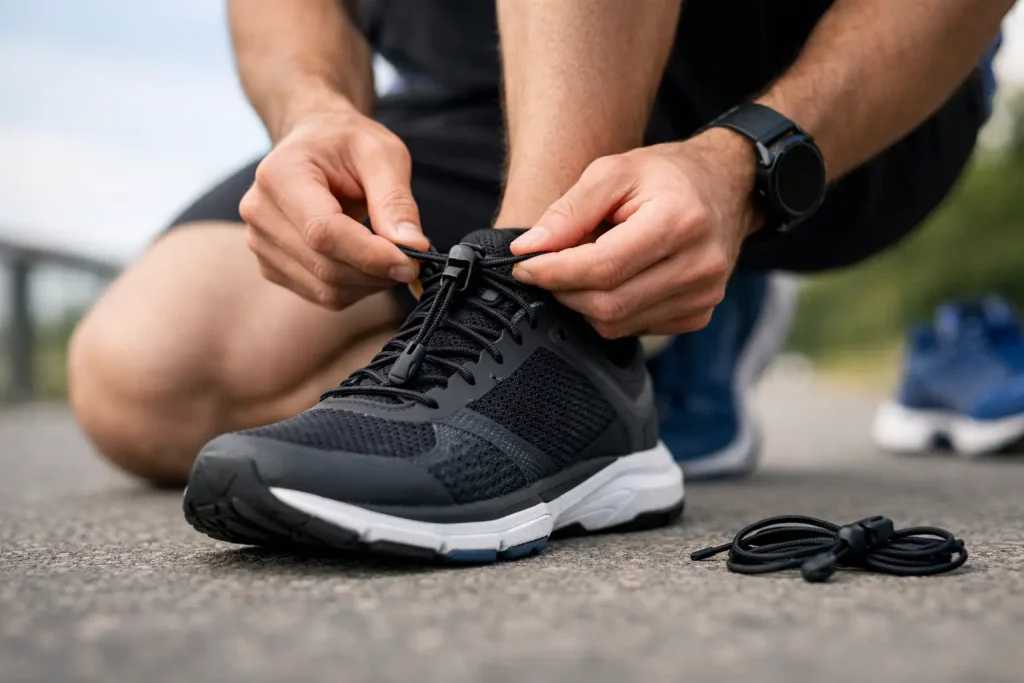
Second, they are convenient. Once set up properly, you can usually slip your shoes on and off without retying them. That matters if you run before work, head out on short lunch-break miles, or simply cannot be bothered redoing knots every time. For triathletes this has always been a major benefit, but it helps ordinary runners too.
Third, they can reduce lace-related irritation. Some runners get hot spots or discomfort from lace pressure, especially over the instep. Elastic systems often spread tension more evenly, which can make a shoe feel smoother and less restrictive.
Where elastic laces work best
Elastic laces tend to suit road running best. If your main training is steady miles on pavement, treadmill sessions, gym-based cardio and occasional parkruns, they are often an easy win. You get comfort, quick entry and a fit that feels more relaxed without being loose.
They also work well for beginner runners. If you are still figuring out what a good shoe fit feels like, elastic laces can remove some of the fuss. Instead of constantly tightening and retying, you can set them once and get on with your run.
Runners returning from injury sometimes like them too, especially if they have swelling or tenderness that makes rigid pressure uncomfortable. The slight give can make a shoe feel less harsh. That said, if you have a medical foot issue or need structured support, comfort should not replace proper fit.
Race day is another common use case. Elastic laces make transitions faster and reduce the chance of a lace coming undone. Even if you are not chasing a personal best, not having to stop and retie your shoes is useful.
When regular laces may still be better
Elastic laces are not automatically the better choice. They are just better for certain needs.
If you run technical trails, sharp descents or muddy ground, a more secure lockdown is often worth having. Traditional laces usually let you fine-tune tension more exactly, especially around the midfoot and ankle. That can help if your shoe tends to move around on uneven terrain.
They may also be better if your shoes already fit slightly large. Elastic laces can improve comfort, but they cannot fix a poor fit. If there is too much volume in the shoe, the extra stretch may make the problem more noticeable rather than less.
Some runners also simply prefer a firmer hold. If you like your shoes to feel snug and race-ready, elastic laces can feel a bit too forgiving. That is not a flaw. It is just a different feel.
Do elastic laces affect performance?
For most runners, not in any dramatic way. Elastic laces are not a shortcut to faster times on their own. What they can do is remove small distractions.
A shoe that feels comfortable from the start and stays comfortable as your feet warm up can help you settle into your run more easily. A lace system that does not come undone can save you an irritating stop. If you are running regularly, those details matter.
There is also a slight mental benefit in having one less bit of kit to manage. Good running accessories are often like that. They do not transform your fitness, but they reduce friction. Over weeks and months, that can make training feel simpler and more consistent.
How tight should elastic laces be?
This is where some runners get them wrong. They fit elastic laces too tightly, then decide they are pointless because the shoe still feels restrictive. Or they leave them too loose and end up with heel slip.
The best setup is usually snug but not rigid. Your foot should feel secure through the midfoot, with enough give that the upper moves slightly as your foot flexes. You should not feel strong pressure points, and your heel should stay fairly stable.
It can take two or three short runs to get the tension right. That is normal. Once dialled in, the fit should feel consistent every time you put the shoes on.
Are elastic laces good for long runs?
They can be, especially if your feet tend to swell. On longer efforts, comfort becomes more important than a perfectly static fit. A bit of stretch can help the shoe adapt rather than fighting your foot for the whole run.
Still, long-run comfort depends on the shoe as much as the lace. If the upper shape does not suit your foot, changing the laces will only do so much. Think of elastic laces as a useful adjustment, not a complete fix for the wrong trainers.
Runners doing marathon training often like them for easy and steady long runs, but some switch back to regular laces for faster sessions if they want a more exact hold.
Are elastic laces good for running shoes with foot pain?
Sometimes, yes. If your issue is pressure on the top of the foot, mild swelling, or general discomfort from tightly tied laces, elastic laces may help straight away. The stretch can relieve pressure and make the shoe feel less harsh.
If the pain comes from poor sizing, arch issues, injury, or instability, they are less likely to solve the real problem. A more comfortable lace setup is useful, but it should not mask a shoe that does not work for you.
If you regularly lose feeling in your toes, get rubbing around the heel, or feel pain that keeps returning, it is worth reassessing the shoe itself rather than just the laces.
What to look for in a good pair
Not all elastic laces feel the same. Some are too springy and make the shoe feel vague. Some are too stiff and defeat the point. For running, you want a pair with enough stretch to reduce pressure but enough structure to hold the shoe properly.
The fastening system matters as well. It should stay put once adjusted and not loosen over time. Durability matters too, especially if you run often or use the same pair across race training and daily miles.
At 4R, the focus is on practical upgrades that make regular running easier, and that is exactly where no-tie elastic laces fit best. They are not about gimmicks. They are about comfort, convenience and keeping kit simple.
So, should you use them?
If you want a quicker setup, a more forgiving fit and less hassle before or during a run, elastic laces are well worth trying. They are especially useful for road runners, newer runners, busy runners and anyone tired of fiddling with knots.
If you need maximum precision, run rough terrain, or already struggle with foot movement inside the shoe, traditional laces may still be the better option. There is no prize for forcing a gear change that does not suit how you run.
The good thing is that this is a low-risk upgrade. If your current laces are one of those small annoyances you keep putting up with, switching to elastic laces can be one of the simplest ways to make your shoes work better for you. Sometimes the best running gear is not the flashiest bit. It is the bit that quietly removes a problem and lets you get on with your miles.
