

Blog
Why Do Runners Chafe on Long Runs?

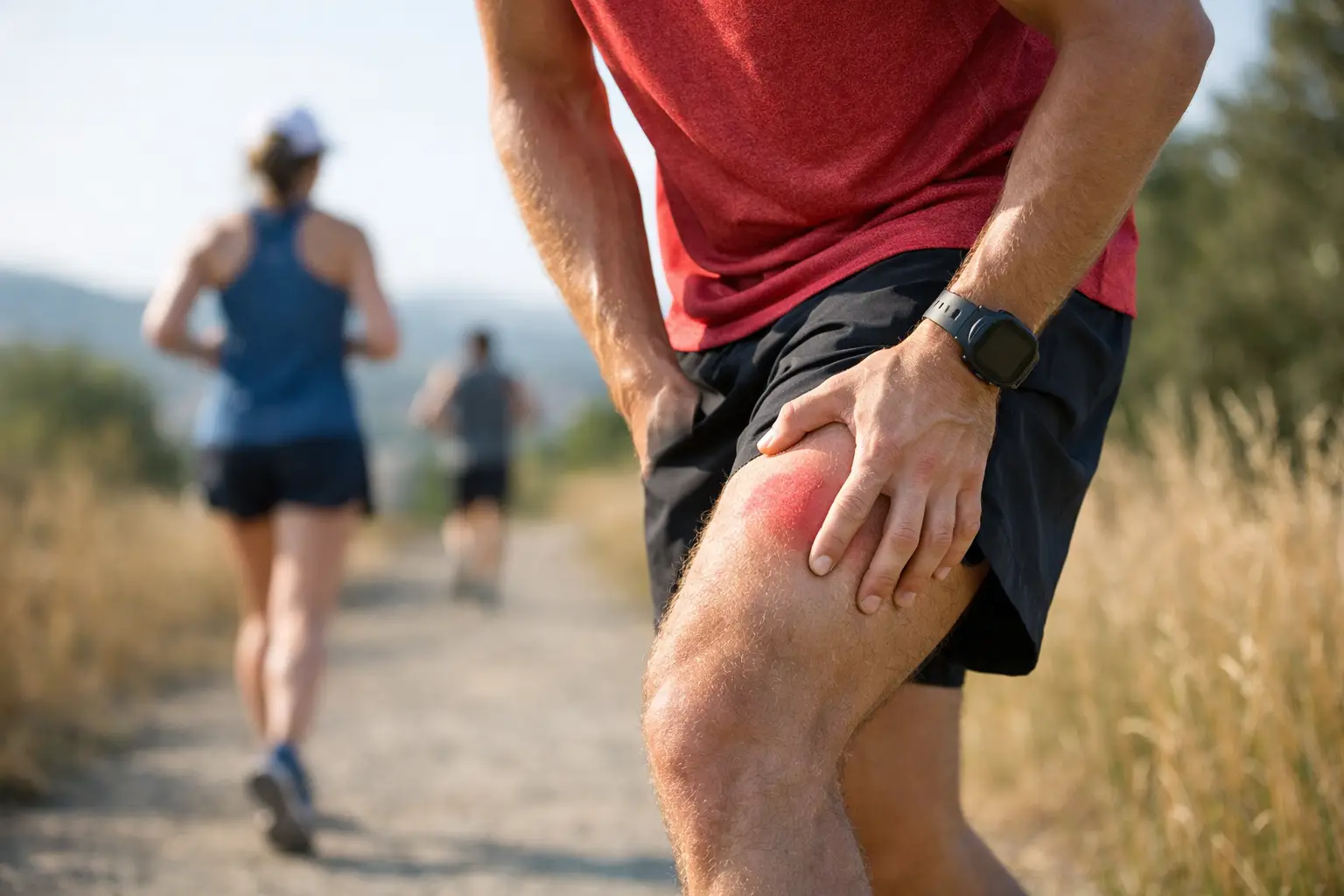
That burning feeling usually shows up when you are already committed to the run – a few miles in, sweat building, stride repeating, and suddenly your inner thighs, underarms or sports bra line start to sting. If you have ever asked why do runners chafe, the short answer is friction plus moisture plus time. The longer answer is more useful, because once you know what is causing it, it becomes much easier to prevent.
Chafing is one of the most common running problems because running repeats the same movement thousands of times. A small rub that feels harmless in the first ten minutes can turn into raw, irritated skin by the end of the session. It affects beginners and experienced runners alike, and it is not just a warm-weather issue. Cold-day layers, wet fabric and poor fit can cause just as much trouble.
Why do runners chafe in the first place?
Skin chafes when one surface repeatedly rubs against another. That might be skin against skin, fabric against skin, or even a seam or edge pressing into the same spot over and over. Running creates the perfect conditions for this because the motion is repetitive, your body heats up, and sweat makes the skin softer and more vulnerable.
Moisture is a big part of the problem. Dry skin can still chafe, but sweat changes the equation. Damp skin becomes more sensitive, and wet fabric can cling, bunch or drag. Rain can make it worse, and so can sunscreen if it leaves a greasy layer under tight clothing. On long runs, salt from dried sweat can also add irritation.
Fit matters just as much as moisture. Clothing that is too loose may shift around and rub. Clothing that is too tight may dig in at the edges. There is no single rule that says tighter is always better or looser is always better. It depends on the garment, the fabric and where it sits on your body.
The places runners chafe most
Some areas take more friction than others. Inner thighs are probably the most talked about, especially on longer runs or in humid conditions. Underarms are another common hotspot because vests, T-shirts and singlets move slightly with every arm swing.
Nipples are a well-known problem too, especially with wet tops or rougher fabrics. Sports bra bands and straps can rub across the chest, shoulders or ribcage. Waistbands may chafe around the stomach or lower back, particularly if shorts slip when they get sweaty. Socks and shoes can also cause rubbing around the heel, toes or arch, which is often described as blistering rather than chafing, but the underlying cause is similar.
For many runners, the exact spot is predictable. If the same area flares up every time, that is useful information. It usually means your gear setup needs a small change rather than a total overhaul.
Why do runners chafe more on some runs than others?
You can wear the same kit on two different days and only chafe once. That is because conditions matter. Heat and humidity increase sweat, which increases friction. Rain leaves clothing wet for longer. Long-distance sessions give irritation more time to build. Race pace can also change the way clothing moves on the body.
Body changes can play a role too. Weight fluctuations, muscle gain, and even small changes in running form can alter where fabric sits or how skin touches skin. New runners sometimes notice chafing more because they are still working out what kit suits them. Experienced runners often get it when they try something new on a long run – new shorts, a different bra, a waist belt, or a top that felt fine when walking around the house.
That is why test runs matter. Gear that feels comfortable for 5K may not hold up over 10 miles.
Clothing mistakes that cause chafing
Cotton is one of the usual culprits. It holds sweat, dries slowly and becomes heavy when wet. Technical fabrics are generally better because they move moisture away from the skin and dry faster. That does not mean every synthetic top is perfect, though. Some fabrics feel smooth but have rough seams, stiff trims or panels that sit in the wrong place.
Seams are worth paying attention to. Flat seams are usually kinder to skin than raised or bulky stitching. Labels, bonded edges and zip guards can also create trouble spots. With bras and shorts, the edge finish matters as much as the main fabric. A soft body fabric with a harsh band can still ruin a run.
Poor layering is another issue. In cooler weather, runners often add an extra top without thinking about how the layers interact. If one layer sticks and the other moves, friction increases. The same goes for reflective vests, hydration packs and armbands. Useful gear is still only useful if it sits comfortably for the full run.
How to stop chafing before it starts
The simplest fix is to reduce friction and keep skin drier. In practice, that means choosing better fabrics, getting the fit right and protecting known hotspots before you head out.
Anti-chafe balm is one of the easiest ways to do that. It creates a protective barrier so skin and fabric can move with less drag. It is especially helpful on inner thighs, under bra bands, around the neck line, underarms and anywhere that has caused trouble before. For longer sessions, it is worth applying more than you think you need. A thin swipe may not last through heat, sweat and distance.
Clothing choice matters just as much. Look for running gear designed to stay put without pinching. Smooth fabrics, fewer seams and secure but not restrictive fits are usually the safest bet. If something needs constant adjusting during a run, it is a warning sign. Small movements become big problems after an hour.
For nipple chafing, some runners use balm while others prefer tape or patches. For feet, well-fitted socks made from moisture-wicking fabric are often more important than the shoe itself. If your socks bunch, slide or stay damp, blisters are more likely.
What to do if you already have chafed skin
Once skin is raw, the goal changes from prevention to protection. Wash the area gently with lukewarm water, pat it dry and avoid anything heavily fragranced. Tight clothing can irritate it further, so softer loose layers are usually better until it settles.
A basic barrier cream can help protect the area while it heals. If the skin is broken, keep it clean and watch for signs of infection such as increasing redness, swelling or discharge. Most mild chafing improves quickly if you stop irritating it, but deep or repeated rubbing can take longer than runners expect.
This is also the moment to work out what caused it. Healing the skin without changing the trigger just means the problem comes back on the next long run.
The best prevention is usually boring
Most anti-chafing fixes are not glamorous. They are small, practical choices repeated consistently. Wear the top that never rubs. Replace the shorts that always ride up. Use balm before long runs instead of waiting until summer. Test new kit on shorter sessions. Wash technical clothing properly so fabric stays smooth and effective.
That is the real answer to why do runners chafe. It is rarely one dramatic failure. More often, it is a chain of small factors – sweat, repetition, fabric, fit and time – all adding up. The upside is that small fixes usually work.
If chafing keeps cutting runs short, focus on the obvious friction points first and build from there. A dependable anti-chafe product and better-fitting kit can make more difference than another expensive piece of gear. At 4R, that practical approach is the point: solve the problem, keep running, and save your energy for the miles ahead.