

Blog
Reflective Running Gear for Night Runs

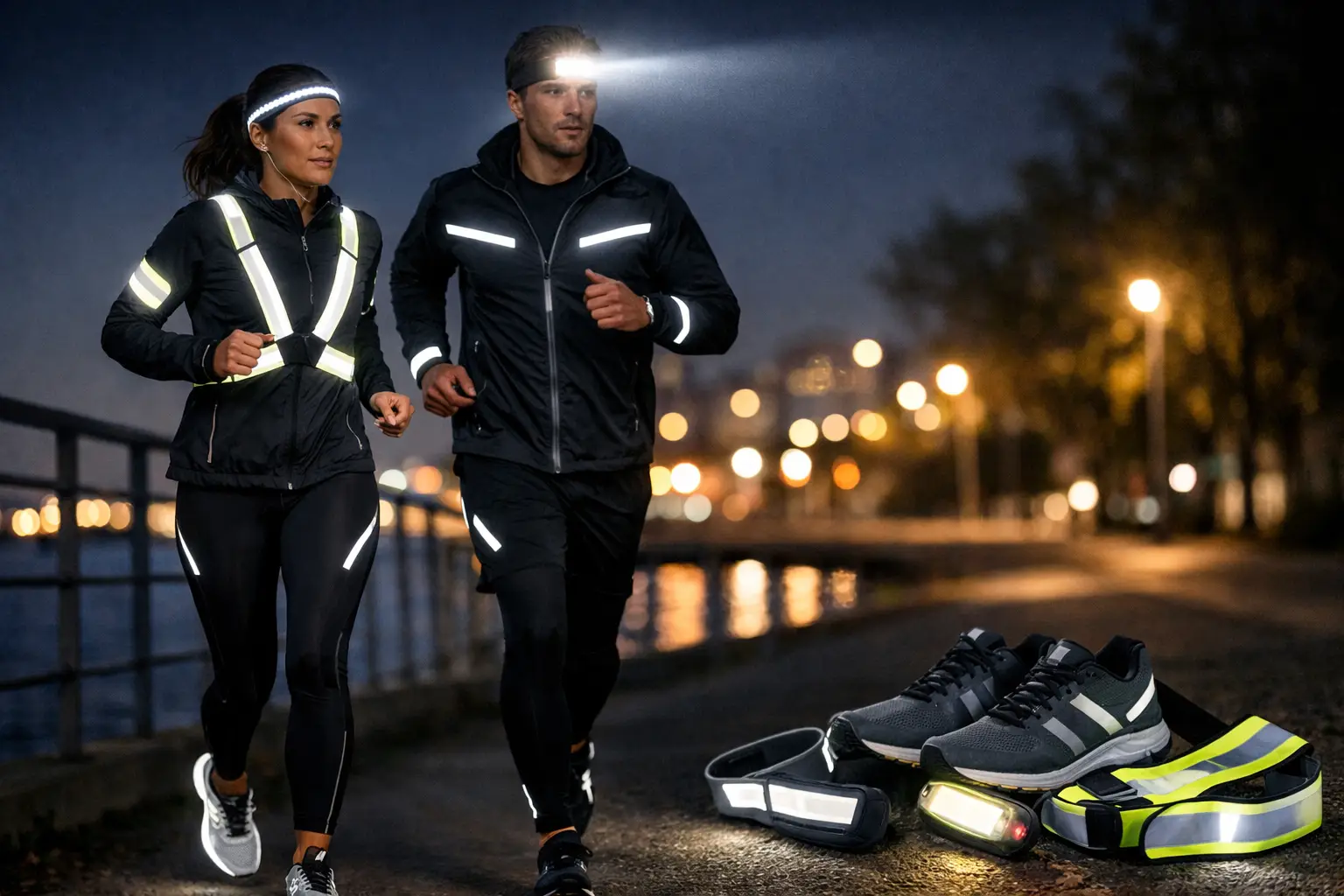
That stretch of road looks very different at 6am in January than it does on a Sunday afternoon. Street lighting is patchy, cycle lanes can disappear into shadow, and drivers are often dealing with rain, glare and tired eyes. If you run before work or after dark, being visible is not a nice extra. It is basic kit.
The good news is that reflective running gear for night does not need to be complicated or expensive. You do not need to dress like a building site. You just need the right type of visibility in the right places, and gear you will actually wear every time you head out.
What reflective running gear for night actually does
Reflective gear and light-up gear are often treated as the same thing, but they do different jobs. Reflective materials bounce light back towards its source. That means they work best when a car headlight, bike light or street light hits them. On an unlit stretch with no light aimed at you, reflectivity helps less.
Lights do the opposite job. They make you visible even when there is no external light source. A chest light, head torch or clip-on LED creates its own visibility and can also help you see where you are placing your feet.
For most runners, the safest setup is not one or the other. It is both. Reflective details help drivers pick up your movement. Active lighting helps people spot you sooner, especially on darker routes or in poor weather. If you only use reflective gear on a very dark route, you may not be as visible as you think.
Where reflective running gear works best
Placement matters more than many runners realise. A small reflective patch on your chest is better than nothing, but it is not always enough. Motion catches attention, so reflective gear on moving parts of the body often stands out more quickly than a single static panel.
That is why reflective ankle bands, arm details and gloves can be so effective. The steady rhythm of running creates movement that other road users recognise as a person rather than a random flash of light. A reflective vest or harness adds visibility across the torso, which is useful from several angles, but combining that with reflective points lower down can make the overall picture clearer.
Fit matters too. If a vest rides up, twists, or feels awkward over layers, there is a fair chance it will stay in the drawer. Night running kit has to be simple enough for a dark winter morning when motivation is already low.
The most useful types of reflective running gear
A reflective vest or harness is often the easiest starting point. It fits over a jacket, base layer or tee, and it gives you clear visibility without replacing your existing kit. This suits runners who train in changing weather because they do not need a separate reflective top for every temperature.
Reflective jackets and tops can work well, especially if you prefer fewer accessories, but they are more seasonal. A winter jacket may be ideal in December and useless in a mild spring evening. If your budget is tight, a separate vest or harness usually gives better flexibility.
Reflective bands are simple and effective. Worn on ankles or wrists, they highlight movement and are easy to pack into a pocket. They are not enough on their own for darker roads, but they are a strong extra layer of visibility.
Reflective details on tights, shoes and gloves help too, although these tend to be supporting features rather than the main event. Shoe reflectivity sits low to the ground and can be missed in traffic, while small logo-level reflective details often look more useful in product photos than they are in practice.
If you run in genuinely dark conditions, active lighting should sit alongside your reflective gear. A rechargeable running headlight or chest light is often the most practical option because it gives you forward visibility as well as making you easier to spot. Headlights are useful for trails, uneven pavements and country roads. Chest lights can feel more stable for some runners and can be less annoying if you do not like wearing light on your head. It depends on your route and preference.
How to choose reflective running gear for night runs
The best choice starts with where you actually run. If most of your miles are in well-lit urban streets, reflective gear with a small active light may be enough. If you run on back roads, canal paths or dim suburban routes, you will want a stronger lighting setup and more all-angle reflectivity.
Weather changes the picture as well. Rain reduces visibility for everyone. Drivers deal with spray and reflections on the windscreen, and runners often end up in darker clothing under waterproof layers. If your outermost layer is not reflective, the reflective top underneath is doing very little. Think about the gear that will actually be visible in real conditions, not just what you wear on dry days.
Comfort is another practical filter. Chafing around the neck, bouncing straps or stiff materials can turn good safety gear into something you avoid. Lightweight, adjustable pieces tend to get used more often. If you are adding a vest or harness over winter layers, make sure there is enough adjustment to fit properly without restricting arm movement.
Rechargeability is worth considering if you use active lights. Disposable batteries are easy to forget until the exact evening you need them. Rechargeable units are more convenient for regular runners and create less waste over time. A quick USB charge suits the reality of everyday training much better than hunting for batteries in a kitchen drawer.
Common mistakes runners make after dark
The biggest one is assuming bright colours are enough. Fluorescent yellow is useful in daylight, but it does much less after dark unless it also includes reflective elements or built-in lighting. Bright and reflective are not the same thing.
Another mistake is relying on one tiny feature. A reflective zip pull or logo does not turn ordinary kit into true night-running kit. If the reflective area is small, badly placed or only visible from one angle, it has limited value.
There is also a tendency to think visibility is only about roads. Shared paths, parks and towpaths bring their own risks. Cyclists, dog walkers and other runners need to see you too. Good visibility helps avoid awkward near misses as much as it helps with traffic.
And then there is consistency. Plenty of runners own reflective gear but only wear it on very dark nights. That sounds sensible until you remember how often dusk, drizzle, fog and poor street lighting create half-lit conditions where visibility is still reduced. If you are questioning whether you need it, you probably do.
Building a simple setup without overspending
You do not need a huge collection. For most runners, one reflective vest or harness, one reliable rechargeable light, and a pair of reflective bands will cover the majority of night runs. That setup works across seasons and layers without making every run feel like a gear project.
If you are just getting started, begin with the pieces that give the biggest difference straight away. A proper reflective outer layer and a rechargeable light will do more for your safety than swapping all your clothing for reflective versions. Then add smaller extras if they fit your routine.
This is also where value matters. Night running gear should be durable, easy to use and affordable enough that it feels like a sensible purchase rather than a luxury add-on. For everyday runners, practical accessories beat premium branding every time. That is why brands such as 4R focus on running essentials that solve real problems without overcomplicating things.
What to look for before you buy
Check how visible the product is from different angles. Front-only reflectivity leaves gaps. Side and rear visibility matter, especially at junctions and crossings.
Look at adjustability and layering. If it only fits over a thin top, you may stop using it in winter. If it is too loose over a tee, it may bounce in summer. One product that handles both is usually the smarter buy.
For lights, think about beam strength, battery life and ease of charging, but keep your route in mind. More power is not always better if you mostly run under street lamps. Comfort, weight and reliability often make a bigger difference over time.
Finally, keep care simple. If a piece of kit is awkward to clean or needs constant fiddling, it becomes a hassle. The best night-running gear is the gear that becomes part of your routine without effort.
Night running can be one of the best parts of the week – quieter streets, cooler air, fewer interruptions. The right gear does not make it glamorous. It makes it safer, simpler and easier to keep showing up when daylight is in short supply.