

Blog
Running Light Vest Review: What Matters After Dark

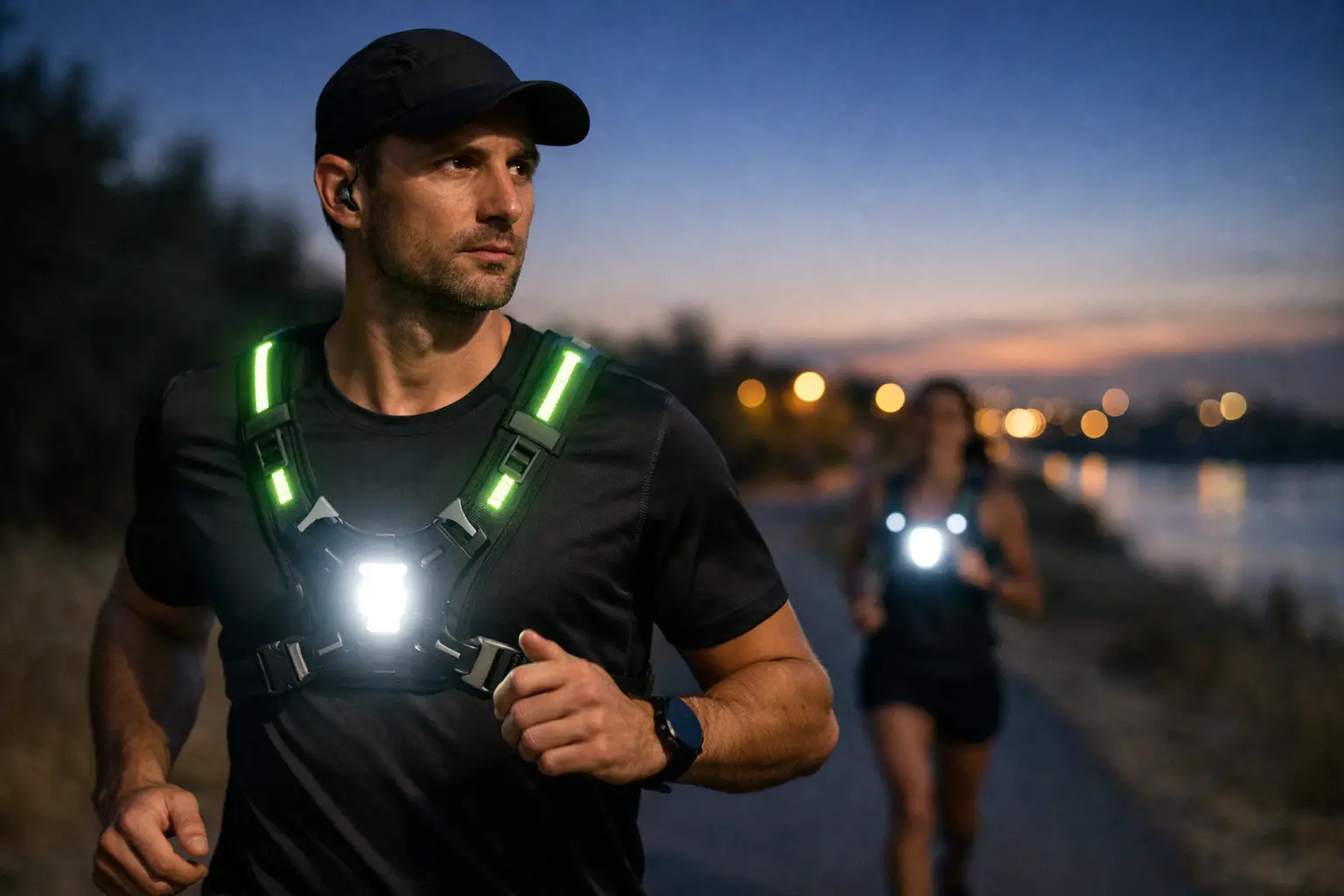
A dark run can turn quickly from peaceful to stressful when traffic cannot see you, your torch bounces with every stride, or a flat battery leaves you squinting at the pavement. This running light vest review focuses on what actually earns a place in your regular kit: visibility that works, a secure fit and enough reliability to get you home confidently.
A light vest is not just a winter extra. For early starts, late finishes and gloomy wet-weather miles, it can be the piece of kit that makes the route feel possible. The best options put light where it helps you see and be seen, without turning your run into a battle with straps, bounce or bulk.
Running light vest review: the features worth judging
The first question is simple: do you need to see the ground ahead, be seen by others, or both? A reflective strap vest helps headlights and streetlights pick you out, but it does not light the way. An LED chest light or illuminated running vest can do both, depending on the design. Knowing the difference stops you buying a product that looks bright in a photograph but does not suit your route.
For runners using lit pavements and crossing roads, visibility from several angles matters most. Look for reflective detailing on the front, back and sides, plus a light pattern that makes your movement recognisable. A steady white front light and red rear light are the clearest setup. Flashing modes can help draw attention in busy conditions, but a constant beam is often easier for other road users to judge.
If you run on canals, country lanes, uneven paths or poorly lit parks, forward illumination becomes the priority. A chest-mounted light has a practical advantage over a head torch for many runners: the beam sits lower and can show texture, puddles and changes in the surface more clearly. It also avoids the familiar head-torch problem of a beam bouncing around as you look over your shoulder or check your watch.
That said, a chest light will not suit every runner. If you frequently scan signs, trail markers or distant bends, a head torch follows your gaze more naturally. Some runners use both on technical trails: a chest light to read the ground and a head torch for distance. It is more kit, but there is a genuine safety benefit on difficult terrain.
Fit is a safety feature, not a minor detail
A vest that slides up, twists around your ribs or rubs under your arms will soon live in a drawer. Good running light vests use adjustable chest and waist straps so the unit stays centred as your breathing changes. The fit should be snug enough to prevent bounce, but never tight enough to restrict a deep breath.
Test it over the layers you really wear. A vest that fits neatly over a light long-sleeve top may become awkward over a winter running jacket. Adjustable straps are therefore more useful than a complicated size range, especially if your year-round kit changes with the weather.
Pay close attention to buckle placement and strap edges. Hard plastic buckles sitting directly on the sternum can be annoying on longer runs. Rough webbing can chafe where arms swing close to the body. These details matter more after 45 minutes in rain than they do during a quick try-on at home.
Weight matters, but only up to a point. The lightest vest is not automatically the best. A slightly heavier unit that stays stable and has a sensible battery can feel far less noticeable than a flimsy one that moves constantly. The goal is controlled, balanced weight rather than a tiny specification on the box.
Beam quality beats big lumen claims
Lumen numbers are useful, but they are not the whole story. A very powerful narrow beam can create a bright spot directly ahead while leaving the edges of the path dark. For running, a broad and even beam is usually more useful because it gives you context: kerbs, branches, puddles and people approaching from the side.
Consider where and when you run. On familiar urban routes with street lighting, a modest front light paired with strong rear visibility may be enough. On unlit paths, you need a brighter usable beam and an output that remains consistent as the battery drains. A light that starts brilliantly then dims sharply halfway through your run is not dependable gear.
Light modes should be simple enough to use with cold hands. One button that cycles logically through low, high and flashing settings is often better than a menu of modes you cannot remember. Check whether the controls are easy to find while wearing gloves and whether an accidental press can switch the unit off.
The angle of the beam is equally important. A light pointed too high can dazzle oncoming runners, cyclists and drivers. One pointed too low gives you a small pool of light at your feet and little warning of what is ahead. A tilting light unit is valuable because it lets you adjust the beam for posture, route and clothing layers.
Battery life should match your real routine
Ignore the longest battery figure if it only applies to a low setting you would never use. Instead, compare the stated run time on the mode you expect to use most. If your typical session is 45 minutes, aim for considerably more than 45 minutes of dependable charge. Cold temperatures, ageing batteries and forgotten charging all reduce the margin.
Rechargeable lights are the sensible choice for regular runners. They reduce waste from disposable batteries and make it easier to maintain a routine: charge after a few runs, rather than hunting for replacements before leaving the house. A clear battery indicator is a small feature with a large payoff. You should know whether you have enough charge before you step out, not discover it on a dark lane.
USB charging is convenient, though the type of connection matters less than durability and ease of use. A protected port is particularly useful in British rain. No running light vest is invincible, but it should cope with wet roads, sweat and the occasional downpour without becoming unreliable.
For longer runs, carry a backup plan. That might be a compact secondary light, a phone torch for emergencies, or a route that keeps you near lit roads. This is not alarmist. Batteries fail, conditions change and being prepared is part of running independently after dark.
Visibility is more than wearing something bright
A bright vest can make you more noticeable, but it does not replace road awareness. Assume that drivers have not seen you until their behaviour shows otherwise. Make eye contact where possible, slow down at crossings and avoid stepping out from behind parked cars. In rain, glare on windscreens and wet tarmac makes everyone harder to spot.
Fluorescent colours help in daylight and dull weather, while reflective materials work when light hits them at night. LEDs add their own active light source. The strongest setup combines these rather than relying on one feature. This is why an illuminated vest with reflective straps can make more sense than a basic hi-vis layer for regular dark running.
Think about your full outfit too. A dark jacket, black leggings and black shoes can absorb you into the background even if the vest is bright. You do not need to dress like a Christmas tree, but adding reflective details to moving areas such as ankles and arms makes your motion easier to read.
Durability and responsible buying
Cheap visibility gear is tempting because it looks straightforward. Yet weak clips, poorly stitched straps and batteries that fade after a season create the exact waste runners should not have to accept. Buy for repeated use. Check the stitching, adjustment hardware, charging cover and whether the light unit feels secure rather than loosely attached.
A cross-functional piece of kit also earns its place. A dependable vest can serve road runs, dog walks, school-run commutes and evening hikes. Using one well-made item across more of your active life is better than collecting specialist products that barely leave the cupboard.
At 4R, that practical approach matters: gear should support the miles without demanding that you compromise on durability or values. You do not need luxury-priced kit to run safely after dark, but you do deserve equipment designed to last beyond a few wet evenings.
Is a running light vest right for you?
Choose a running light vest if you want hands-free visibility, dislike a bouncing head torch, or regularly run where street lighting is patchy. It is particularly useful for everyday road runners who need a straightforward, quick-on solution over changing layers.
A reflective-only vest may be enough for well-lit routes where you mainly need to be noticed. A head torch may be better for technical trails or runners who need the beam to follow their line of sight. There is no single perfect choice, only the right balance for your route, pace and conditions.
Before your next evening run, put your current visibility kit on, step outside and view it from a distance if you can. If it feels uncomfortable, hard to operate or easy to ignore, it is not doing its job. Choose light gear you will wear consistently, charge routinely and trust when the daylight disappears.