

Blog
Reflective Straps Versus Armbands for Runners

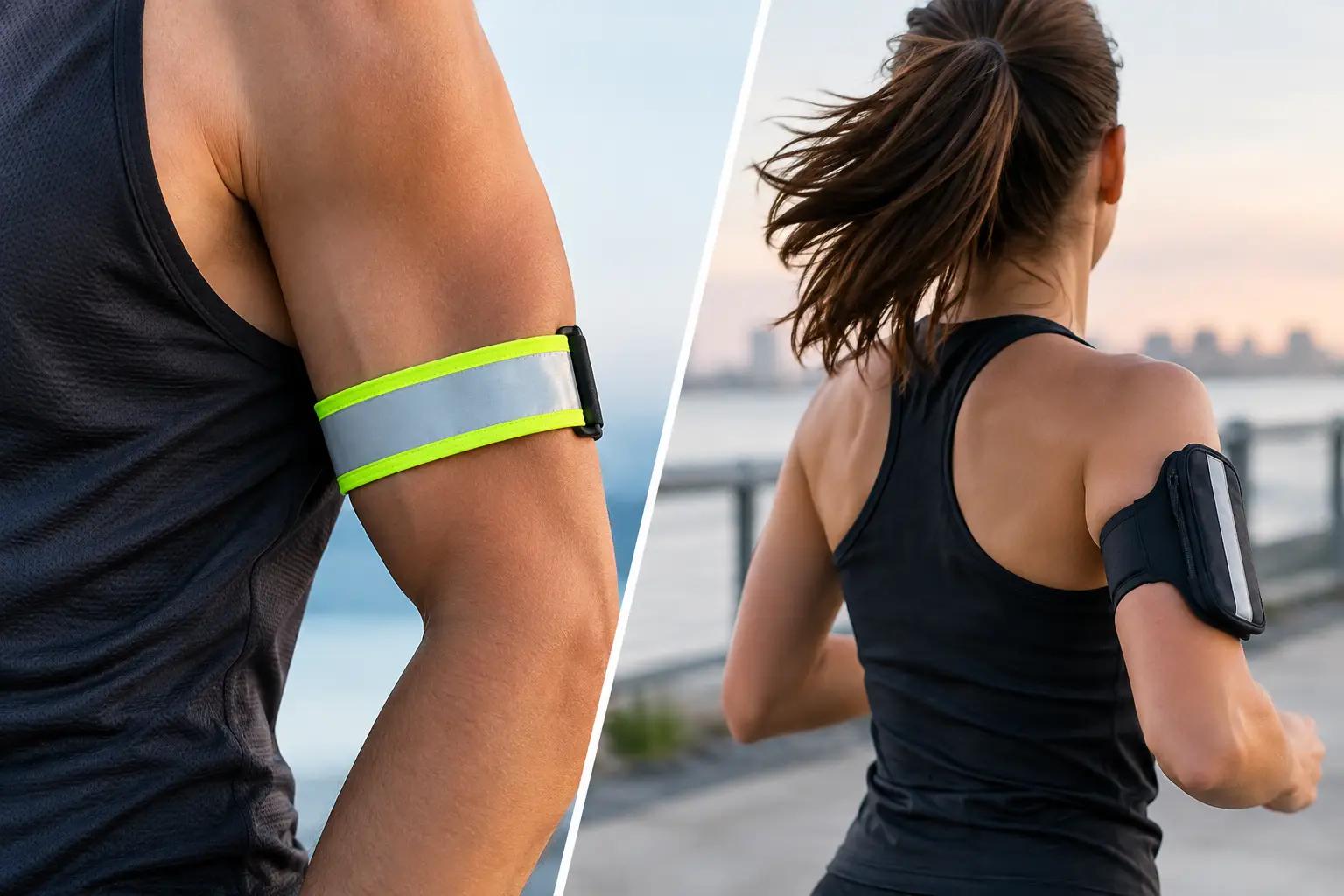
A dark pavement after work can turn a familiar running route into a visibility test. Reflective straps versus armbands is not just a question of what looks neat in a running photo. It is about where drivers, cyclists and other path users will spot you first, how your kit feels at kilometre eight, and whether you will actually wear it every time daylight fades.
Both options earn their place. The better choice depends on your route, the weather, what you already wear and how much visibility you need. The key is to choose dependable gear you will use for more than one season, rather than another throwaway accessory destined for the back of a drawer.
Reflective Straps Versus Armbands: The Main Difference
Reflective armbands are compact bands worn around the upper arm or, in some cases, the ankle. They create a small bright reflective point when light from a car headlamp hits them. They are quick to put on, easy to carry and usually suit runners who need a simple extra layer of visibility.
Reflective straps normally refer to a harness or vest-style system that sits across the chest, shoulders and back. Because it covers more of your body and creates a recognisable human outline, it is generally easier to notice from several angles. A good reflective strap vest also stays visible over a running jacket, hoodie or technical tee without making you feel bundled up.
Neither is a magic shield. Reflective material needs an outside light source to shine back, so it does little on an unlit trail where there are no headlights. For fully dark routes, pair reflective kit with an active light such as a chest light or headtorch. Reflection helps others see you. A light helps you see the ground and makes your presence clearer before a vehicle is close.
When an Armband Makes Sense
An armband is a practical choice for runners whose usual routes are already well lit, or for those who mostly run in daylight but occasionally get caught by an early sunset. It takes seconds to fit, weighs almost nothing and can move between your running top, cycling layer and walking jacket.
It is also useful when you want to add a little movement-based visibility. Arms naturally swing as you run, and that motion can help catch another road user’s eye. An ankle band can offer a similar advantage, particularly near road crossings where moving feet are easier to distinguish than a static patch of fabric.
The trade-off is coverage. One band on one arm is a small signal, not a full visibility strategy. It can also slip over a smooth jacket sleeve, feel restrictive if tightened too much, or disappear from view when your arm is turned away. If you run on narrow country roads, along darker suburban stretches or near fast traffic, an armband alone is rarely enough.
Armbands work best as a lightweight addition. Keep one in your running belt, jacket pocket or work bag for those unexpected late finishes. They are a sensible, low-fuss option, but they should not be mistaken for high-coverage gear.
Why Reflective Straps Offer More Coverage
A reflective strap harness makes your upper body easier to identify from the front, side and rear. That matters because roads are not simple straight lines. You may be approaching a roundabout, crossing at a junction, running around parked cars or sharing a path with cyclists who are coming from behind.
The shoulder and chest layout also places reflective material higher than an ankle band. Higher positioning is often less likely to be blocked by puddles, kerbs, hedges or parked vehicles. It is especially useful in wet weather, when black running layers and a shiny road surface can make a runner blend into the background.
For Northern Irish runners heading out on a damp winter evening, this is familiar territory. A reliable reflective harness can go over a long-sleeve top in autumn, a shell in winter and a light tee in spring. That cross-season use is exactly what good functional gear should deliver.
Comfort matters here. A poorly designed harness can bounce, pinch at the shoulders or feel awkward under a backpack. Look for adjustable straps that sit flat, secure buckles and a fit that lets you breathe deeply and swing your arms naturally. Test it over the layers you genuinely run in, not just over a thin top on a mild day.
Visibility Is Not the Same as Being Seen
It is tempting to think that more reflective material automatically solves every problem. It does not. Visibility changes with rain, fog, road layout, a driver’s attention, street lighting and the colour of the clothes underneath your gear.
Reflective straps are highly effective when headlights hit them. An LED chest light or headtorch remains visible independently, which makes it valuable in complete darkness or low-traffic areas. The strongest approach for many runners is layered visibility: a reflective harness for broad passive reflection, plus an active light for consistent presence and safer footing.
Think about direction too. A rear-facing reflective element matters if you run with traffic behind you. Front and side visibility matter at crossings. If your run includes several environments – a residential estate, a canal path and a main road, for example – choose kit that works across all three rather than optimising for only one section.
Bright clothing can help in daylight, but it does not replace reflective details after dark. Likewise, reflective details built into a shoe or jacket are useful, yet often too limited to rely on alone. Small signals add up, but purposeful visibility gear does the heavier lifting.
Fit, Layers and Real-World Running
Your best choice should fit your routine, not an idealised version of it. If you run home from work, an armband may be the easiest item to keep in your bag. If you regularly head out before sunrise, a reflective strap vest is worth the extra few seconds because it gives you more consistent coverage.
Consider your layers. Thick winter jackets need more adjustment room than a summer singlet. A harness should fit firmly enough not to bounce but never squeeze your chest or interfere with breathing. An armband should stay in place without leaving a deep mark or making your arm feel numb.
Sweat and rain deserve attention too. Choose gear that can be wiped clean, dries quickly and keeps its shape after repeated use. Cheap reflective accessories can crack, fray or lose fastening strength after a handful of wet runs. Replacing poorly made kit again and again is not a bargain. It costs more over time and creates needless waste.
At 4R, we believe running gear should earn its space. A visibility accessory should work across seasons and activities, not become disposable clutter after a few outings. That is better for your budget, your kit drawer and the planet.
Choose for Your Route, Not the Trend
For short runs on bright streets, an armband may be all the extra reassurance you need, especially when combined with existing reflective details on your clothing. For mixed urban routes, reflective straps provide stronger all-round coverage without the bulk of a high-vis jacket.
For rural lanes, unlit paths or winter mileage in persistent rain, choose a reflective harness and add an active light. This is not about looking over-equipped. It is about giving other people more chances to register that you are there before they reach you.
If you run with a group, do not assume another runner’s light makes you visible. Each runner needs their own reflective and illuminated presence. The person at the back, the person crossing the road and the person wearing all-black layers can otherwise disappear surprisingly quickly.
Make Your Visibility Gear Last
A quick check before each darker run goes a long way. Make sure buckles close securely, elastic has not stretched beyond a stable fit and reflective sections are clean. Mud and road grime dull the surface that needs to return light.
Wash according to the care instructions and avoid treating reflective gear as indestructible. Excessive heat, harsh detergents and rough storage can shorten its useful life. Hang it to dry, store it where it is easy to grab, and replace it only when the material or fastening has genuinely reached the end of its working life.
The best visibility kit is the kit that becomes automatic: straps on, light charged, route checked, door closed behind you. Choose the coverage your conditions demand, then get out there with the confidence to enjoy every mile.