

Blog
Reflective Straps Review: Do Runners Need Them?

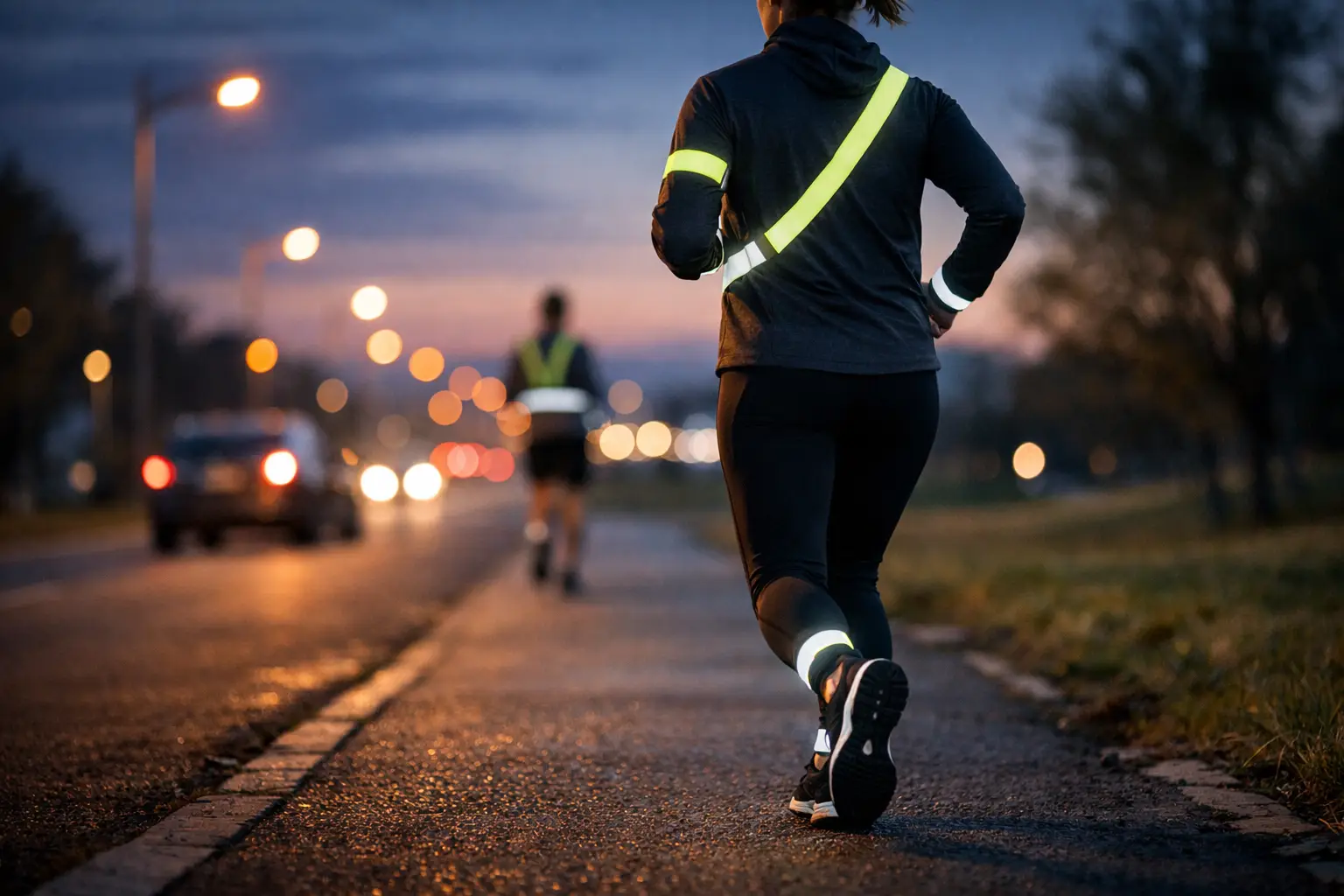
A dark running top can disappear at the roadside long before a runner feels they are in danger. Streetlights help, but they do not make you visible from every angle, and car headlights often pick up movement rather than detail. This reflective straps review looks at whether this simple bit of kit earns a place in your running drawer – and whether it is a better choice than buying another fluorescent top.
What reflective straps are designed to do
Reflective straps are lightweight adjustable bands, usually worn across the shoulders and around the waist. Their job is not to light your way. Their job is to return a driver’s headlights towards the source, making your moving body far easier to spot in low light.
That distinction matters. Fluorescent clothing is useful in dull daytime conditions, but it relies on available light. Reflective material performs when headlights, bike lights or street lighting hit it. For winter morning runs, evening sessions and unlit country lanes, that is exactly when you need it most.
The strongest argument for straps is their simplicity. One adjustable harness can work over a running tee, a waterproof jacket or a warmer mid-layer. Rather than owning separate high-visibility outfits for every season, you add one durable layer of visibility to clothing you already wear. That is practical for your budget and far kinder to the planet than treating running kit as disposable fashion.
Reflective straps review: the factors that matter
A good review should look beyond how bright the product appears in a product photo. Reflective gear has to stay visible and stay comfortable while you are actually moving. The key questions are fit, coverage, construction and how well the straps work with the rest of your kit.
Fit should stay secure without restricting you
The best straps sit close to the body, with enough adjustment to fit different layers. They should not bounce against your chest, creep up towards your neck or loosen after a few kilometres. A harness that feels fine while standing still can become irritating once your arms are swinging and your breathing is deeper.
Look for broad adjustment range around both the waist and shoulders. This is especially useful if you run through the British and Irish seasons, when a light summer top and a winter running jacket demand very different fits. Elasticated sections can help reduce movement, but overly stretchy straps may gradually lose their shape. The sweet spot is secure webbing with considered elastic where it supports comfort.
Before heading out, take a moment to adjust the harness over the layers you are wearing. It should be snug enough not to shift, but loose enough to allow a full breath. If you notice rubbing after ten minutes, do not assume you will get used to it. Reposition it or choose a design with a less abrasive edge.
Visibility is about shape, movement and angles
A reflective strip on the chest is useful, but a harness that creates a recognisable human outline is more effective. Drivers do not just need to see a flash of light. They need to identify a person early enough to react calmly.
Shoulder and waist straps add reflective points at different heights, while your moving arms and upper body make that outline easier to notice. A design with reflective material across the front and back gives you more confidence at junctions, on bends and when traffic approaches from behind.
There is still a trade-off. Straps offer excellent reflective coverage for their low weight, but they do not provide the 360-degree illumination of an LED chest light or a running light worn front and rear. On truly dark rural routes, combining reflective straps with a headtorch and lights is the smarter approach. Reflective gear helps others see you. A light helps you see potholes, uneven paths and loose gravel.
Comfort decides whether you will use them
The most visible piece of safety kit is worthless if it stays in a cupboard. Lightweight straps usually beat a full hi-vis vest for runners who dislike extra heat, especially during tempo sessions or mild evenings. They leave much of your running top uncovered, improving airflow and avoiding that clammy feeling some solid vests create.
However, a minimal harness offers little storage. If you need to carry a phone, key, gels and a soft flask, a running vest or belt may still be the better fit. Choose straps when visibility is the priority and you already have a reliable way to carry essentials. Choose a purpose-built running vest when you want storage and visibility in one item.
Pay attention to buckles and strap ends as well. Hard plastic hardware should sit away from common rub points, while loose webbing should be secured rather than flapping about. Small details make a big difference after an hour on the road.
Durability matters more than a bargain price
Cheap reflective accessories can be tempting, particularly when they are marketed as a quick winter fix. But faded reflective print, weak stitching and brittle clips turn a supposedly useful item into waste far too quickly.
Check the stitching around adjustment points and buckles, as these areas take the most strain. Reflective panels should be firmly integrated rather than lightly printed on the surface. After a run, let straps air dry instead of leaving them bundled in a damp kit bag. Sweat, mud and road grime can be wiped away with a damp cloth, and harsh washing or high heat should be avoided unless the care label says otherwise.
Buying fewer products that genuinely last is a better standard for running gear. At 4R, that is the point of functional kit: dependable performance, without encouraging a cycle of replacing things that should have been made properly in the first place.
Who gets the most value from reflective straps?
Reflective straps suit runners who train on roads before sunrise or after work, particularly those who want a no-fuss layer that works over their existing wardrobe. They are also a strong option for walkers, dog owners, cyclists on short urban journeys and anyone travelling to or from a club session in the dark.
They make particular sense for beginner runners building consistency. Early starts and evening runs are often the only realistic space in a busy week, and feeling visible can make those sessions feel less intimidating. The harness takes seconds to put on and does not ask you to overhaul your kit collection.
They are less suited to runners who mainly use fully lit paths, treadmills or daylight routes. You may still carry them for the occasional late finish, but the need is lower. Likewise, if your route is completely unlit, reflective straps alone are not enough. You need active lighting and a route choice that gives you the best possible margin of safety.
How to wear reflective straps properly
Wear the straps as the outermost layer so reflective sections are not hidden by a jacket, scarf or hydration pack. Centre the chest and back sections, then adjust the waist so it remains level as you run. The shoulder straps should lie flat without pulling into the base of your neck.
If you wear a backpack or running vest, check from behind that the pack has not covered most of the reflective material. In that case, use additional rear lighting or attach a separate reflective element where it can be seen. Visibility works best in layers, not as a single promise from one item.
It is also worth testing your gear at home. Ask someone to shine a torch or car headlights towards you from a sensible distance, then turn around and move naturally. This quick check reveals whether the straps sit where they should and whether your jacket, hair or bag gets in the way.
The honest verdict
Reflective straps are not glamorous, and that is exactly why they work. They are light, adaptable and easy to keep by the door for the runs that happen when daylight does not. Their biggest strength is allowing one piece of durable gear to improve the visibility of the clothing you already own.
Use them as part of a sensible low-light setup, not a substitute for awareness, route planning or lights on dark roads. Then pull them on, step out with purpose and give every driver a better chance of seeing the runner you are working hard to become.