

Blog
Running Visibility: Be Seen on Every Run

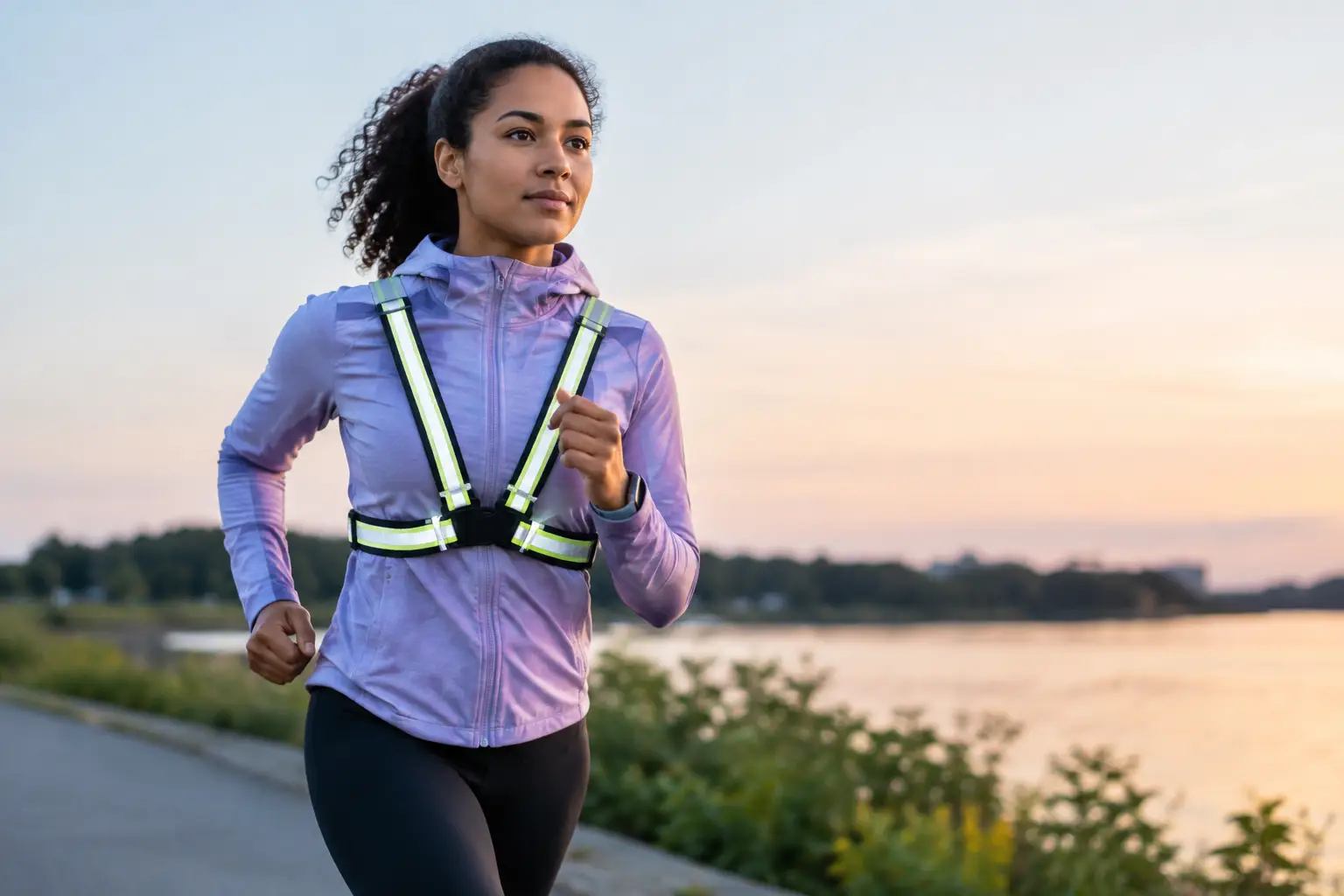
A black running top can feel like the obvious choice at 6am. It is simple, familiar and hides a bit of road spray. But when a driver, cyclist or fellow runner only spots you at the last second, running visibility stops being a style choice. It becomes the margin that gives everyone more time to react.
For runners across the UK and Ireland, low light is part of the routine for much of the year. Early starts, evening miles, wet roads and unlit paths are not rare conditions. They are normal training conditions. Being seen should be built into your kit and your habits, not treated as a winter-only extra.
Why running visibility matters before the sun goes down
Darkness is not the only problem. Dusk, dawn, rain, fog and glare from low sun can make a runner harder to identify than a fully dark evening. A motorist may notice movement without understanding what it is. A cyclist may see a shape but misjudge its speed or direction. Good visibility makes your presence clear sooner.
That matters because road users need time, not surprises. The goal is not to look bright from a few metres away. The goal is to give people approaching from ahead, behind and the side enough warning to adjust safely.
This is especially relevant on country lanes and suburban roads, where street lighting can disappear without warning. It also applies on shared paths. A runner wearing dark kit and quiet shoes can arrive behind a dog walker or commuter almost unnoticed. Visibility is a courtesy as well as a safety habit.
Running visibility needs more than one bright item
Reflective material and lights do different jobs. Relying on just one can leave gaps in how you are seen.
Reflective details return light towards its source. They work brilliantly when a car headlight, bike light or streetlight hits them, but they do not create their own light. On a poorly lit route with no light pointed your way, reflective strips alone can disappear.
LED lights create their own signal. A chest light, head torch or clip-on light can make you visible from a distance, including in areas with little ambient light. They also help others understand your position and movement. But a small light fixed in one place may not show your full outline, particularly from the side.
The most practical approach is to layer both. Use reflective vest straps or reflective accents to make your body shape easier to recognise, then add a rechargeable light for an active signal. Think front, back and side, rather than simply buying the brightest item available.
Make your movement recognisable
A moving arm or leg is easier to read than a static block of colour. Reflective bands, straps or details placed around the wrists, ankles and torso help show that you are a person running, not an object at the edge of the road.
A reflective vest is often a strong choice because it sits over the kit you already own. That makes it more versatile than buying separate bright layers for every season. On a mild autumn evening it goes over a T-shirt; in January it fits over a jacket. Fewer single-purpose purchases means less clutter in the drawer and less waste created in the first place.
Fit matters. Straps should be secure enough that they do not bounce, twist or slide over your shoulders after the first kilometre. If something annoys you on a short test run, it will be worse at the end of a long one.
Put lights where they can be noticed
A forward-facing light helps you see broken pavement, puddles, roots and changes in surface. A rear light is useful for alerting traffic approaching from behind. If you only run on lit urban streets, a modest light may be enough for being seen. If your route includes trails, canals, rural roads or uneven ground, you may need a more powerful beam to see safely too.
Avoid aiming a head torch directly at oncoming people. Angle it slightly downwards so it lights your route without dazzling others. On flashing modes, choose a pattern that catches attention without becoming harsh or distracting. A steady beam can be better on busy shared paths, while a measured flash may stand out more on a dark roadside.
Rechargeable lights are a sensible long-term choice, but only if you charge them. Build it into your routine: plug in lights when you put your running clothes away, not five minutes before you leave. Check the battery level before longer runs and colder evenings, when batteries can drain more quickly.
Choose colours with the route and weather in mind
High-visibility colours can help in daylight and twilight, especially fluorescent yellow, green and orange. Yet they are not a substitute for reflective material or lights after dark. Fluorescent fabric relies on available daylight. Once the light drops, it loses much of its advantage.
Colour also depends on the backdrop. Bright yellow can stand out against grey streets but may blend into autumn hedgerows. White can look sharp in daylight but vanish against headlights and pale rain. This is not a reason to overthink every outfit. It is a reason to avoid assuming one colour makes you visible in all conditions.
A dependable running wardrobe is built around useful combinations. Choose durable, versatile layers that work across seasons, then add visibility gear when the light changes. That is a better answer than buying disposable novelty kit for every weather forecast. At 4R, we believe practical gear should earn its place on every run and last longer than one trend cycle.
Build a pre-run visibility check
The easiest safety habits are the ones that take seconds. Before leaving, ask yourself whether you can be seen from the front, rear and side. If the answer is uncertain, add a light or reflective layer.
Check the route as well as the kit. A well-lit pavement through town calls for different choices from an isolated lane after rain. If you are running with a friend, do not assume two people are automatically more visible. Both runners should have their own reflective detail and light where possible.
Keep your awareness switched on even when your kit is doing its job. Lower music volume near crossings, make eye contact with drivers where you can, and be cautious around driveways and parked vehicles. Visibility reduces risk. It does not give you control over another person’s attention.
Do not forget the details that affect focus
Comfort supports safer decisions. Chafing, loose laces and a bouncing light pull your attention away from the road. Secure no-tie elastic laces can remove one small distraction, while anti-chafe balm can prevent discomfort becoming the only thing you notice halfway through a run.
These are not glamorous additions, but dependable running is built on details. When your gear fits, stays charged and works as expected, you are more likely to use it consistently. Consistency is where safety habits become normal rather than inconvenient.
Make being seen part of your running identity
Some runners worry that reflective straps and lights look excessive on a short urban route. That thinking belongs to the same culture that sells us piles of throwaway sportswear and calls it choice. Practical kit is not overkill when it helps you run more confidently, for more months of the year, without buying unnecessary replacements.
Choose equipment that is adjustable, rechargeable and made to work across your existing wardrobe. Look after it, wipe down lights after wet runs and replace damaged reflective items when they no longer perform. The most sustainable running gear is gear you genuinely use, maintain and trust.
When the light starts to fade, do not cut your run short because you feel hard to spot. Put on the reflective layer, switch on the light and take up your space with confidence. Every safe mile after dark is a reminder that the right gear should support your life, not slow it down.