

Blog
Running Jacket Versus Gilet: Which One Works?

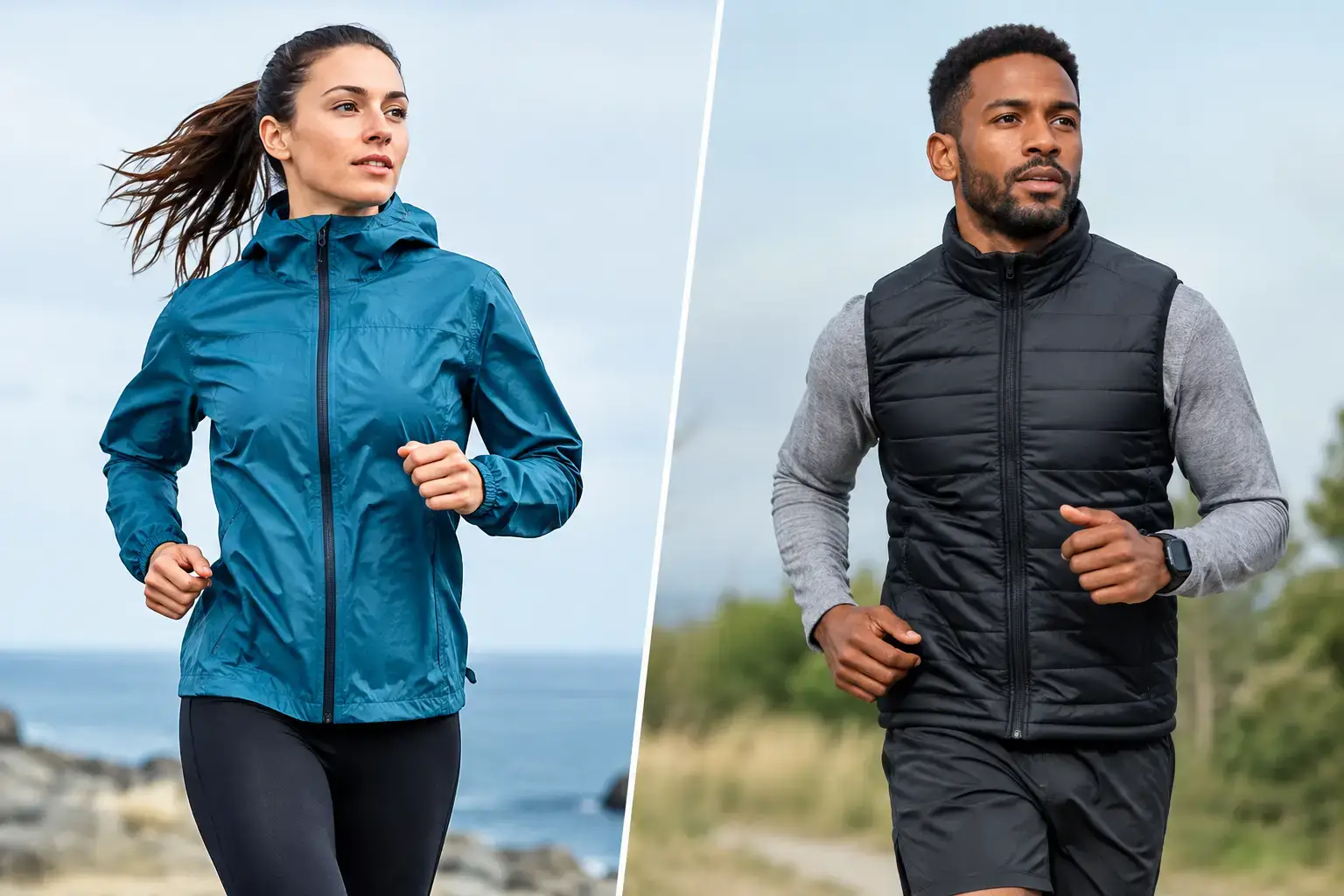
You are three kilometres into a run, the wind picks up and suddenly the layer that felt sensible at the front door feels completely wrong. That is the real running jacket versus gilet decision. It is not about owning more kit. It is about choosing one dependable layer that keeps you comfortable without leaving you clammy, restricted or carrying it home in your hand.
For most runners, a jacket and a gilet solve different problems. One protects your whole upper body from changeable weather. The other keeps the cold wind off your core while giving your arms room to work and heat to escape. Know the difference and you can buy with purpose, wear each piece harder and avoid the disposable activewear cycle.
Running jacket versus gilet: the essential difference
A running jacket is a full-sleeve outer layer. It is the stronger choice when rain, cold air or exposed conditions could make a run unpleasant or unsafe. Depending on the fabric, it may be windproof, water-resistant or waterproof. The best running jackets are light, breathable and cut to move with you rather than flap around like a casual coat.
A gilet is a sleeveless body warmer, sometimes called a running vest. It protects your chest and core from wind while allowing your arms to release heat. That makes it a smart layer for cool, dry runs, rolling terrain and sessions where your effort changes often.
The key is simple: jackets provide broader weather protection; gilets give more temperature flexibility. Neither is automatically better. Your route, pace, weather and personal temperature all matter.
Choose a running jacket when weather is the main challenge
Reach for a jacket when the forecast could interfere with your run. Steady rain, biting headwinds and low temperatures are all good reasons to cover your arms as well as your torso. This is particularly true on long easy runs, where your effort is controlled and you generate less heat than during intervals.
A water-resistant jacket is often enough for drizzle, showers and damp trails. It packs down easily and takes the edge off a wet, windy day. A properly waterproof shell earns its place when rain is persistent, conditions are cold or you will be out for several hours. Just remember that waterproofing can reduce breathability. If you are working hard uphill, even an excellent shell can feel warm inside.
Look for a close but non-restrictive fit, a zip that is easy to adjust while moving and ventilation where you need it. A high collar helps in wind, while reflective details are worth having for early-morning or evening runs. In poor light, add dedicated reflective straps or a chest light rather than assuming a small reflective logo will make you fully visible.
A jacket is also the safer call when you are heading into the hills, running an unfamiliar route or travelling far from home. Conditions can turn quickly. Carrying a light shell is a practical choice, not overthinking.
Choose a gilet when you need warmth without overheating
A gilet shines in that awkward middle ground: too cool for a T-shirt, too mild for sleeves. Think crisp spring mornings, dry autumn evenings and winter runs where you expect to warm up within the first ten minutes.
Because your arms are uncovered, a gilet lets you move freely and regulate body temperature more naturally. It works especially well over a long-sleeve running top. If you start cold, zip it fully; once your engine is running, open the zip slightly to dump heat without exposing your whole chest.
It is also a strong option for faster sessions. Tempo runs, fartlek and hill repeats can make a jacket feel stifling, even when the air is chilly. A wind-resistant gilet blocks the coldest air against your core while avoiding the trapped heat that can make hard training feel harder than it needs to.
That said, a gilet has limits. It will not stop rain soaking your sleeves, and it offers little comfort when your arms are cold in a strong wind. If the weather is genuinely unpleasant, do not try to tough it out for the sake of travelling light. Take the jacket.
Match the layer to effort, not just temperature
The temperature on your weather app is only one part of the decision. A calm 6°C can feel very different from a windy 6°C beside the coast, across open country or on a city route funnelled between buildings. Rain changes the equation again, particularly if you are running slowly or stopping at crossings.
Your planned effort matters just as much. For an easy recovery run, you may want more protection because you will not create as much body heat. For intervals, you may begin in a jacket or gilet and need far less by the first hard rep. A packable layer is useful here, provided you are genuinely happy to carry it.
Use this quick rule before leaving home: dress for how you will feel after ten minutes, not for how you feel standing still. If you are perfectly warm at the door, you are often wearing too much. The exception is prolonged rain, strong wind and very cold conditions, where extra protection is sensible from the outset.
Build a smaller, harder-working running wardrobe
Fast fashion encourages runners to buy a separate outfit for every forecast. That is wasteful, expensive and rarely necessary. A better approach is to build a compact layering system around reliable pieces that work together.
For many everyday runners, one lightweight running jacket and one versatile gilet cover a remarkable range of conditions. Pair them with a breathable short-sleeve top, a long-sleeve base layer and, for colder days, a warmer mid-layer. You can then adapt to the season without filling drawers with gear that only sees daylight twice a year.
Prioritise durable fabrics, useful pockets, quality zips and a fit you can wear repeatedly. A jacket that delaminates after one season or a gilet that loses shape after a few washes is not a bargain. The lower-impact choice is usually the item you will use for years.
At 4R, that belief sits at the heart of practical running gear: buy with intent, choose products that do their job, and keep them in use. Performance and responsible consumption should run side by side.
Details that make either layer more useful
Do not get distracted by marketing language alone. The small design decisions are what you notice halfway through a wet Tuesday run.
A good running layer should be light enough to wear or carry, quiet enough that it does not rustle with every stride, and shaped for forward arm movement. If a jacket pulls across your shoulders, rides up at the waist or has sleeves that bunch at the wrists, it will soon stay at the back of the cupboard.
For jackets, consider whether you need genuine waterproof protection or simply wind resistance and shower protection. Waterproof fabrics are valuable, but they are not automatically the best everyday option. For gilets, focus on wind blocking across the front and breathability at the back. A highly insulated gilet can be excellent for walking or standing around, yet too warm for most running.
Visibility matters through the darker months. Choose bright colours where they suit your route and add purposeful lighting or reflective gear for dawn, dusk and night. Being seen should never depend on luck or on drivers spotting a dark runner at the last second.
The best choice for common running conditions
On a cool, dry and breezy day, a gilet over a long-sleeve top is usually the sweet spot. It keeps your core comfortable without making you feel wrapped up.
In light rain with mild temperatures, a lightweight water-resistant jacket gives you more confidence, especially if the route is exposed. Open the zip as you warm up and use the hood only when you need it, if your jacket has one.
For cold, dry winter running, your choice depends on pace. A gilet can be enough for a steady or hard effort when paired with a warm base layer. A jacket makes more sense for easy miles, strong winds and long stretches where you may cool down.
For persistent rain or a long run in uncertain weather, choose the jacket. You may get warm, but you have better protection when the weather turns. That extra margin can make the difference between finishing strong and cutting the run short.
The best layer is the one that lets you forget about the weather and focus on your stride. Choose fewer pieces, choose them well, and let every run give them a proper reason to exist.