
Blog
Reflective Vests: Run Brighter After Dark

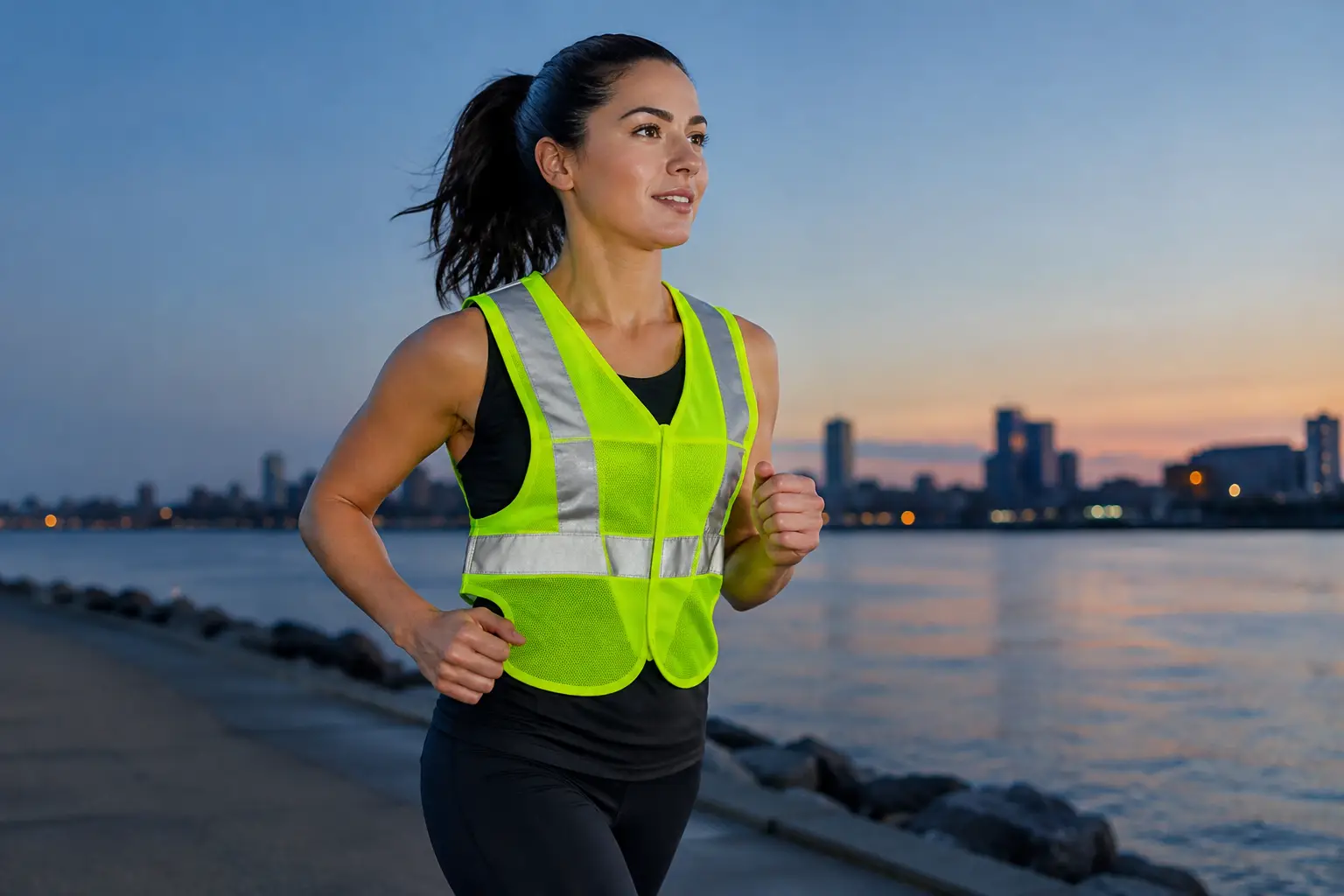
A dark winter evening should not decide whether you get your run done. Reflective vests give drivers, cyclists and other path users a better chance of seeing you sooner, without forcing you into a bulky extra layer. For early starts, late finishes and changeable weather, that visibility is not a gimmick. It is practical running kit.
The best choice is rarely the brightest-looking option on a product page. A useful vest must stay comfortable over your chosen layers, remain visible when you move, and be reliable enough that you actually wear it. That is where thoughtful gear beats disposable sportswear every time.
Why reflective vests matter on a run
Reflective material works by returning light towards its source. When a car headlight, bike lamp or street light hits reflective detailing, it creates a bright return that can make your moving body far easier to spot. This is especially valuable on unlit lanes, suburban roads, shared paths and crossings where a driver is already processing a lot of visual information.
There is an important catch: reflection needs a light source. A reflective vest can shine brilliantly in headlights yet offer limited visibility to someone without a lamp aimed in your direction. That does not make it less worthwhile. It simply means smart night running often uses more than one layer of visibility.
A reflective vest paired with a chest light, head torch or small LED creates a stronger setup. The light helps you be seen before someone’s beam reaches you, while the reflective sections respond when it does. On country roads around Newry and far beyond, where stretches can be dark and pavement may disappear, that combination can make a real difference.
Choosing reflective vests that runners will wear
The most effective reflective vest is the one you reach for before every low-light run. Comfort decides that habit. If it flaps, pinches under the arms or feels awkward over a jacket, it will soon end up at the bottom of a drawer.
Start with fit, not size on the label
Many running reflective vests use adjustable straps rather than a traditional fabric body. This gives you room to change your layers between a humid autumn evening and a freezing January morning. Look for adjustment at the waist and shoulders, then test whether the vest sits close enough to avoid bouncing without restricting your breathing or arm swing.
A snug fit is helpful, but tight is not the aim. You should be able to take deep breaths, rotate your shoulders and reach for a gel or phone with no tugging. If you wear a running pack, check that the straps will not cover the reflective areas or rub against the vest’s buckles.
Look for visibility from more than one angle
Road users do not only approach from behind. You might be crossing a junction, running towards traffic or moving along a winding trail. Reflective coverage on the front, back and sides gives you a better chance of catching light from different directions.
Think about movement, too. Details around the torso and shoulders can be easier to recognise as a person in motion than one small reflective patch. There is no need to look like a highlighter pen, but a few well-positioned reflective elements can work harder than a large panel hidden beneath a hydration vest.
Keep the weight low and the design honest
Running gear should earn its place. A lightweight strap-style vest is easy to fold into a pocket or stash in a pack when daylight lasts longer than expected. It also avoids the clammy feeling that can come with a full hi-vis outer layer during a hard session.
That said, a full vest or bright outer layer may be the better choice for commuting, walking the dog, volunteering at an event or running beside busy traffic in poor weather. There is no single perfect format. Choose the level of coverage that suits where, when and how you move.
Build a visibility system, not a single-product solution
A reflective vest is a strong foundation, but safe running after dark is about stacking sensible choices. Your route, weather, pace and local traffic all matter. A lit canal path calls for a different setup from an exposed rural road in rain.
For most runners, this simple approach is enough:
- Wear reflective details that can be seen from the front, rear and sides.
- Use a rechargeable light when darkness, rain or poor street lighting reduces contrast.
- Choose brighter clothing when conditions are dull, while remembering that bright fabric is not the same as reflective material.
- Run facing oncoming traffic where it is safe and legal to do so, and give yourself room at junctions.
- Let someone know your route if you are heading out alone on isolated paths.
Do not assume street lighting removes the need for reflective gear. Pools of light and shadow can make it harder for others to judge distance and speed. Rain adds glare to windscreens and road surfaces, while a low winter sun can be as troublesome as darkness. Visibility is about helping people identify you early, not merely making yourself technically noticeable at the last second.
Reflective vest straps versus hi-vis running tops
Hi-vis and reflective are often used as though they mean the same thing. They do different jobs. Fluorescent or bright fabric is most useful in daylight, dawn and overcast conditions. Reflective surfaces respond best when light hits them in darker conditions. A quality running wardrobe often includes both, rather than treating one as a replacement for the other.
A bright running top is comfortable and simple, particularly if you run mainly in daylight but sometimes finish after sunset. A reflective strap vest is more adaptable because it can go over any top, jacket or gilet. It also allows you to add visibility without buying a separate high-visibility version of every item you own.
That matters if you care about reducing waste. Fast fashion has encouraged us to buy specialised clothing for every possible scenario, then replace it when it loses its appeal. A durable adjustable vest is a more useful answer: one dependable piece that works across seasons and layers. Buy less, use it harder, and choose gear made to stay in your rotation.
Make sure your vest stays effective
Reflective material does not need complicated care, but neglect shortens its useful life. Mud, road spray and body oils can dull surfaces, especially around straps that sit close to your torso. Wipe the vest down after grimy runs and follow the care instructions rather than throwing it into a hot wash with everything else.
Avoid harsh detergents, fabric softener and high heat unless the manufacturer specifically allows them. These can affect coatings, elastic and stitched details. Let the vest air dry, keep it away from direct heat, and inspect the buckles and adjustment points now and then. A cracked clip or stretched strap can turn a secure fit into an irritating bounce.
Before a dark run, hold the vest under a torch or car headlight from a short distance. If the reflective sections look dull, damaged or heavily worn, it may be time to replace it. Safety gear should be dependable, not something you hope still works.
When a reflective vest is not enough
There are runs where the better call is to change the plan. Thick fog, icy roads, high winds, severe rain and poorly maintained routes can reduce visibility and footing beyond what a vest can solve. An indoor session, a daytime route or a well-lit loop is not backing down. It is good judgement that protects tomorrow’s training.
Likewise, do not let visible gear create false confidence around traffic. Make eye contact where possible, assume drivers have not seen you until their actions show otherwise, and stay alert around driveways and junctions. Music can still have a place on a run, but keep the volume low enough to hear what is happening around you.
At 4R, we believe functional running gear should help you move with confidence without feeding a throwaway cycle. Choose reflective kit that fits, lasts and works with the clothing you already own. Then lace up, switch on your light when needed, and give every mile after dark the respect it deserves.