

Blog
How to Stop Shoelaces Coming Undone for Good

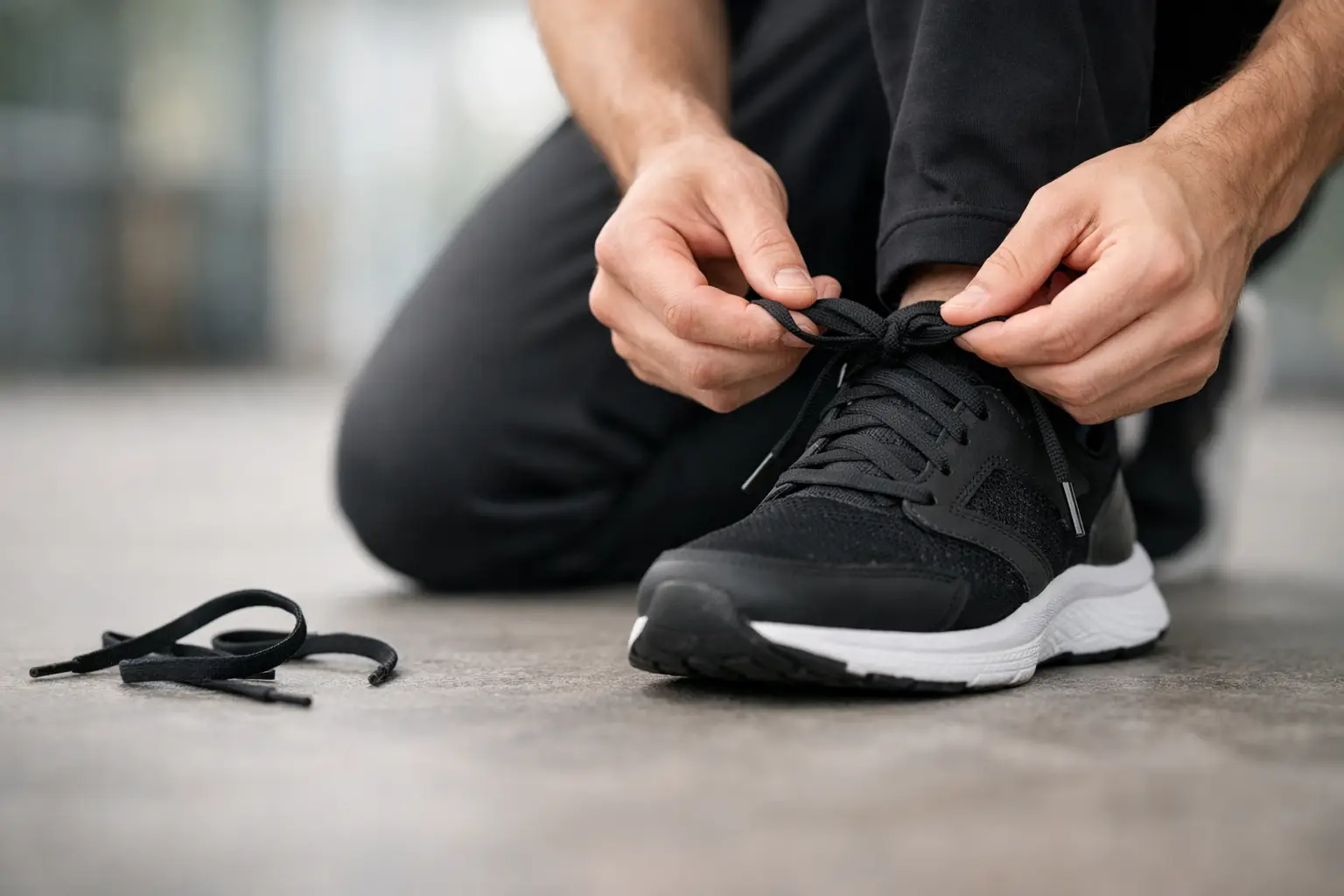
A lace coming loose at kilometre six is more than a small annoyance. It breaks rhythm, costs focus and can leave a trailing loop exactly where you do not want one. Knowing how to stop shoelaces coming undone means looking beyond simply pulling the bow tighter. The right knot, the right tension and the right laces can make every run feel more secure.
Why shoelaces keep coming undone
Most laces do not fail because you have tied them carelessly. They fail because running puts the knot under constant, repeated force. Each foot strike creates impact and vibration. As your shoe flexes, the laces move through the eyelets and the loops of a standard bow can gradually slacken.
Sweat, rain and mud can make the problem worse. Smooth, round polyester laces often slide more readily than flat, textured ones, while very stiff new laces may struggle to grip until they have been worn in. If your shoes are slightly too large or your heel is slipping, you may also be over-tightening the lace area to compensate. That puts extra pressure on the knot and can create numb toes as well as loose laces.
A dependable fix starts with a simple principle: your shoe should feel secure before you tie the bow. The knot is there to hold your fit in place, not to rescue a poor fit.
How to stop shoelaces coming undone with a better knot
For everyday trainers, the standard bow is fine if it is tied properly. Make the first crossover snug, then form two even loops and pull them firmly out to the sides. A loose first crossover is the usual weak point. The bow may look neat, but it has nothing solid beneath it to hold.
For running, a double knot is the simplest upgrade. Tie your normal bow, then tie the two loops together once more. Keep the second knot compact rather than yanking it tight enough to distort the shoe. You want a secure finish that is still easy to undo with cold fingers after a wet run.
There is one useful check: look at the bow. When the loops sit across the shoe, roughly side to side, the knot is generally balanced. If the loops point up and down the length of the shoe, your starting knot is likely twisted. Untie it and begin again with the opposite first crossover. This small adjustment helps the bow sit flatter and resist working loose.
Try the runner’s knot for heel slip
If your laces repeatedly loosen because your heel moves inside the shoe, use the top eyelets to create a runner’s knot, also called a heel-lock lacing pattern. Rather than crossing the laces through the final eyelets, take each lace straight up through the eyelet on the same side to leave a small loop. Feed each lace end through the loop on the opposite side, then pull down and back towards your heel before tying your bow.
This anchors the ankle collar more effectively and can reduce heel lift without crushing the front of the foot. It is particularly useful on descents, trails and longer road runs, when feet can shift as they warm up. The trade-off is that it may feel too restrictive for runners with a high instep or sensitive Achilles area. Adjust gradually, and stop if it causes rubbing or tingling.
Keep the bow low and tidy
A large bow can catch more air, brush against the opposite shoe or snag on trail debris. Once tied, tuck the loops and lace ends beneath the crossed section of the laces, or into a lace keeper if your footwear has one. Do not tuck them so deeply that pressure builds across the top of your foot.
Avoid wrapping loose lace ends around your ankle. It can look like a quick fix, but it creates uneven pressure and may rub over distance. Secure, low-profile lacing is the better answer.
Get the fit right before tightening anything
Your running shoes need enough room for your toes to spread and for your feet to swell slightly during exercise. If you have to haul the laces extremely tight to feel planted, reassess the shoe size, width or lacing pattern. A good fit should hold the midfoot and heel while leaving the forefoot comfortable.
Start lacing at the bottom with even tension, then tighten each section progressively as you move upwards. Pulling only at the top creates slack lower down, which will migrate as you run. You are aiming for firm and even, not aggressively tight.
Before heading out, walk briskly, jog on the spot and do a few strides. If your heel lifts, use the runner’s knot. If your toes feel pinched, ease the lower eyelets and keep more tension around the ankle. Your feet can change during a run, especially in heat or heavy rain, so a fit that works for a 5K may need a little more forgiveness on a long session.
Replace worn or slippery laces
Laces are small, but they are not disposable afterthoughts. Frayed fibres, stretched sections and flattened aglets can make them harder to tighten and more likely to fail at the worst moment. Replacing a tired pair is a practical way to extend the useful life of otherwise good running shoes, rather than binning footwear before its time.
Flat laces are often a strong choice for trainers because their wider surface creates more friction in the knot. Textured or slightly waxed laces can also hold well, though heavily waxed options may be less comfortable to adjust on the move. Round laces work perfectly in many hiking boots and casual shoes, but choose a grippier material if they constantly slip.
Length matters too. Laces that are too long create oversized loops and dangling ends. Laces that are too short encourage a tiny, strained bow that is difficult to double knot. Match the replacement length to the number of eyelet pairs on your shoe, and choose a durable option that suits how you actually train.
When no-tie elastic laces are the smarter answer
If you are tired of stopping to retie laces, no-tie elastic laces are worth considering. They replace a conventional lace with a stretch system that holds the shoe securely while allowing it to flex naturally with your foot. Once adjusted, you can slip shoes on and off without retying them every time.
They are especially useful for busy runners fitting a session around work, parents heading out before the school run, triathletes, people with limited hand mobility and anyone who wants a cleaner, snag-free setup. In wet weather, they also remove the hassle of dealing with soaked, muddy knots.
Elastic laces are not automatically right for every runner. Some people prefer the precise, locked-in feel of standard laces for fast intervals, technical trails or races where they make small tension changes between shoes. The key is correct adjustment. Set them while standing in your running socks, with your heel properly seated at the back of the shoe. The fit should be secure enough to prevent sliding but never tight enough to create pressure across the instep.
At 4R, we see no-tie laces as functional gear, not another throwaway accessory. A well-made pair can keep dependable shoes in regular use, cut down on nuisance stops and help you focus on the miles ahead.
Do not rely on quick fixes that create new problems
Tape, glue and complicated knots may seem tempting before an event, but they are rarely the best long-term answer. Glue can damage laces and makes shoes awkward to remove. Tape gets messy in rain and can leave residue. Overly elaborate knots can be difficult to release if your feet swell or you need to take shoes off quickly.
Likewise, do not ignore a lace that comes undone repeatedly in the same shoe. Check whether an eyelet is damaged, whether the tongue keeps sliding to one side, or whether the shoe has lost its shape. The lace may be highlighting a fit or wear issue rather than causing it.
A secure start makes running simpler
Take thirty seconds before you leave: seat your heel, tighten evenly, use a balanced bow and double knot if needed. For persistent problems, change the lace type or move to an elastic system that suits your routine. Small gear choices have a real effect when you are trying to run comfortably, safely and without interruption.
Your attention belongs on your breathing, your pace and the road or trail ahead – not on a loose lace flapping around your ankle.