

Blog
Elastic Laces Versus Traditional Laces for Runners

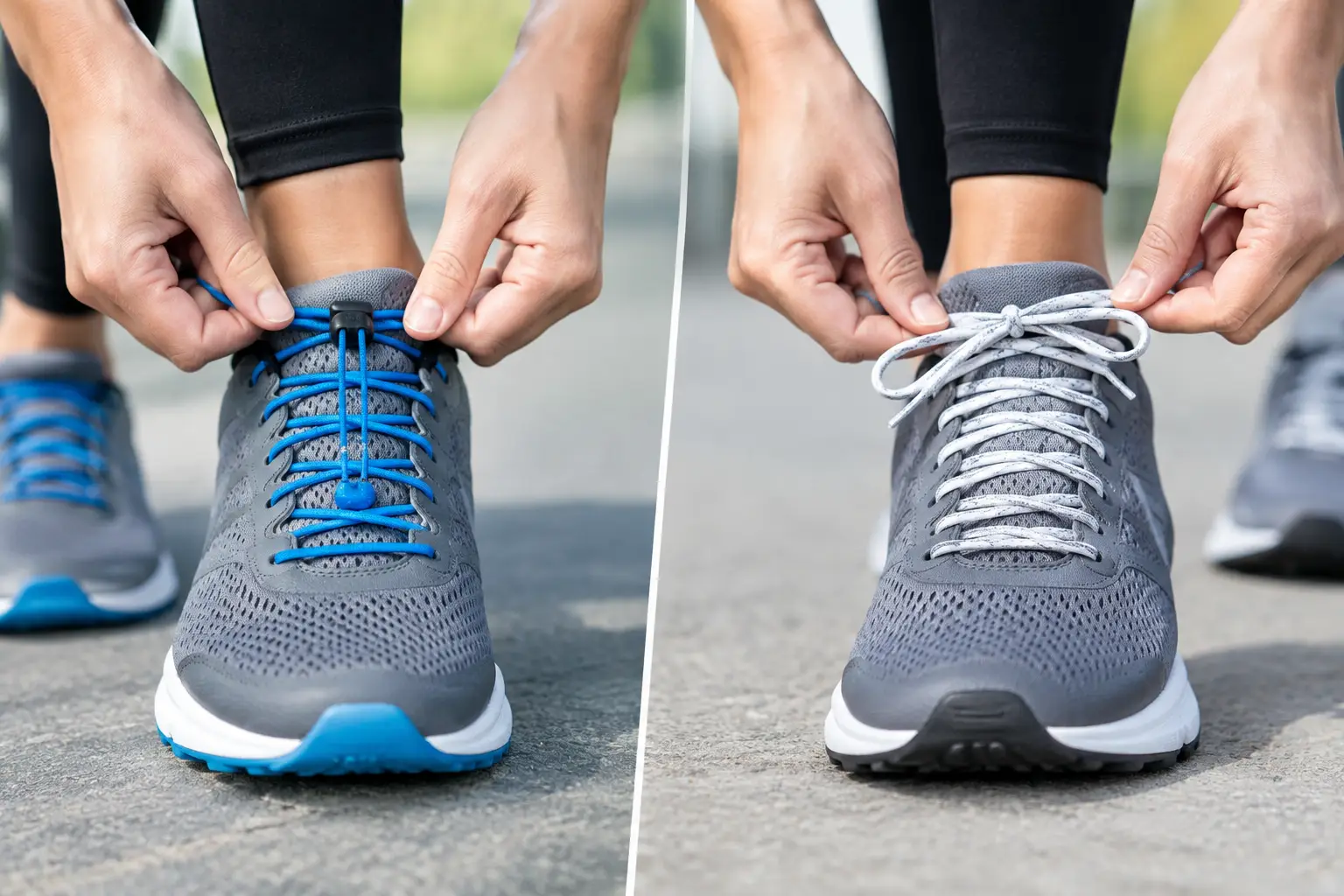
A lace coming loose at kilometre six is a small problem that can ruin a good run. You either stop, break your rhythm and retie it, or carry on with a shoe that no longer feels secure. That is why elastic laces versus traditional laces is more than a style choice. It affects comfort, consistency and whether your footwear works with your routine rather than against it.
For runners, walkers, gym-goers and anyone who wants less faff at the door, the right answer depends on the shoe, the session and your feet. Elastic laces solve a genuine everyday problem brilliantly. Traditional laces still earn their place when precise adjustment matters most.
Elastic laces versus traditional laces: the real difference
Traditional laces are static. Once tied, they hold the shoe at the tension you set, though the knot can loosen and the laces can stretch or slip over time. They allow you to alter pressure across different sections of the shoe, giving a highly tailored fit when you know how to lace for your foot shape.
Elastic laces stretch as your foot moves, then return to shape. Most no-tie systems use an adjustable lock or toggle, so you set the overall tension once, trim excess length if needed, and slip the shoe on and off afterwards. The result is a more forgiving hold with no bows to come undone.
Neither is automatically better. A runner who needs a locked-down fit for steep trails may prefer traditional laces. Someone fitting in a lunchtime 5K, managing stiff fingers, or getting children out the door will often value the speed and steady comfort of elastic laces far more.
When elastic laces are the smarter choice
They keep your routine moving
The strongest case for elastic laces is simple: put your shoes on, head out, get on with it. There is no double-knotting before a run and no loose loop catching on a pedal, kerb or gym equipment. If you regularly run before work, squeeze in training between commitments, or change footwear at the office, those saved seconds become a useful reduction in friction.
They are particularly practical for parkruns, easy runs, travelling, dog walks and recovery days. Your footwear is ready when you are. That matters on the wet, dark mornings we know well from Newry to Newcastle, when motivation can be fragile enough without wrestling with a knot.
They can reduce pressure points
Feet expand as they warm up. This is normal, especially during longer runs, warm-weather sessions and runs with sustained downhill sections. Static laces can begin to feel restrictive if they were tied tightly at the start. Elastic laces offer some give, which can make the upper feel less harsh across the top of the foot.
That flexibility may also help people with mild swelling, high insteps, arthritis, limited mobility or reduced hand dexterity. It is not a medical fix, and a shoe that causes pain still needs attention. But a forgiving lace system can make a well-fitting shoe easier to wear comfortably.
They suit everyday trainers as well as running shoes
Good gear should work hard. No-tie laces can turn a pair of running shoes into easy, dependable footwear for commuting, walking and daily errands without buying another throwaway pair for each purpose. That cross-functional value fits a slower, more responsible approach to kit: choose durable essentials, use them properly and keep them in service.
Where traditional laces still win
Traditional laces give you greater control over the fit zone by zone. You can skip an eyelet to relieve pressure on a sore toe, create more room over a high instep, or use a heel-lock pattern to reduce heel lift. Elastic laces generally apply tension more evenly, which is comfortable for many feet but less adjustable for specific fit problems.
They can also be better for technical terrain. On rocky trails, muddy descents or fast hill sessions, some runners want the firmest possible connection between foot and shoe. A carefully tied conventional lace, particularly with a secure runner’s knot, gives a reassuringly planted feel.
This does not mean elastic laces cannot handle running. A properly fitted set can work very well for road miles, treadmill training and everyday exercise. The point is to be honest about the demands of the run. If your heel is moving, your toes are sliding forward, or the shoe feels vague through corners, increase the tension slightly or return to standard laces for that shoe.
Fit matters more than the lace type
Laces cannot rescue the wrong shoe size, a worn-out upper or a trainer that does not suit your stride. Start with enough space at the front of the shoe, a secure heel and no pinching around the midfoot. Then choose the lacing system that helps preserve that fit through your session.
When fitting elastic laces, begin looser than you think. Put the shoe on with the socks you normally run in, stand up and walk around for a few minutes. Adjust the lock in small increments until the heel feels secure without a tight band across the top of the foot. Jog gently before cutting any excess cord. It is easier to shorten later than to replace a lace cut too aggressively.
For longer runs, test them before race day. Take the shoes out for an easy session of at least 30 minutes, then pay attention to numbness, hot spots and heel movement. Small adjustments are normal. What you want is a fit you stop noticing.
Durability, value and waste
A cheap lace that frays quickly or a plastic lock that cracks is false economy. It adds another small item to replace, another package to ship and another bit of waste to deal with. The most sustainable accessory is one that stays useful.
Look for strong, resilient elastic cord, a lock that holds its setting and ends that are finished cleanly. Check the tension every few weeks, especially if you use the same shoes for running and daily wear. Salt, mud and repeated stretching can all take their toll, so rinse dirty laces with fresh water and let them air-dry after particularly wet outings.
Traditional laces are also a sensible low-waste option when they are still doing their job. There is no need to replace functional kit for the sake of it. The better choice is the one that extends the useful life of footwear, improves how often you wear it and stops you buying duplicate products you do not need.
At 4R, that is the standard we back: practical running gear that earns its place, rather than disposable extras made for a single season.
Which laces should you choose?
Choose elastic laces if convenience, quick transitions and a flexible feel are high on your list. They are a strong match for road running, easy miles, gym sessions, walking, triathlon transitions, family life and anyone tired of stopping to retie a shoe.
Stick with traditional laces if you need detailed adjustment, run technical trails, use specialised lacing patterns or simply love the firm, precise feel of a tied shoe. There is nothing old-fashioned about using the system that gives you confidence on demanding ground.
Some runners will benefit from both. Keep elastic laces in your everyday road shoes and standard laces in trail shoes or a pair reserved for races. That is not excess for the sake of it if both pairs are already in regular use. It is choosing each tool with purpose.
The best test is not what looks smartest in the box. It is whether, halfway through a run, your shoes feel secure, comfortable and forgotten. Set your laces up properly, take one less excuse out of the morning, and put that energy into the miles ahead.