
Blog
Do Reflective Clothes Work for Safer Night Runs?

A black-clad runner can disappear on an unlit lane far sooner than they expect. The question is not simply, “do reflective clothes work?” It is whether the person approaching you has a light pointed in your direction, how early they can spot you, and what else you are wearing to stand out.
Reflective running clothing and accessories can make a real difference after dark. But reflection is not magic. It is one part of a sensible visibility set-up, alongside bright colours, active lights, route choices and alert running. If your kit only works when a car’s headlights reach it, it cannot replace a light that helps you be seen before that point.
How reflective clothing actually works
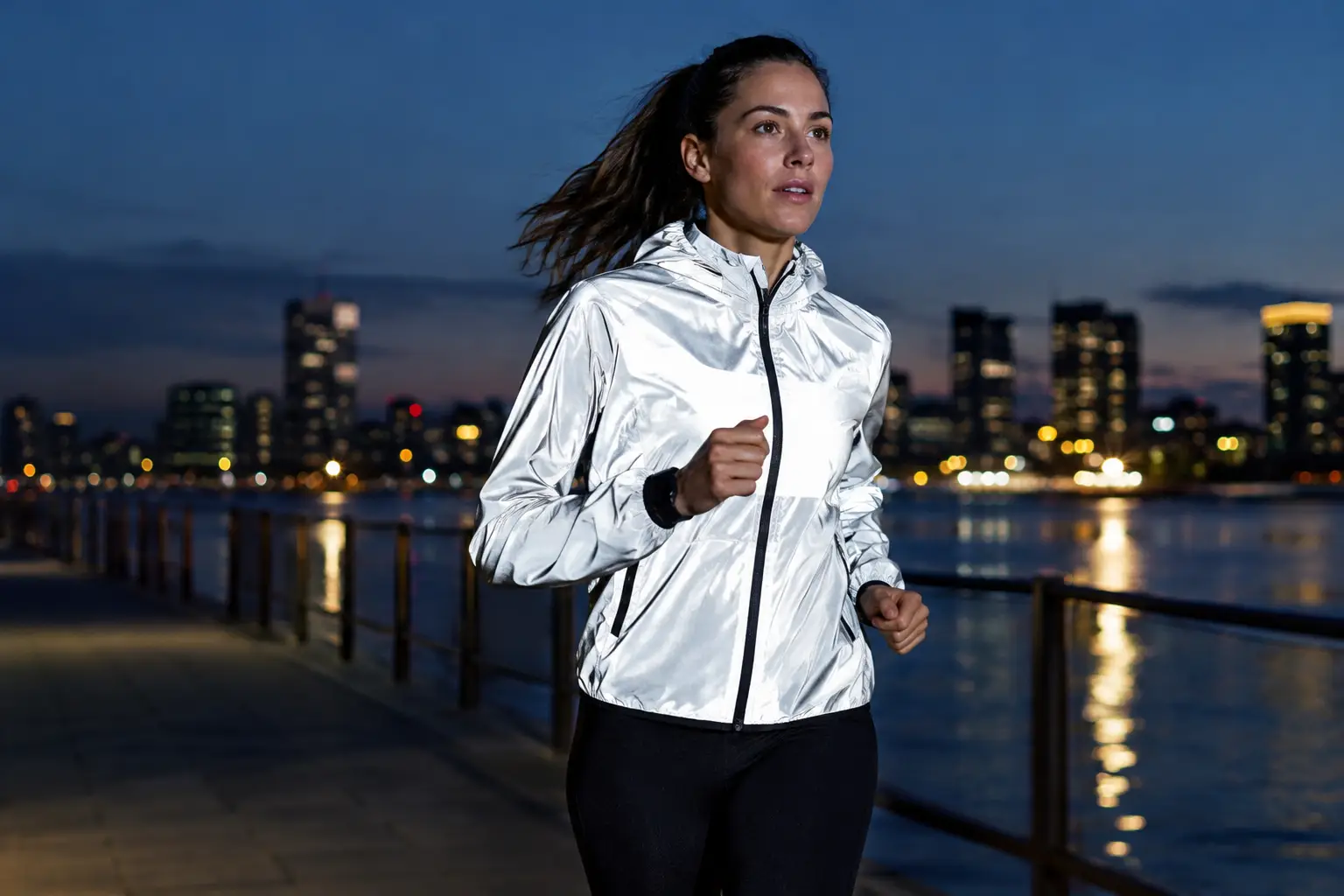
Reflective material is designed to return light towards its source. When a driver’s headlights, a cyclist’s lamp or a torch hits reflective detailing, it appears bright against the darkness. This is called retroreflection. It is why road signs, traffic cones and high-visibility workwear can seem to light up at night.
For runners, that means reflective logos, strips, prints and panels can catch attention from a useful distance when light is aimed at them. A jacket with large reflective areas will usually be more noticeable than one with a tiny reflective logo tucked on the back shoulder. More coverage gives approaching road users more to catch.
The limitation is built into the technology. Reflective clothing does not generate its own light. In a poorly lit park, on a trail, or near a vehicle with weak or badly aimed lights, it may not show up until relatively late. A runner can feel highly visible because their kit flashes under the streetlamp behind them, while still being difficult to see from the road ahead.
Reflective is not the same as fluorescent
These terms are often lumped together, but they help in different conditions. Fluorescent yellow, orange and green are most useful in daylight, especially on grey mornings or overcast afternoons. They convert some invisible ultraviolet light into visible light, making the colour look especially vivid.
After dusk, fluorescent fabric loses much of that advantage. Reflective material performs better when headlights are involved. At night, a bright red, yellow or white running top may still give useful contrast under street lighting, but it will not shine back like a reflective panel.
For the broadest cover, choose kit that combines daytime colour with reflective details. You run in changing conditions, not laboratory conditions. A winter evening can begin in fading daylight and finish in full darkness.
Do reflective clothes work in every running situation?
They work best on roads or shared routes where other people are using lights. They are particularly useful for making your body shape recognisable to drivers and cyclists. Reflective elements on the chest, back, arms and lower legs help create a moving outline rather than a single point of brightness.
They are less effective as a standalone solution on unlit trails, country lanes without traffic, or paths where you need to be visible from several directions. There may be no light source to reflect, and a person walking towards you may not be carrying a torch. In these settings, an active light is the stronger first layer.
Rain and mist add another complication. Wet roads can throw glare back at drivers, while rain on a windscreen can reduce contrast. Reflective details still help, but relying on a small reflective badge is a poor bet. You want clear, deliberate visibility rather than hoping someone notices you at the last moment.
Dark clothing also changes the equation. Reflective accents on black leggings or a dark jacket are useful, yet large areas of dark fabric absorb light. If you run on roads after dark regularly, a reflective vest or straps worn over your usual kit can add a much clearer visual signal without forcing you to buy a separate outfit for every session.
Build a visibility set-up, not a single-item fix
The safest approach is layered. Think of reflective material as the detail that responds to other people’s lights, while LEDs make you visible on your own terms.
A practical after-dark set-up might include a light on your chest or upper body, reflective straps or a vest over your top, and reflective detailing that moves with your arms or legs. Lights placed lower down or on the rear can also help people judge your position and direction. The goal is not to look like a Christmas tree. It is to be unmissable where it counts.
Movement matters more than many runners realise. Reflective bands near ankles, wrists and elbows are highly effective because the human eye notices a familiar moving pattern. A driver may identify the swinging motion of legs before they can make out a face or a logo. That extra moment is valuable.
There are four checks worth making before an evening run:
- Use an active light on genuinely dark routes, not only reflective clothing.
- Put reflective elements on the front and back, not just one side.
- Choose larger reflective areas over tiny decorative details.
- Test your kit in the conditions you actually run in, ideally with a friend shining a light from a distance.
That final point cuts through marketing quickly. Stand at the roadside or on a path, then see what your running partner can spot from different angles. A product that looks highly reflective in a product photo may offer only a small flash in real life.
The trade-off: comfort, durability and coverage
Running gear has to work while you are moving. A bulky hi-vis layer that traps heat or bounces around soon ends up at the bottom of a drawer. The best visibility gear is the gear you will wear for every early start and late finish.
Look for adjustable reflective straps or a lightweight vest that fits over a T-shirt, jacket or hydration layer. That flexibility makes one durable item useful through several seasons. It is a better answer than buying a disposable, single-purpose outfit that barely survives one winter.
Reflective prints and tapes can wear down over time. Repeated abrasion from backpacks, rough washing, fabric softener, high heat and mud can all reduce their performance. Follow the care label, wash only when needed and avoid treating technical running kit like everyday cotton laundry. If the reflective area is cracking, peeling or no longer responds clearly to a torch, it is time to replace or supplement it.
At 4R, we believe practical running kit should earn its place. Durable, cross-functional gear creates less waste than trend-led sportswear that is replaced every season. A reflective vest or rechargeable light that you use across hundreds of runs is a small piece of equipment with a serious job.
Visibility still needs road sense
No garment gives you a right of way. Even excellent reflective clothing cannot overcome a distracted driver, a vehicle turning across a pavement, glare from rain, or a blind corner. Run facing oncoming traffic where it is safe and appropriate, keep your ears open near roads, and assume you have not been seen until you know otherwise.
If you wear headphones, consider keeping the volume low or using one ear only on traffic-heavy routes. Avoid stepping out from between parked cars, and make your route choices match the light available. A slightly longer path with pavements and streetlights can be the stronger training choice on a dark evening.
Reflective kit is most useful when it supports these decisions, rather than pretending to solve every risk. It helps people see you earlier. It does not control what they do next.
Make being seen part of your run ritual
So, do reflective clothes work? Yes, when light reaches them and when they form part of a wider visibility plan. They are highly worthwhile for road running after dusk, especially with broad reflective coverage and moving details on the arms and legs. On their own, they are not enough for every dark route.
Before you lace up, take ten seconds to check your visibility in the mirror: reflective layer on, light charged, route sensible. That simple habit protects the run you have planned and the many more still ahead.