

Blog
Commuter Runner Safety Setup Example for Dark Runs

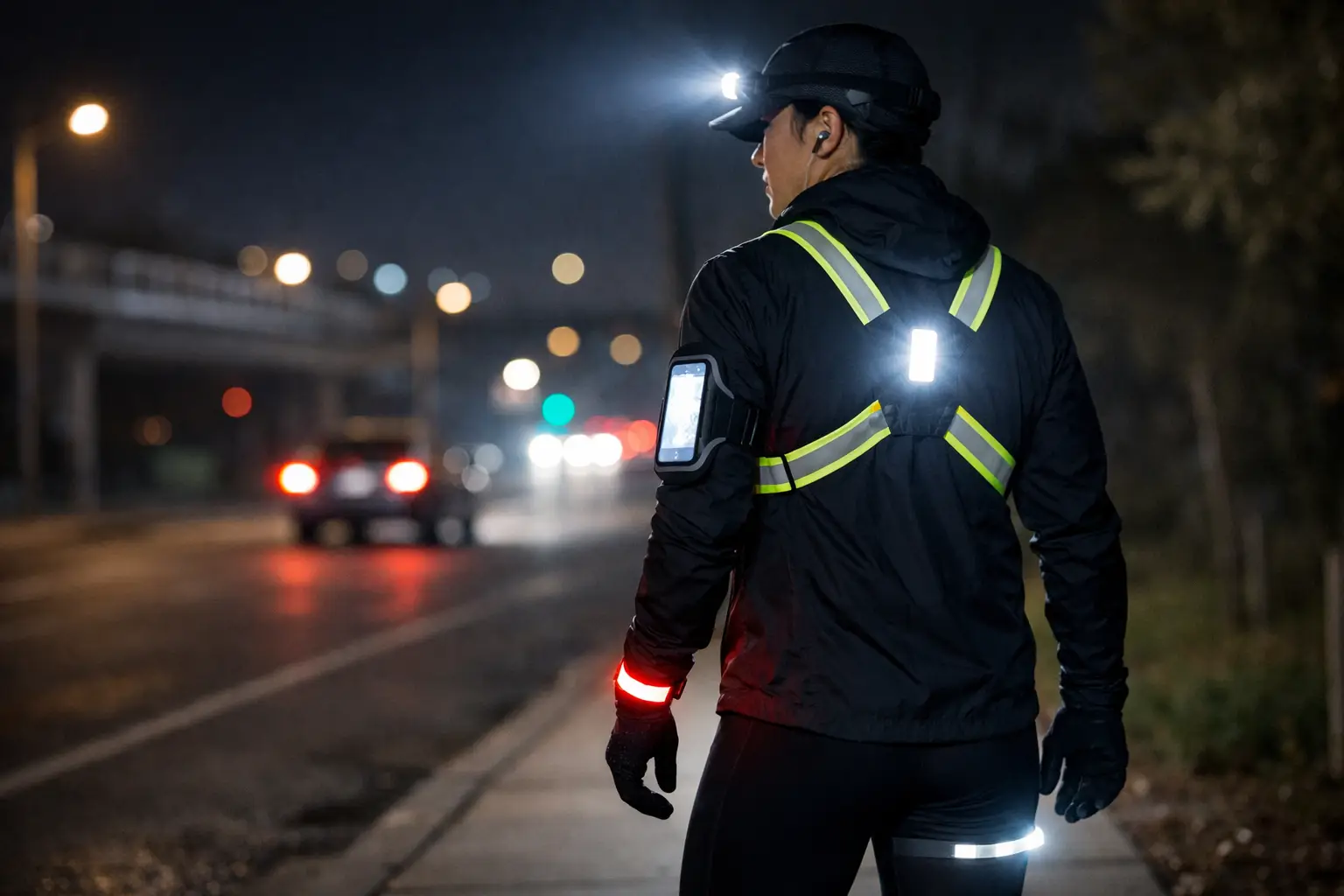
The best commuter runner safety setup example is not a head-to-toe shopping list. It is a small, repeatable system that makes you visible, comfortable and ready to make good decisions when the pavement is wet, the traffic is busy and daylight has disappeared before your working day ends.
For many runners, the commute is the only realistic training window. That early run before the office or evening journey home can clear your head and build serious consistency. But it also puts you beside cars, bikes, junctions and poorly lit paths. Safety gear should help you run with confidence, not turn every trip into a faff.
Start with the route, not the gear
A good safety setup begins before you leave the house. Your brightest light will not fix a route that forces you across blind bends, unlit shortcuts or fast roads with no pavement. Choose streets with consistent lighting where possible, and favour crossings, wider footpaths and routes with active shops or homes over isolated canal paths at night.
This does not mean every commuter run must be brightly lit and urban. It means matching the setup to the conditions. A city route may need strong all-round visibility around traffic. A greenway, park or country lane demands a proper forward-facing light so you can see uneven ground, puddles and changing surfaces.
Run the route in daylight first if you can. Notice where cars emerge from driveways, where cycle lanes cross the pavement and where loose gravel collects. Familiarity is a safety feature that costs nothing and lasts longer than any disposable gadget.
A commuter runner safety setup example
Picture a 6 km evening run home through a busy town, followed by a darker stretch of shared path. The runner wears a breathable long-sleeve top, running tights or shorts suited to the temperature, and a lightweight reflective vest strap over the outer layer. A rechargeable chest light sits securely at the front, while a compact headlight is used for the unlit final section.
The vest strap makes the runner visible from several angles without requiring a separate high-vis outfit for every weather forecast. The chest light gives a clear, moving point of visibility for drivers and cyclists. The headlight is angled slightly down, lighting the ground ahead without blasting other path users in the face.
Their phone is charged and stored close to the body in a secure pocket or running belt. Keys are minimal. A small card or tag carries an emergency contact and any vital medical information. If the weather is cold or wet, a lightweight outer layer goes over the top rather than relying on bulky clothing that becomes uncomfortable after the first mile.
That is the point: a capable setup made from useful pieces, not an overflowing drawer of single-purpose kit.
Build visibility in layers
Reflective material and active lighting do different jobs. Reflective straps or details return light towards a driver’s headlights, so they are most effective when a vehicle is already close enough to illuminate you. LEDs create their own light, helping people notice you earlier and from more directions.
Use both when running near traffic in darkness. A reflective vest strap is a practical layer because it can go over the running kit you already own, whether it is a tee in mild weather or a jacket in January. Add a rechargeable LED chest light for active visibility, particularly at junctions, crossings and on streets where vehicles approach from different angles.
For genuinely dark paths, a headlight is about seeing as well as being seen. Look for a secure, rechargeable option with a beam that does not bounce excessively. More brightness is not always better. On a city pavement, a lower setting can be enough and may preserve battery life. On uneven trails or unlit paths, increase output so you can spot hazards in time to react.
Check the charge before every run. A rechargeable light is a better long-term choice than repeatedly buying and binning batteries, but only if it is ready when you need it. Make charging part of your routine: shoes aired, kit drying, lights on charge.
Keep your kit stable and comfortable
Safety equipment that rubs, bounces or overheats you will end up at the back of a cupboard. That is why fit matters. Adjust reflective straps so they sit close to the body but still allow full breathing and arm movement. Test chest lights over the layers you actually wear in winter, not just over a thin T-shirt indoors.
Chafing can ruin a commute run quickly, especially when rain, sweat and a loaded running belt are involved. Apply anti-chafe balm to known problem areas before you leave: thighs, underarms, bra lines, feet or anywhere straps touch skin. It is a small habit that keeps attention on the road and the run, rather than a growing hotspot.
No-tie elastic laces can also make a noticeable difference. They remove the risk of a lace coming loose halfway across a road and let you make small fit adjustments when feet swell. They are not essential for everyone, but for runners constantly changing from work shoes to trainers, they make the transition quicker and more dependable.
Avoid wearing dark kit with the idea that one tiny reflective logo is enough. Black running clothing is practical and versatile, especially in British weather, but it should be paired with visibility layers that do real work. You do not need to buy fluorescent everything. You do need to be easy to identify as a moving person, not a vague shape at the edge of a headlight beam.
Carry only what changes the outcome
Commuter running asks you to balance preparedness with freedom of movement. Carrying too much makes you less comfortable and more distracted. Carrying nothing can leave you stuck after a flat phone battery, a sudden downpour or an unexpected delay.
Your essentials will vary, but most runners benefit from a charged phone, a payment card or small amount of cash, keys and identification. In colder months, a light layer may be more useful than extra gels for a short journey. If you run after work and expect to finish late, tell someone your route or share your location through your phone.
Keep the phone accessible enough to use without unpacking your whole bag, but secure enough that it cannot bounce out. Do not run while scrolling, replying to messages or changing music at crossings. Pause somewhere safe. Your pace can wait.
If you use headphones, keep the volume low or leave one ear free. The right choice depends on your route and comfort level. On a quiet, familiar path, some runners prefer no audio at all. Near traffic, being able to hear tyres, bells, engines and people approaching from behind gives you more information to work with.
Run like traffic cannot predict you
Even excellent visibility does not guarantee that a driver has seen you. At every junction, assume you need confirmation. Make eye contact where possible, watch for vehicle movement rather than trusting indicators, and be especially cautious around larger vehicles with wider blind spots.
Slow slightly at side roads and driveways. It costs seconds, not fitness. If rain is falling, give everyone more space: drivers take longer to stop, windscreens can glare and your own footing may be less certain.
On shared paths, keep left where local guidance calls for it, pass with room and make your presence known politely. A simple verbal warning is often clearer than suddenly appearing beside someone. Angle your headlight down when approaching others, then lift it again once you have passed.
Make it a system you will actually repeat
The strongest commuter setup is one you can put on half-awake at 6am or after a long day without thinking. Keep your reflective straps, lights, laces and anti-chafe balm in one place near your trainers. Charge devices together. Replace damaged straps and worn-out kit before they fail on a dark night.
At 4R, we believe useful running gear should earn its place through durability, comfort and everyday purpose, not through fast-fashion turnover. A small collection of dependable, cross-functional pieces creates less waste and serves more runs.
Your commute does not need perfect conditions to count. Set up smart, stay visible, trust your awareness and let the run home become the part of the day that belongs completely to you.